
Bee pollen
Bienenpollen, auch Blütenpollen genannt, ist ein natürliches Bienenprodukt aus dem gesammelten Blütenstaub zahlreicher Pflanzen. In unserer Kategorie findest du ihn als loses Granulat, in praktischen Kapseln und als fein vermahlenes Pulver. Herkunft, Form und Verzehrmenge unterscheiden sich je nach Produkt, weshalb sich ein genauer Blick auf die Angaben lohnt. Auf dieser Seite erhältst du einen sachlichen Überblick, damit du die passende Form für deinen Alltag findest.


Buy Bee Pollen: Flower Pollen as Granules, Capsules and Powder
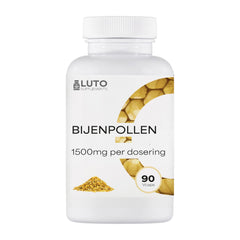
In our bee pollen category, you will find flower pollen in various forms. Bee pollen, also known as flower pollen, is a natural bee product collected by honeybees from the pollen of numerous plants. It is traditionally offered as loose granules, conveniently dosed in capsules, or finely ground as powder.
On this page, we provide you with an objective overview: what bee pollen is exactly, where it comes from, how it differs from propolis and royal jelly, and what you should pay attention to when purchasing and determining the intake amount. This way, you can find the form that suits your daily life.
What is Bee Pollen (Flower Pollen)?
Bee pollen is the pollen from plants that honeybees collect on their leg hairs when visiting flowers. With a little nectar and saliva, they form small pellets from it, known as pollen pellets. These are collected at the beehive and then gently dried. Bee pollen is therefore a purely natural product whose color can range from yellow to orange to brown, depending on which plants it comes from.
Where Does Bee Pollen Come From?
Bee pollen is produced where bees have access to a diverse landscape of flowers, such as meadows, fields, and forest edges. Beekeepers collect it using special pollen traps at the entrance of the beehive. Because the bees visit different plants, the composition of each harvest is slightly different. Reputable suppliers usually state the origin and collection region transparently.
What Is in Bee Pollen?
Bee pollen is naturally multifaceted in composition and contains, among other things, plant-based protein building blocks, carbohydrates, and secondary plant compounds from the pollen. The exact composition varies depending on its botanical origin and the season. This information is purely descriptive and does not constitute a health-related statement.
Difference from Propolis and Royal Jelly
Bee pollen, propolis, and royal jelly are three different bee products. Bee pollen is collected flower pollen. Propolis is a resinous substance that bees make from tree resins and use to seal their hive. Royal jelly, also known as royal jelly sap, is a substance produced by nurse bees that serves to feed the queen bee. All three come from the beehive but differ in origin, consistency, and use.
Forms: Granules, Capsules and Powder
Bee pollen is available in several forms. For example, loose granules can be sprinkled over muesli or yogurt, or added to smoothies. Capsules offer a pre-measured portion and are convenient for on the go. Powder is suitable for stirring into drinks. Which form is right depends mainly on your personal preferences.
How Much Bee Pollen per Day?
How much bee pollen per day is advisable depends on the respective form and concentration of the product. Loose granules are usually consumed by the teaspoon, while the information for capsules and powder varies depending on the manufacturer. Those trying bee pollen for the first time usually start with a small amount. Always pay attention to the recommended daily intake on the packaging for the specific daily amount.
When and How to Take It?
Bee pollen can be flexibly incorporated into your daily routine. Many people take it in the morning with breakfast, for example in muesli or a smoothie. Granules and powder develop their typical, slightly floral-tart taste particularly well in combination with yogurt or fruit. Capsules are swallowed with sufficient liquid. There is no fixed time to take it.
What to Look for When Purchasing?
When purchasing bee pollen, pay attention to transparent information about its origin and the apiary, gentle drying, and airtight, light-protected packaging. An important note: bee pollen is a bee product and can cause allergic reactions in people with an allergy to flower pollen or bee products. If you are prone to allergies, pregnant, or breastfeeding, please consult a doctor before consumption. Bee pollen is not suitable for young children.
In addition to bee pollen, discover other products from our assortment: In our Superfoods, you will find natural classics, while Spirulina and Chlorella are among the well-known microalgae. Our Immune System category is also worth a look.
Need more advice?

Tobian
Customer service