




Green tea
Grüner Tee aus der Pflanze Camellia sinensis gehört zu den beliebtesten pflanzlichen Klassikern und ist reich an Polyphenolen und Catechinen wie EGCG. In dieser Kollektion findest du echten grünen Tee in konzentrierter Form – als fein gemahlenes japanisches Matcha-Pulver und als standardisierten Grüntee-Extrakt. Grüner Tee enthält von Natur aus Koffein; der Gehalt schwankt je nach Sorte, Anbau und Zubereitung. Wähle die Form, die zu deinem Geschmack und deinem Alltag passt, und beachte stets die Verzehrempfehlung auf der Verpackung.



Buy Green Tea: Matcha & Green Tea Extract from Japan
Green tea is one of the best-known plant-based classics and is made from the leaves of the tea plant Camellia sinensis. Unlike black tea, the leaves are not fermented after harvest, but gently heated (steamed or roasted). This largely preserves the typical plant compounds, such as polyphenols and catechins. In this collection, you will find green tea in concentrated form – as finely ground matcha powder and as standardized green tea extract.
Our range includes genuine green tea products from various brands, including Japanese matcha from LUTO Supplements as well as ceremonial matcha from Shinyu. This allows you to choose between a classic brewed powder and a more concentrated extract with a stated polyphenol content. Below, we answer the most common questions about green tea.
What is green tea extract?
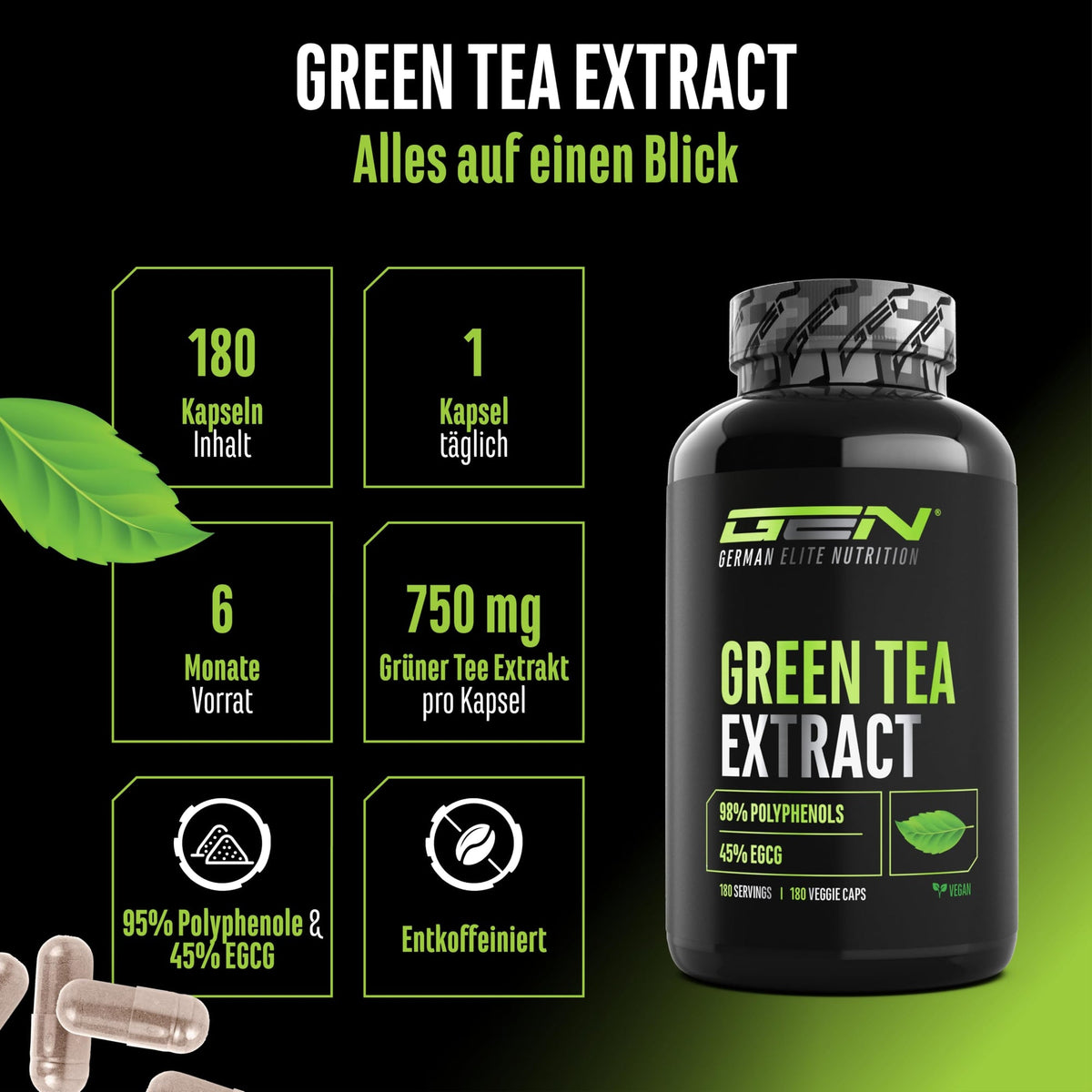
Green tea extract is a concentrated form of green tea. The valuable plant compounds are extracted from the tea leaves and dried, creating a powder with a higher, often standardized content of polyphenols and catechins. Extracts are usually stated as a ratio (for example, 10:1) or by a percentage of polyphenol content. As dietary supplements, they are available in capsule or powder form.
Green tea extract or matcha – what is the difference?
Matcha is finely ground green tea: the whole tea leaves, grown in the shade, are ground into a fine powder and whisked completely with water and drunk. You therefore consume the entire leaf. A green tea extract, on the other hand, is a concentrated extract in which certain ingredients are enriched. Matcha stands for taste, ceremony, and natural leaf powder, while the extract is primarily focused on a defined content of polyphenols.
Where is green tea found?
The basis is always the tea plant Camellia sinensis. Green tea is traditionally drunk as loose tea or tea bags; as a dietary supplement, you can also find it as matcha powder and as green tea extract in capsules or powder. Related plant compounds such as polyphenols are also found in other foods, such as grapes, berries, and cocoa.
What forms and varieties are available?
Green tea is available in several forms: as loose leaf tea, as ceremonial or culinary matcha powder, and as standardized extract in capsules. Matcha powder is suitable for whisking, for lattes, or for baking. Extracts in capsule form are practical for on the go and provide a defined polyphenol content. Which form is right for you depends on your preferences in terms of taste, application, and concentration.
Caffeine content of green tea
Green tea naturally contains caffeine. The content varies depending on the variety, cultivation, and preparation; matcha tends to provide more caffeine per serving because the whole leaf is consumed. If you are sensitive to caffeine, pay attention to the serving size and the time of day you take it.
EGCG and polyphenols – explained objectively
Green tea is known for its content of polyphenols, a large group of plant compounds. Among the catechins found in green tea is particularly epigallocatechin gallate (EGCG). The content of polyphenols and catechins is often standardized in extracts and stated on the packaging. This information describes the composition of the product and is purely objective in nature.
Dosage per day
How much green tea is appropriate depends on the form: matcha is usually prepared in servings as a powder (for example, one to two grams per cup), while extract capsules are taken according to the instructions of the respective manufacturer. Since the caffeine and polyphenol content varies between products, there is no universal amount. Always follow the consumption recommendation on the packaging.
When to take it?
Many people enjoy green tea or matcha in the morning or throughout the day. Due to the natural caffeine content, some prefer to take it in the first half of the day. Whether before or after a meal depends on your personal preferences and tolerance.
Who is green tea interesting for?
Green tea appeals to anyone who appreciates its characteristic taste or wants to integrate plant-based polyphenols into their daily life – whether as a tea lover, in the office, or around sports. People who are sensitive to caffeine, pregnant women, and breastfeeding women should monitor their intake and seek professional advice if in doubt.
What should you look for when buying?
Pay attention to the origin (Japanese matcha is considered a quality marker), to a stated polyphenol or catechin content in extracts, as well as to a transparent list of ingredients without unnecessary additives. For matcha, a bright green color and a fine grind are indicators of quality. Also check the information on caffeine content and serving size so that the product suits your needs.
Discover related categories in our range: Caffeine, Antioxidants, Superfoods, and more Herbs & Plants.
Need more advice?

Tobian
Customer service