
Silicon
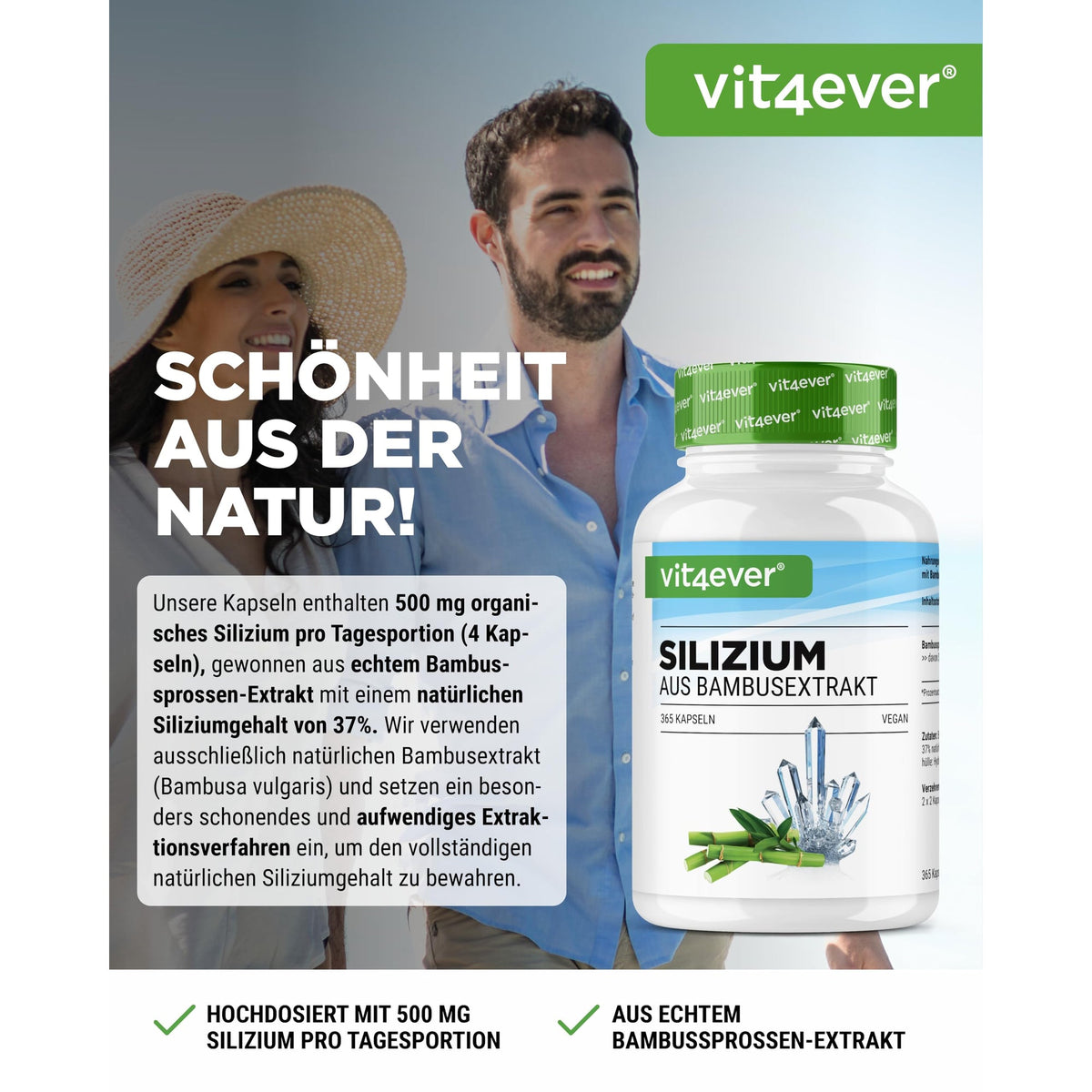
Silizium, oft auch Silicium genannt, ist ein Spurenelement, das in Pflanzen wie Bambus und Brennnessel sowie in Getreide und Mineralwasser vorkommt. In Nahrungsergänzungsmitteln wird es meist als Bambus-Extrakt eingesetzt, weil dieser Rohstoff von Natur aus viel Kieselsäure enthält. Für Silizium sind in der EU derzeit keine gesundheitsbezogenen Angaben zugelassen. Wir beschreiben die Produkte deshalb sachlich über Rohstoff, Siliziumgehalt, Kapselgröße und Packungsinhalt, sodass du selbst vergleichen kannst. In dieser Kategorie findest du Silizium als reines Bambus-Extrakt-Präparat und als Bestandteil eines Kombinationsprodukts. Beide Varianten sind vegan und für die tägliche Einnahme gedacht.



Buy Silicon: The Mineral from Bamboo and Silicic Acid
Silicon is one of the most common elements on Earth and is found in small amounts in the body, including in connective tissue, skin, hair, and nails. In food and supplements, silicon appears as silicic acid and in bound forms. For supplements, silicon is often obtained from plant sources with a naturally high silicon content, such as bamboo extract and the horsetail plant (Equisetum arvense). In our range, you will find silicon as a standalone supplement made from bamboo extract and in complexes with other ingredients, in various dosages.
What Is Silicon?
Silicon is a trace element that is commonly found in nature, often in the form of silicates and silicic acid. In the human body, silicon is present in small amounts, particularly in connective tissue and structures such as skin, hair, and nails. In supplements, silicon is offered in various forms, including plant-based silicon from bamboo or horsetail, as well as stabilized silicic acid (for example, orthosilicic acid). The label indicates how much silicon a product provides per serving and where it comes from.
Silicon, Selenium, or Silica: What Is the Difference?
In practice, the name silicon is often confused with other terms. Silicon is not the same as selenium: despite their somewhat similar-sounding names, selenium is a completely different trace element with its own functions. The term silica refers to silicon dioxide, the compound of silicon and oxygen found in substances such as quartz and sand; silica is therefore a silicon-containing compound, not an element in itself. Silicic acid, finally, is the form of silicon dissolved in water that the body can absorb. In supplements, it is always silicon being discussed, offered as a plant extract or as silicic acid.
Where Does Silicon in Supplements Come From, and How Is It Obtained?
For supplements, silicon is generally obtained from plant sources that are naturally rich in the mineral. Bamboo extract is a commonly used source because bamboo has one of the highest natural silicon contents; the silicon is extracted from the bamboo stalks and standardized. Horsetail (Equisetum arvense, also known as scouring rush) is also used as a silicon source. In addition, there is stabilized orthosilicic acid, a form of silicon that has been prepared with bioavailability in mind. In industry, pure silicon is also obtained from sand (silicon dioxide), but in dietary supplements, the focus is on plant sources and silicic acid. The label indicates which source and form of silicon the supplement uses.
What Does Silicon Naturally Occur In?
Silicon naturally occurs in various plant-based foods. Good sources include whole grains such as oats and barley, rice, certain vegetables, and bananas. Drinking water also provides part of the daily silicon intake, depending on the source. The amount of silicon in food depends on the degree of processing; unrefined whole-grain products generally contain more silicon. For people who want to supplement their silicon intake, a supplement made from, for example, bamboo extract can be a practical option.
What Forms of Silicon Are Available?
Silicon is available in supplements in various forms. Plant-based silicon from bamboo extract or horsetail is supplied as a capsule or tablet with a standardized silicon content. Stabilized orthosilicic acid is often offered in liquid form or as drops. In addition, you will find silicon in complexes, for example combined with other ingredients in products aimed at skin, hair, and nails. When comparing products, it is helpful to pay attention to the amount of elemental silicon per serving and the source used.
How Much Silicon Per Day?
No official recommended daily amount has been established for silicon. The dosage per product varies and is stated on the packaging, expressed in milligrams of silicon per capsule or serving. Follow the directions for use of the respective supplement and do not exceed the recommended dosage without consulting a professional. During pregnancy or breastfeeding, when taking medication, or if in doubt, it is advisable to consult a doctor or therapist beforehand.
Buy Silicon: What Should You Look For?
When choosing a silicon supplement, there are several practical points to consider. Pay attention to the amount of elemental silicon per serving and the source, such as bamboo extract, horsetail, or stabilized orthosilicic acid. Decide whether you are looking for a standalone silicon supplement or a complex in which silicon is combined with other ingredients. Pay attention to the dosage form (capsules, tablets, or drops), purity, and price per daily serving. Silicon is a trace element; for related products, also view our Minerals collection.
Need more advice?

Tobian
Customer service