


Copper
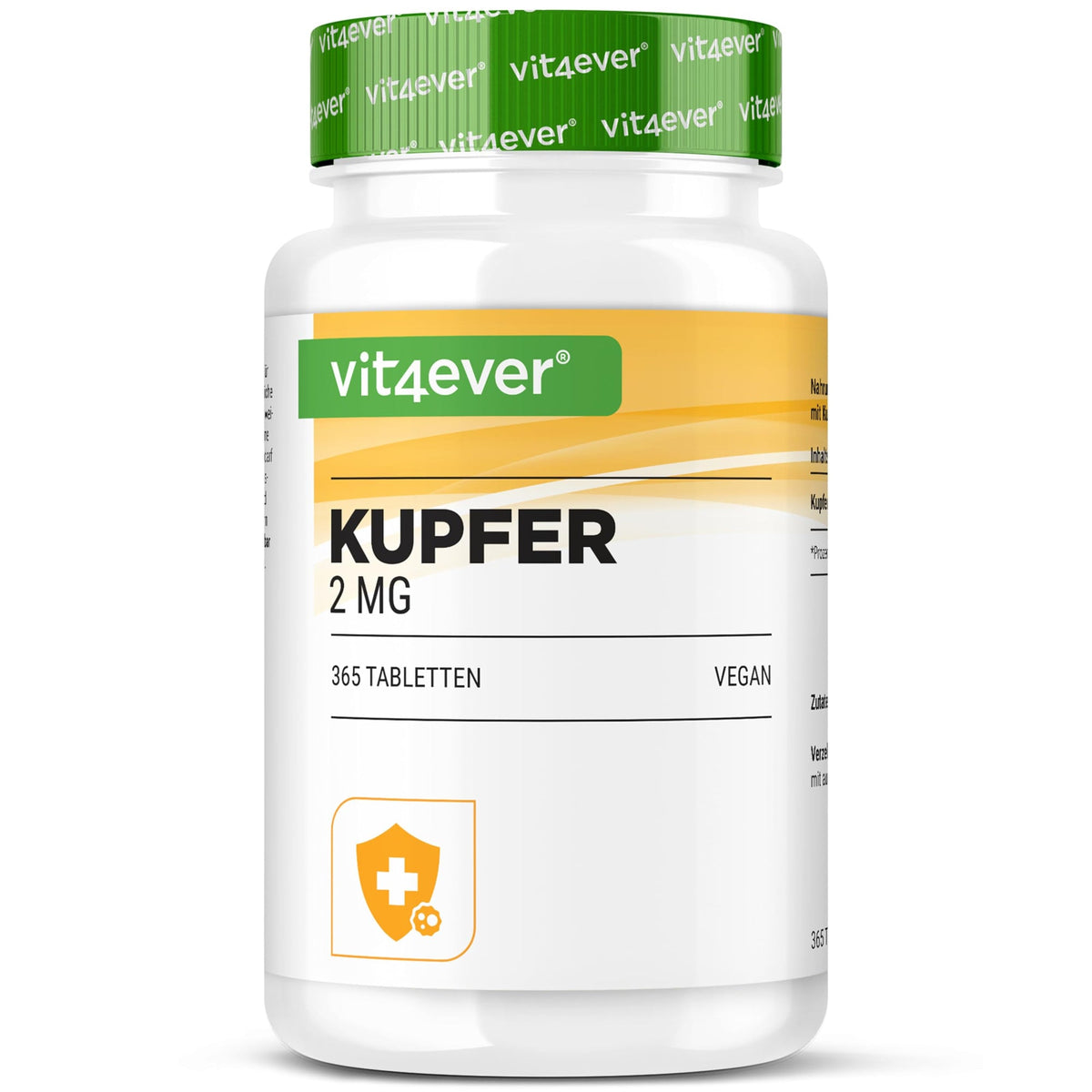
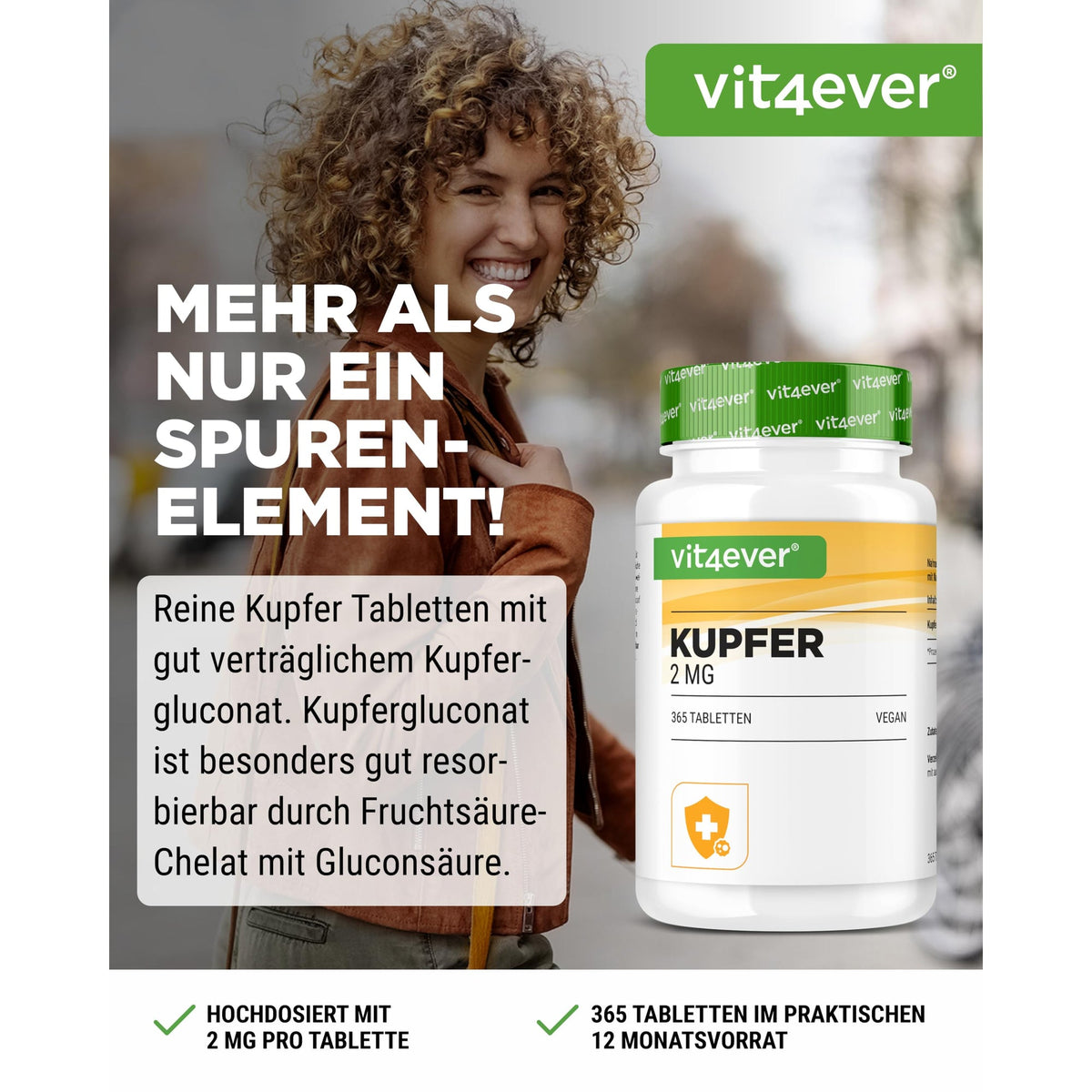
Kupfer ist ein essenzielles Spurenelement, das dein Körper nicht selbst bilden kann. Kupfer trägt zur normalen Funktion des Immunsystems bei, trägt zur normalen Funktion des Nervensystems bei, trägt zur Erhaltung von normalem Bindegewebe bei, trägt zu einem normalen Energiestoffwechsel bei, trägt zum normalen Eisentransport im Körper bei, trägt zur normalen Haar- und Hautpigmentierung bei und trägt dazu bei, die Zellen vor oxidativem Stress zu schützen. Gute Quellen sind Innereien, Kakao, Nüsse, Vollkorngetreide, Hülsenfrüchte und Schalentiere. In unserem Sortiment findest du Kupfer als Bisglycinat und als Gluconat mit 2 mg pro Tablette sowie als Bestandteil von Multipräparaten.

Buy Copper: An Essential Trace Element for Connective Tissue, Skin, and Hair
Copper is an essential trace element that the body needs in small amounts. Copper contributes to the maintenance of normal connective tissue, normal hair and skin pigmentation, normal iron transport in the body, normal immune system and nervous system function, normal energy metabolism, and helps protect cells from oxidative stress. In our range, you will find copper in highly bioavailable forms such as copper gluconate and copper bisglycinate, as well as in mineral complexes.
What Is Copper, and What Does It Do?
Copper is an essential trace element that the body cannot produce on its own and must be obtained through food or supplementation. According to accepted nutritional claims, copper contributes to the maintenance of normal connective tissue, normal hair and skin pigmentation, normal iron transport in the body, normal immune system and nervous system function, normal energy metabolism, and the protection of cells from oxidative stress. The label of each product states how much copper is provided per serving, expressed in milligrams.
Copper and Its Interaction with Iron
Copper and iron work closely together in the body. Copper contributes to normal iron transport in the body, playing a role in making iron available and transporting it. This is also why the two minerals are sometimes considered together. Furthermore, copper contributes to normal immune system function and the protection of cells from oxidative stress, functions it shares with some other trace elements. This is why copper is often combined with other nutrients in mineral complexes.
Copper for Skin, Hair, and Connective Tissue
Copper is a popular mineral for anyone who cares about their skin, hair, and connective tissue. Copper contributes to normal hair and skin pigmentation and the maintenance of normal connective tissue. Because of these functions, copper is found in products aimed at skin, hair, and nails, often in combination with other minerals. Therefore, in our range, you will find copper both as a standalone supplement and in broader complexes.
What Foods Contain Copper?
Copper occurs naturally in various foods. Good sources include organ meats (such as liver), shellfish and crustaceans, nuts and seeds, legumes, whole grains, and dark chocolate (cocoa). With a varied diet, most people obtain sufficient copper. For anyone who wants to specifically supplement their intake or use a mineral complex, a copper supplement can be a good addition. Keep in mind the balance between copper and zinc (see below).
What Forms of Copper Are Available?
Copper supplements come in various forms. Organically bound forms such as copper gluconate and copper bisglycinate (copper bound to the amino acid glycine) are considered highly bioavailable and are frequently used. You will also find copper in broader mineral and vitamin complexes. Dosages are generally low, often around 1 to 2 milligrams per serving, because the body only needs a small amount of copper. When comparing, it is helpful to pay attention to the amount of elemental copper per serving and the form used.
How Much Copper Per Day and the Copper-Zinc Balance
The recommended daily intake of copper for adults is approximately 0.9 to 1.3 milligrams. Many supplements provide an amount around or slightly above this level, for example 2 milligrams per serving. An important point is the balance between copper and zinc: A persistently high intake of zinc can interfere with copper absorption, and vice versa. Therefore, do not take high doses of copper without reason and consider your total intake from food and other supplements. Stick to the recommended dosage on the packaging and consult a doctor if you have any doubts or are taking medication.
Buying Copper: What to Look For
When choosing a copper supplement, a few points are important. Look at the amount of elemental copper per serving in milligrams and the form used, such as highly bioavailable copper gluconate or copper bisglycinate. Decide whether you are looking for a standalone copper supplement or a mineral complex in which copper is combined with other nutrients. Consider the balance between copper and zinc and pay attention to purity. Copper is an essential trace element; for related products, also check out our Minerals and Zinc collections.
Need more advice?

Tobian
Customer service