7 products
Filter op
Filter op
Actieprijs€26,90
€14,94  / dosering
Actieprijs€27,90
€10,33  / dosering
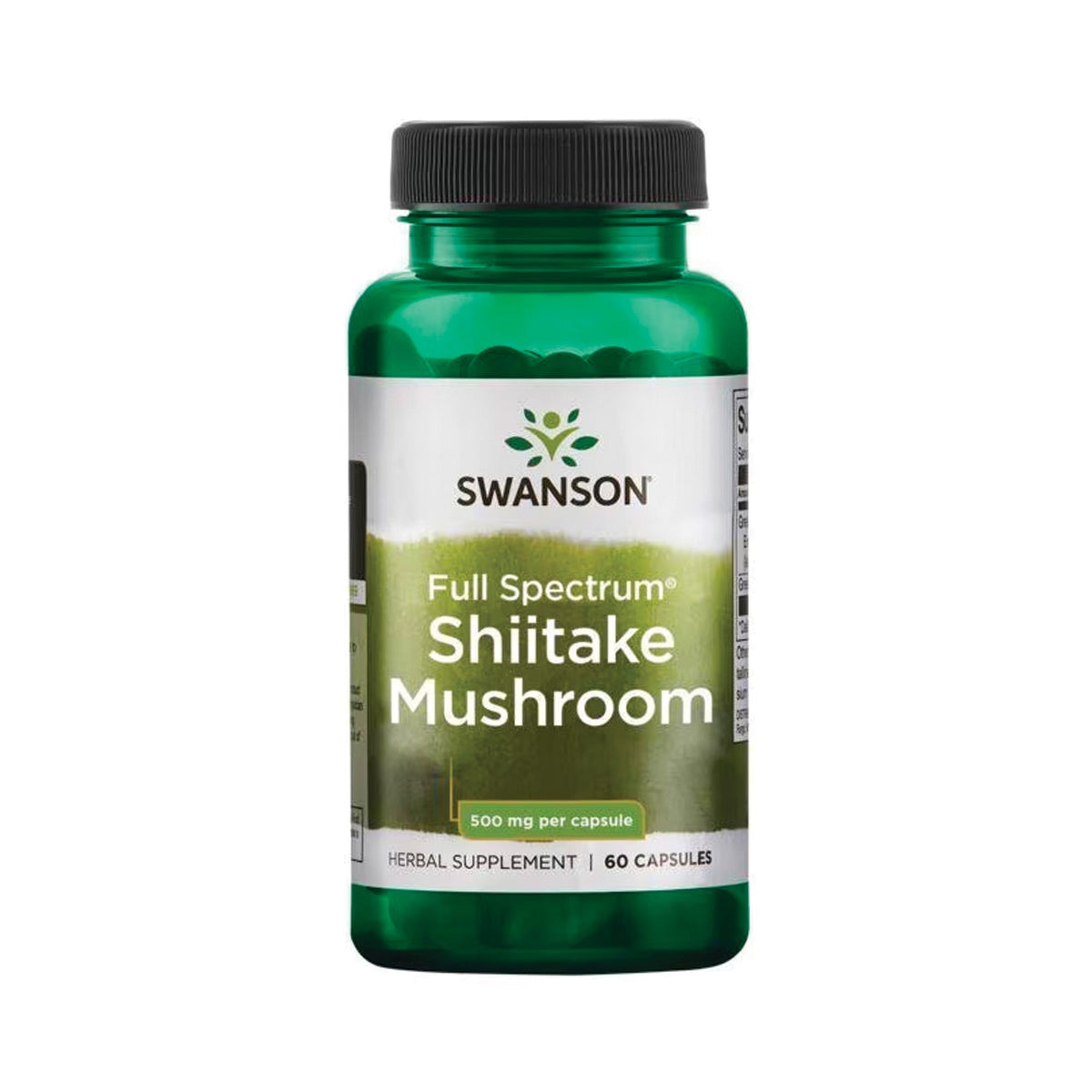
Actieprijs€9,90
€151,61  / kg
Actieprijs€13,90
€204,41  / kg
ActieprijsVanaf €24,90
Actieprijs€30,90
€134,93  / kg
UitverkochtVit4ever Lion's Mane Hericium erinaceus 30:1 Extrakt - 180 Kapseln
Actieprijs€23,90
€13,28  / dosering

Buy Mushroom Extracts: Individual Varieties and Mushroom Complexes

Mushroom extracts are concentrates made from dried mushrooms. Unlike simple mushroom powder, the material is extracted with hot water, alcohol, or a combination of both, filtered, and then dried. This enriches certain components, especially polysaccharides such as beta-glucans. Because mushroom cell walls are made of chitin, which the human digestive tract cannot easily break down, extraction is the standard processing method for many varieties.

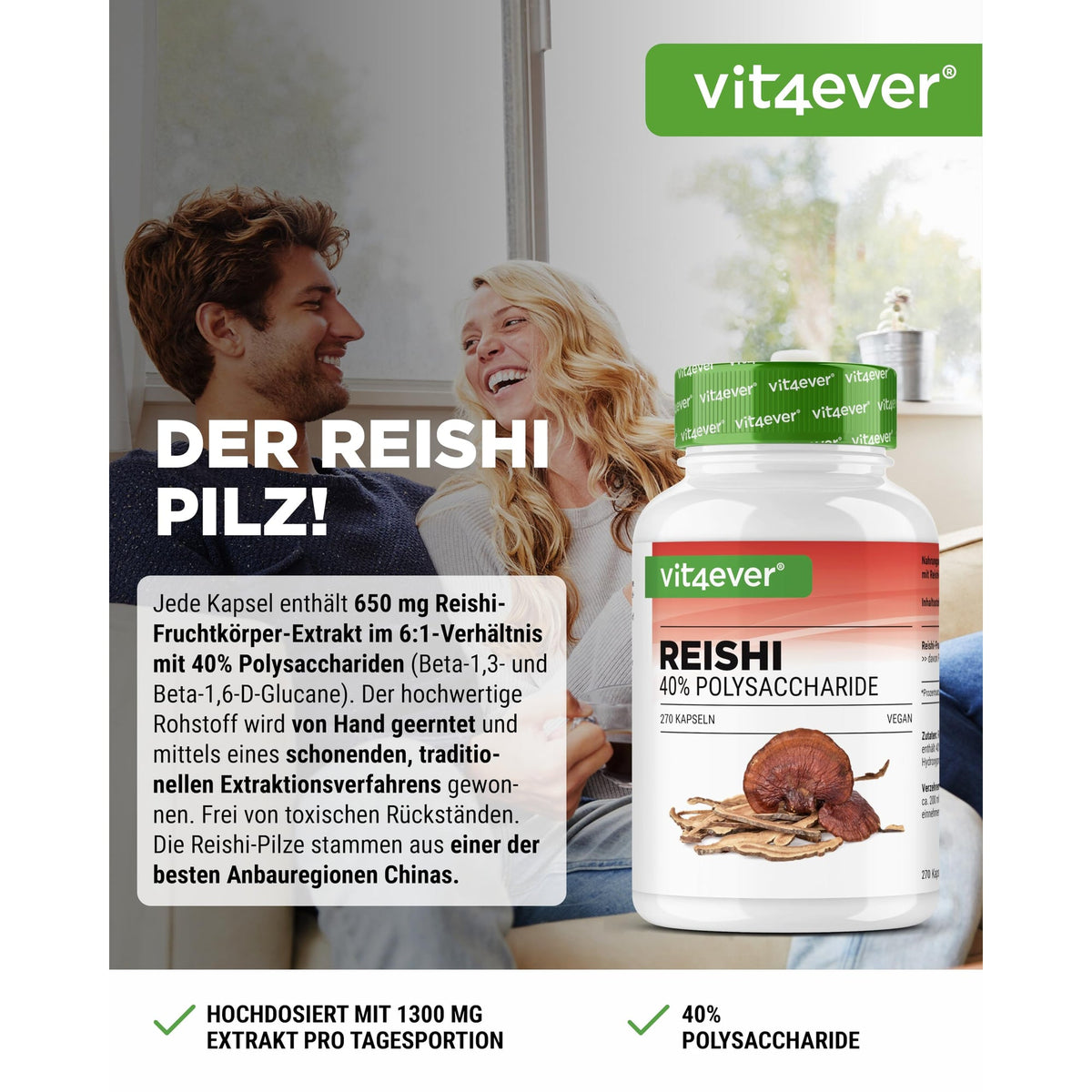
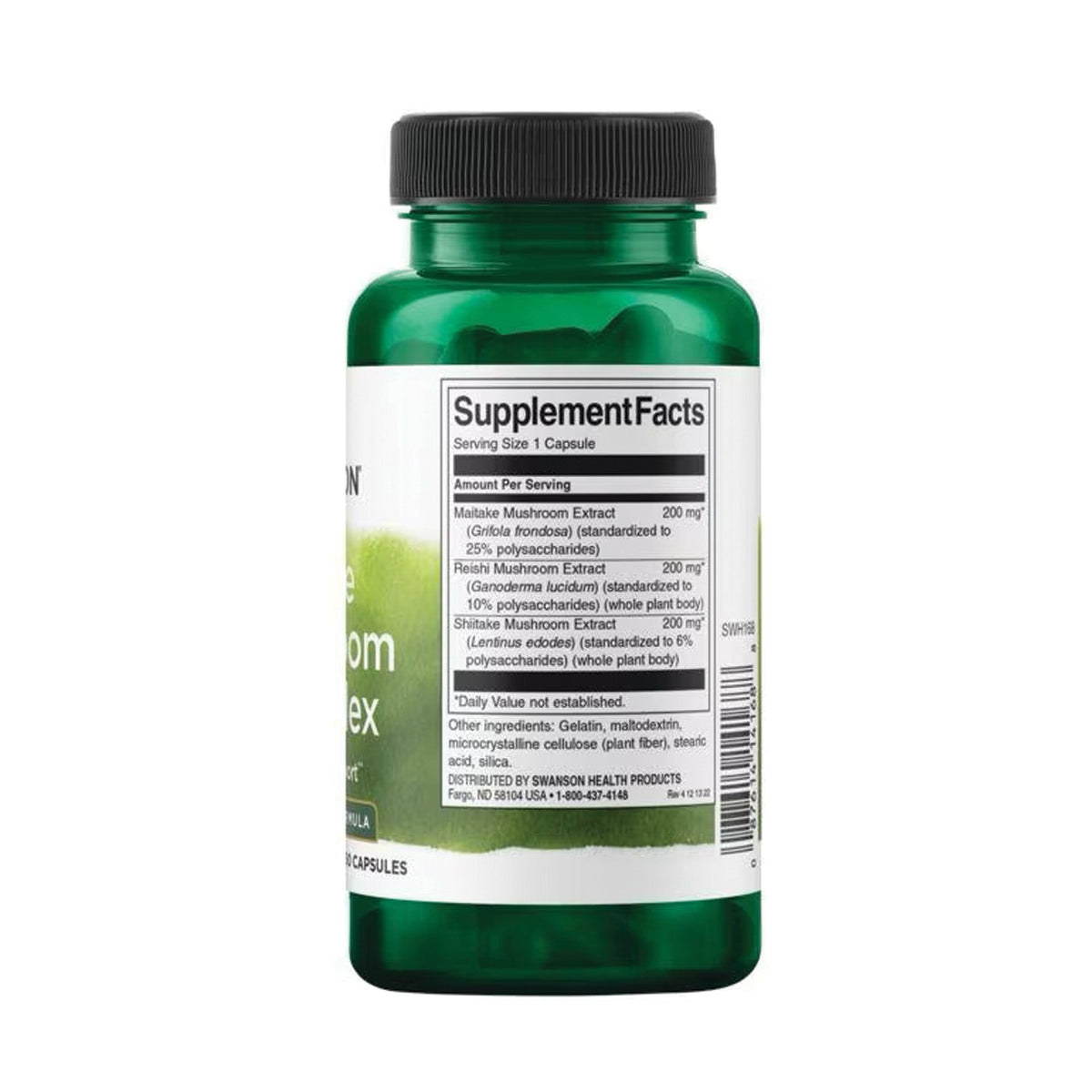
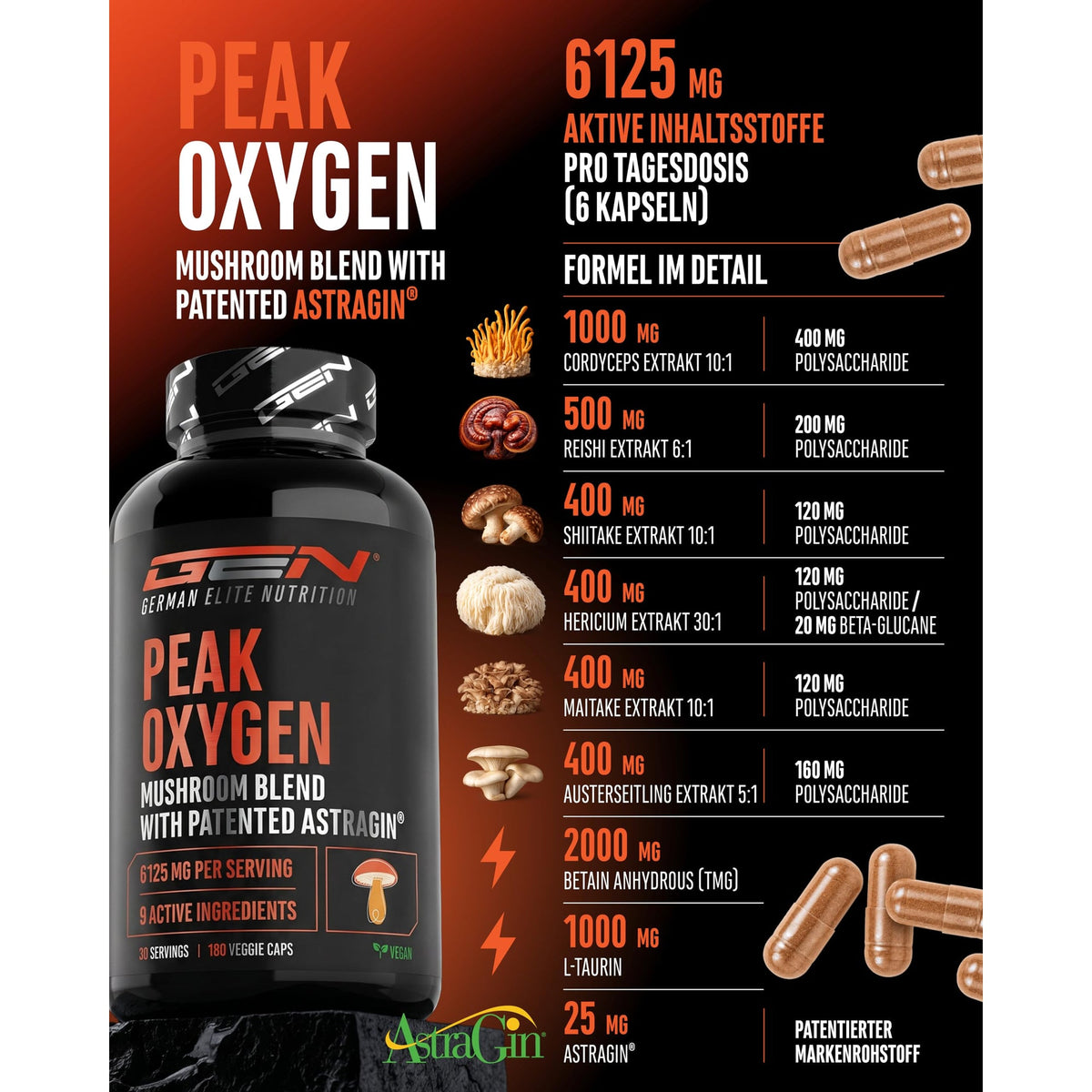
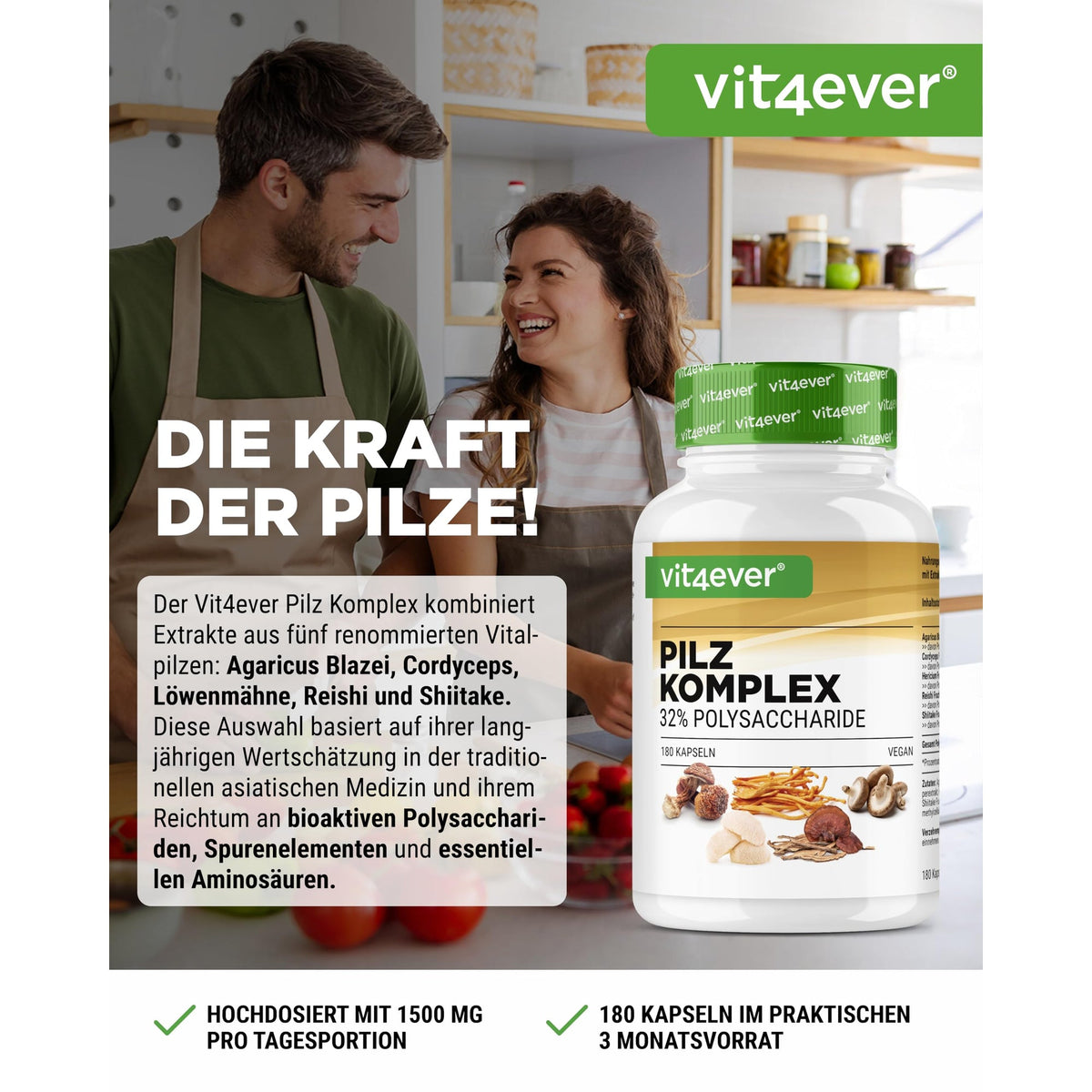
At LUTO Supplements, you will find mushroom extracts as individual products and as complexes: Reishi Intenso with 1300 mg and 270 capsules from Vit4ever, Lion's Mane with 650 mg and 180 capsules from Vit4ever, Cordyceps Sinensis CS-4 40% in bottles of 180 and 300 capsules from Vit4ever, the mushroom complex with five varieties from Vit4ever, and the Peak Oxygen mushroom complex from German Elite Nutrition. On this page, you will learn how extracts are made, what the label says, and how to compare the products.

Which mushrooms will you find in this category?

The most common varieties are Reishi (Ganoderma lucidum), Cordyceps (Ophiocordyceps sinensis and Cordyceps militaris), Lion's Mane or hedgehog mushroom (Hericium erinaceus), Shiitake (Lentinula edodes), and Maitake (Grifola frondosa). Other varieties include Chaga, Turkey Tail, and Oyster Mushroom, which appear mainly in complexes. Each variety has its own ingredient profile, which is why extracts cannot be directly compared to one another.

Fruiting Body or Mycelium?

The fruiting body is the visible mushroom, while the mycelium is the thread-like network in the substrate. Products made from fruiting bodies generally contain more mushroom-specific polysaccharides. Mycelium is often grown on grain and then ground up with the substrate, which can increase the proportion of grain starch. High-quality labels therefore indicate which part of the mushroom was used.

Beta-Glucans and Extract Ratios

Two pieces of information help with comparison. The extract ratio, such as 10:1, describes how much dried mushroom material was used to produce one part extract. Standardization indicates the percentage content of polysaccharides or beta-glucans. It is important that the percentage refers to beta-glucans and not just polysaccharides in general, because starch from the substrate is classified as a polysaccharide.

Hot Water Extract or Alcohol Extract?

The choice of solvent determines which components end up in the extract. A hot water extract enriches water-soluble polysaccharides, while an alcohol extract is more likely to contain fat-soluble components such as triterpenes in Reishi. A double extract combines both methods and is therefore frequently used for Reishi and Chaga. If the label only says "extract" without further specification, it is worth looking at the detailed product information.

Why we describe mushrooms neutrally

No health claims for mushrooms and plant-based ingredients have yet been approved in the European Union. We therefore deliberately refrain from making statements about the immune system, nerves, sleep, stress, or performance, and do not use terms such as "vital mushroom" as a promise of efficacy. Instead, we describe the botany, production, label information, and origin so that you can make an objective comparison.

Individual Mushroom or Mushroom Complex?

An individual extract contains only one variety and can be precisely dosed. A complex combines several varieties in one capsule and is practical if you want to try different mushrooms. The content per variety in a complex is necessarily lower than in an individual product. Therefore, check the amount per variety and per daily serving before comparing.

Origin, Cultivation, and Purity

Most mushrooms used in dietary supplements come from controlled cultivation, often in China, Korea, or Europe. Because mushrooms absorb substances from their substrate, testing for heavy metals and pesticides is advisable. Look for information about origin, organic certifications, and whether the manufacturer provides batch analyses. You will find this information on the respective product page.

Capsules, Powder, and Intake

Capsules are flavorless and easy to dose, while powder can be used flexibly and stirred into coffee, tea, or a smoothie. Depending on the variety, mushroom extracts taste earthy or bitter, Reishi particularly so. Follow the recommended intake stated on the label. If you are taking medication, are pregnant, or are breastfeeding, speak with a doctor before taking them.

Need more advice?

Feel free to send us a message. We're happy to help and will answer your questions as soon as possible.
Tobian

Tobian

Customer service