

3 products
Filter op
Filter op
Actieprijs€19,90
€18,09  / kg
UitverkochtInulin Pulver | 227 Gramm | NOW Foods
Actieprijs€17,90

Buy Inulin: The Soluble Fiber from Chicory Root

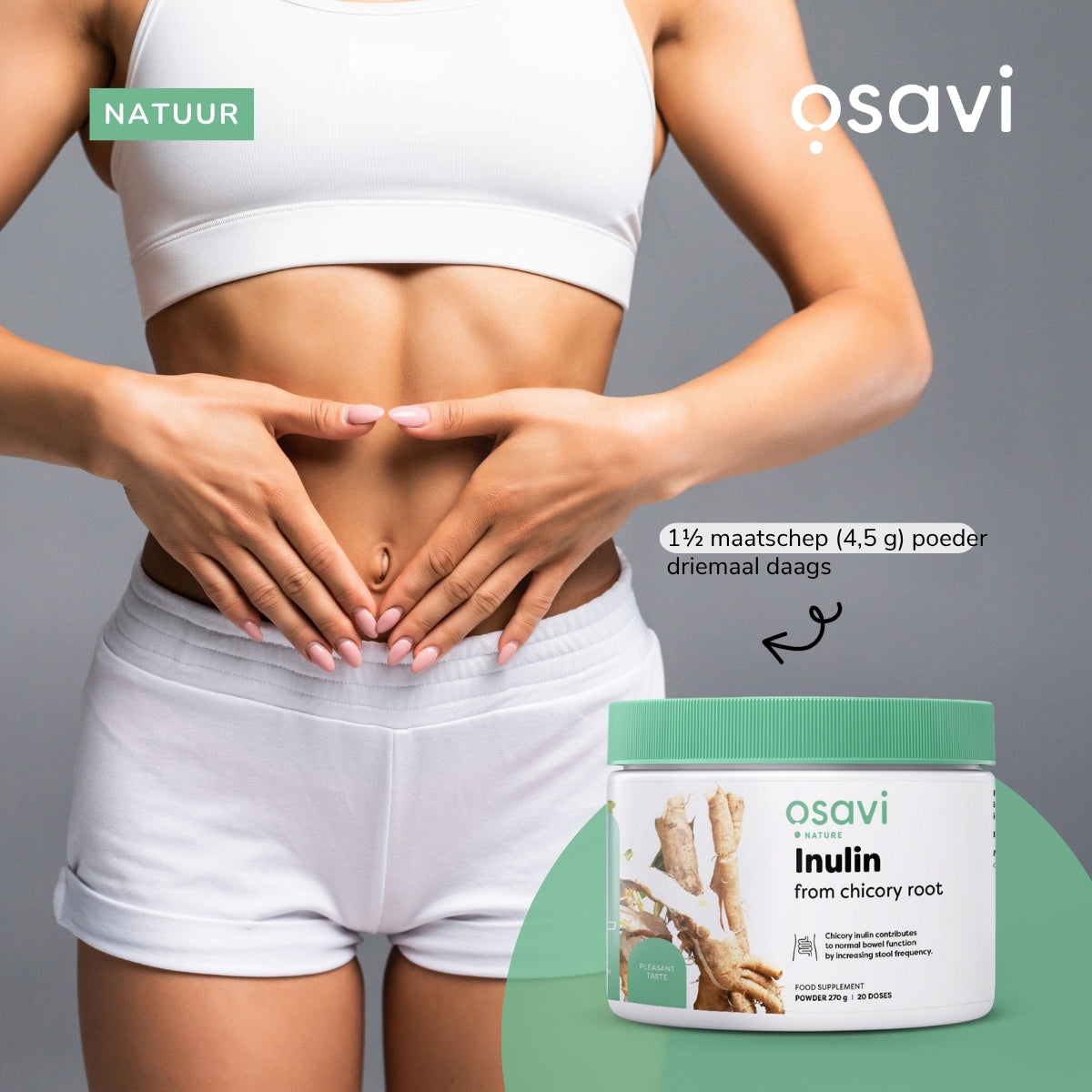
Inulin is a natural, soluble fiber that occurs naturally in many plants and is generally extracted from chicory root for use in supplements. Inulin is classified as a prebiotic: it is not digested in the small intestine but serves as food for gut bacteria in the large intestine. Chicory inulin contributes to normal bowel function by increasing bowel movements. In our range, you will find inulin as chicory root powder in various package sizes.

What Is Inulin?

Inulin is a collective term for a group of soluble fibers (fructans) made up of chains of fructose units. These fibers occur naturally in many vegetables and plants. Because the body does not digest inulin in the small intestine, the fiber reaches the large intestine virtually unchanged, where it is utilized by gut bacteria. This is why inulin is called a prebiotic: a food source for the "good" bacteria in the gut. In supplements, inulin is usually offered as a powder. The label indicates how much inulin a product provides per serving.

Inulin as a Prebiotic and Bowel Function

Inulin is primarily known as a prebiotic fiber. Chicory inulin has an approved health claim: chicory inulin contributes to normal bowel function by increasing bowel movements. This claim applies to a daily intake of at least 12 grams of chicory inulin. In addition, inulin serves as food for gut bacteria as a prebiotic. Due to this prebiotic character, inulin is also added to some probiotic products, so that the fiber and the bacterial cultures are combined in one product.

Where Does Inulin Come From and What Foods Contain It?

The inulin in supplements is generally extracted from the root of the chicory plant (dandelion), which naturally has a high inulin content; on labels, you will find it as "chicory inulin" or under a brand name such as Fibruline™. In addition, inulin occurs naturally in various vegetables and plants, including chicory, dandelion, leeks, onions, garlic, asparagus, artichokes, and bananas. A diet rich in these products therefore naturally provides inulin. For those who want to specifically supplement their fiber intake, inulin powder is a practical option.

How Do You Use Inulin Powder?

Inulin powder is versatile in its applications. It is easily soluble and can be stirred into water, juice, yogurt, a smoothie, or other dishes. Inulin has a slightly sweet taste and is therefore sometimes also used as a mild, high-fiber ingredient in cooking. Increase the amount gradually: Since inulin is fermented in the large intestine, a sudden high intake can lead to a feeling of fullness or bloating in some people. By starting with a small amount and gradually increasing it, the digestive system will adjust.

How Much Inulin Per Day?

The dosage varies depending on the product and is stated on the packaging in grams per serving. For the approved bowel function claim, an intake of at least 12 grams of chicory inulin per day is required. It is advisable to gradually increase the intake to allow the digestive system to adjust and to take inulin with sufficient fluids. Follow the directions for use of the respective supplement. In the case of irritable bowel syndrome or a sensitive digestive system, when taking medication, or if in doubt, it is advisable to consult a doctor or therapist beforehand.

Buying Inulin: What to Look For

When choosing an inulin supplement, there are a few practical points to consider. Look at the amount of inulin per serving in grams so that you can adjust the daily intake, and at the source (chicory root). Pay attention to the purity, the package size, and the price per serving. Since inulin is a prebiotic fiber, it is often combined with probiotics; for related products, also take a look at our Probiotics collection.

Need more advice?

Feel free to send us a message. We're happy to help and will answer your questions as soon as possible.
Tobian

Tobian

Customer service