

7 products
Filter op
Filter op
ActieprijsVanaf €3,48
€27,72  / l
ActieprijsVanaf €2,90
ActieprijsVanaf €3,48
€28,83  / l
ActieprijsVanaf €3,90
€38,25  / kg
ActieprijsVanaf €19,90
€29,93  / kg
ActieprijsVanaf €4,48
€32,44  / kg
Actieprijs€45,90
€765,00  / kg

What is Beta Fuel and why is it different from regular energy gels?

During prolonged or intense exercise, your body burns carbohydrates as its main source of energy. The longer and harder you go, the more carbohydrates you need per hour to maintain your pace. Traditional sports nutrition is limited to around 60 grams of carbohydrates per hour because the body cannot process more through a single absorption channel in the intestine. Beta Fuel bypasses this limit by combining two carbohydrate sources, each using its own channel.

Maltodextrin is absorbed via the SGLT1 transporter. Fructose uses the GLUT5 transporter, a completely independent channel that can be active at the same time. Because both channels work in parallel, total carbohydrate absorption can increase to 80 to 120 grams per hour. The 1:0.8 ratio of maltodextrin to fructose is the scientifically supported ratio that optimally utilizes both channels without overloading the stomach. This is the core of Beta Fuel: not swallowing more carbohydrates, but actually being able to absorb and use more carbohydrates.

When is Beta Fuel useful and when is it not?

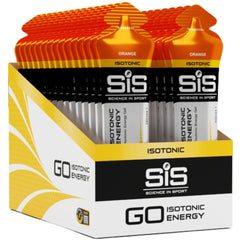
Beta Fuel was developed for exercise where you need 80 grams of carbohydrates per hour or more. This is the case for bike rides of two hours or longer at moderate to high intensity, marathon and half-marathon races, triathlons, and intense multi-day sports activities. For shorter sessions of less than an hour or at low intensity, the higher carbohydrate intake is often not necessary, and the GO range from Science in Sport with 22 grams per gel is sufficient.

The choice of Beta Fuel also depends on how your stomach reacts to high carbohydrate doses during exercise. Start with one product per hour and increase gradually. Anyone who reacts sensitively to high carbohydrate intakes with stomach discomfort should test Beta Fuel in training first before using it in a competition or race.

The Beta Fuel range: five product forms for every situation

Beta Fuel is available in various product forms that you can combine depending on the requirements of your training or competition.

Beta Fuel 80 Sachet

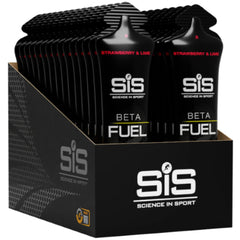
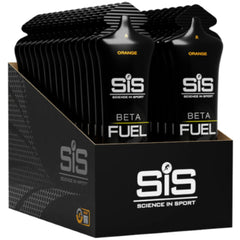
Delivers 80 grams of carbohydrates in powder form, mixed with 600 ml of water. This is the carbohydrate drink for anyone who wants to use a water bottle as a complete energy source per hour. No sodium, no caffeine. Available in Strawberry Lime, Orange, and Red Berry.

Beta Fuel Gel

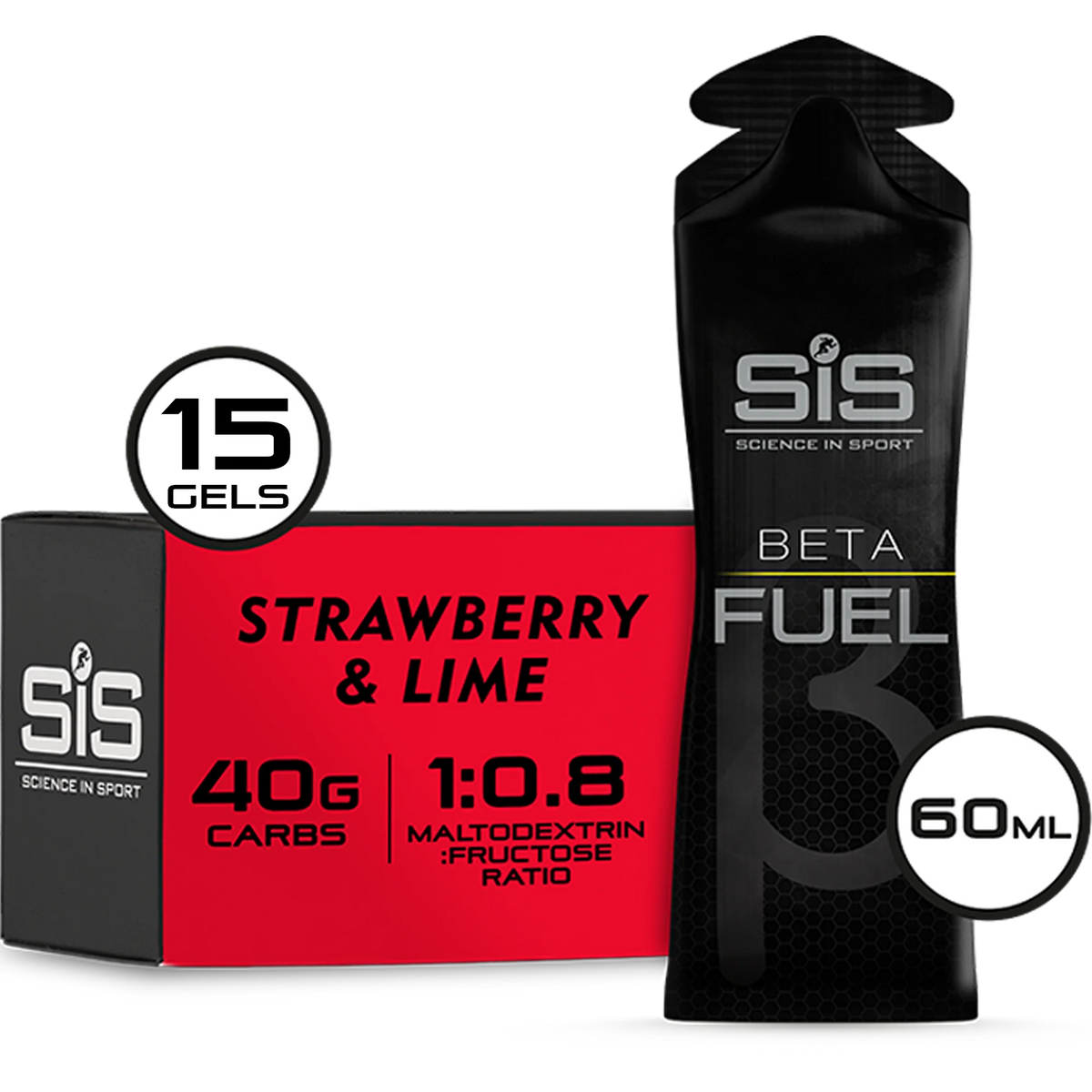
40 grams of carbohydrates in 60 ml. Naturally isotonic, no water needed. Compact for the jersey pocket or running belt. Can be combined with the 80 Sachet for hours with higher energy needs. Available in Strawberry Lime, Orange, and Neutral.

Beta Fuel Gel + Nootropics

Combines 40 grams of carbohydrates with 200 mg of caffeine, 250 mg of Cognizin Citicoline, 200 mg of L-Theanine, and 1 gram of L-Taurine. Designed for moments when mental focus and alertness are just as important as physical energy. Maximum of one per day due to the caffeine content.

Beta Fuel Electrolyte Gel

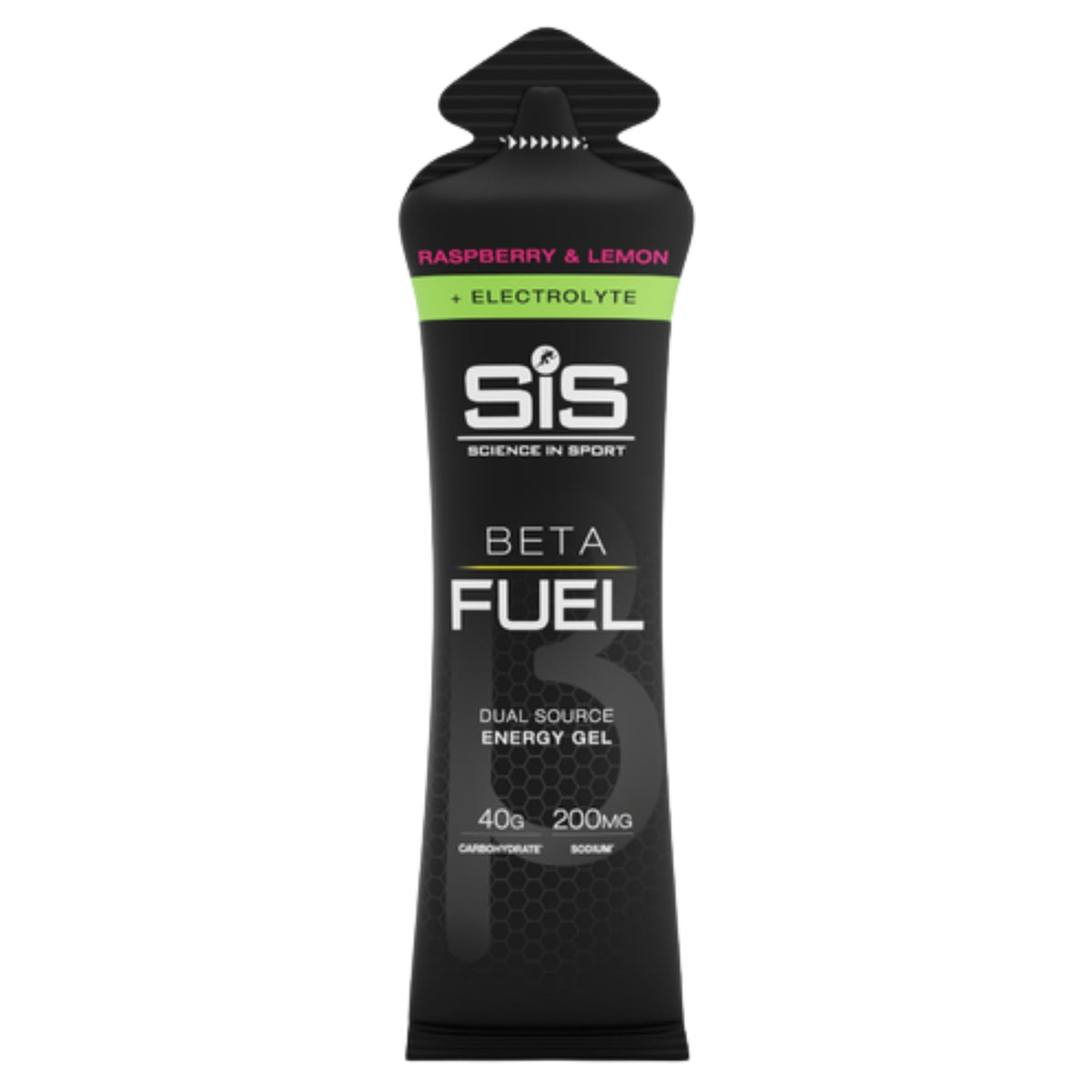
40 grams of carbohydrates with 200 mg of sodium per gel. Developed for sessions in warm weather or with heavy sweating, where sodium loss is an issue alongside energy supply. No caffeine, no daily upper limit.

Beta Fuel Energy Chew Bar

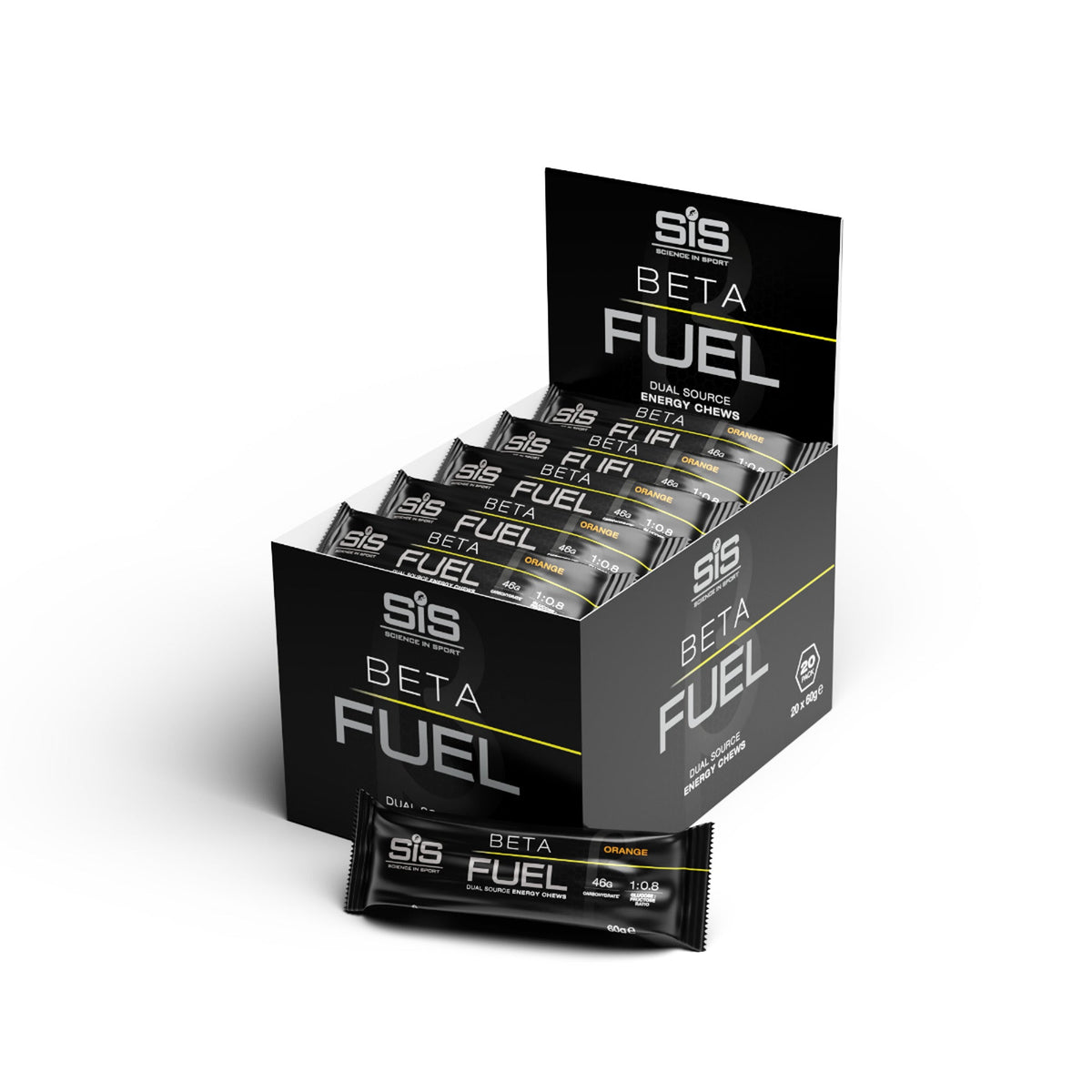
A 60-gram chew bar with 45 grams of carbohydrates, divided into six pieces. A solid alternative to the gel for athletes who want variety in texture or struggle to consistently take gels when fatigued.

How do you use Beta Fuel in your hourly strategy?

A good hourly strategy starts early. Do not wait until you feel tired or hungry, but start eating after the first half hour and maintain a steady rhythm after that. One Beta Fuel Gel every half hour provides 80 grams of carbohydrates per hour. A combination of one 80 Sachet in a water bottle and one gel brings you to 120 grams per hour, the upper limit of what the body can process. Use the Nootropics Gel in moments when concentration and decisions are crucial, such as a difficult descent, a long solo section, or the final phase of a competition. Use the Electrolyte Gel as a replacement for a regular gel on warm days or when sweating heavily.

Beta Fuel is not recommended for quiet base training at low intensity or sessions of less than an hour. In these moments, the GO Isotonic Gel or the GO Electrolyte Sports Drink is sufficient.

Beta Fuel for cyclists, runners, and triathletes

Beta Fuel was developed in collaboration with professional athletes and tested under competition conditions. Cyclists use it because a water bottle with 80 grams of carbohydrates and a gel in the back pocket form a complete hourly strategy without having to carry multiple bottles. Runners appreciate the compact gel for the running belt. Triathletes combine products per discipline: a sachet on the bike, gels while running.

For all target groups: Beta Fuel must be tested in training first before being used in a competition. A high carbohydrate intake during exercise requires the gastrointestinal tract to adapt.

Informed Sport certified and gluten-free

All Beta Fuel products are tested by Informed Sport for the WADA banned list on a batch-by-batch basis. This offers safety for athletes who are tested or consciously pay attention to the origin of their supplements. Beta Fuel is gluten-free. The Nootropics Gel is not suitable for those sensitive to caffeine and should not be combined with other caffeine sources until the daily upper limit is reached.

Need more advice?

Feel free to send us a message. We're happy to help and will answer your questions as soon as possible.
Tobian

Tobian

Customer service