




Collagen is everywhere: in powders, capsules, drinks, and even coffee whiteners. But what exactly is it, what types are there, and what should you look for when buying?
Here you will read what collagen is, what it is found in, what types there are, and how to choose a good collagen. Factual and without big promises.
Topics in this article
- What is collagen?
- The types: I, II and III
- What does collagen do in the body?
- What is collagen found in?
- Powder, capsules or hydrolysate?
- Which collagen is the best? What should you look for
- How do you use collagen?
- Frequently asked questions
- Conclusion
What is collagen?
Collagen is the most common protein in your body. It is a structural protein: a kind of building block and solid fibrous material that gives your skin, bones, cartilage, tendons, ligaments, and connective tissue shape and strength. You can think of it as the "glue" between your cells.
Your body produces collagen itself from amino acids, with glycine, proline, and hydroxyproline as the most important building blocks. From around the age of twenty-five, this natural production gradually decreases. This is the reason why collagen has become so popular as a supplement.
The types: I, II and III
There are probably twenty-eight types of collagen, but three come across you most often in practice:
- Type I: the most common type, found mainly in skin, bones, tendons, and ligaments.
- Type II: the type you find mainly in cartilage.
- Type III: found a lot in the skin and blood vessels, often together with type I.
On the label of a supplement, you usually see type I and III (from beef or fish, aimed at skin and general connective tissue) or type II (aimed at cartilage). So, which type you choose depends on what you want to use it for.
What does collagen do in the body?
Collagen is purely functional building material: It gives skin, joint cartilage, bones, and tendons structure. As you get older, your body produces less of it, and you notice this, among other things, in your skin.
It is important to be honest: For collagen itself, no health claims are currently approved in the EU. So we make no promises about it. What is allowed concerns vitamin C, which plays a role in collagen formation: Vitamin C contributes to normal collagen formation for the normal function of the skin, bones, cartilage, blood vessels, teeth, and gums. That is why collagen is often used together with vitamin C.
What is collagen found in?
Collagen only occurs in animal sources. In food, it is found mainly in parts that we eat very little of today: the connective tissue, skin, and bones of animals. Think of bone broth, chicken skin, or fish with skin.
As a supplement, collagen usually comes from:
- Beef (bovine): rich in type I and III, a widely used and affordable source.
- Fish (marine): mainly type I, with small peptides.
- Chicken: often the source for type II, aimed at cartilage.
There is no purely plant-based collagen: plants do not contain collagen. But there are vegan "Collagen Booster" products that deliver building blocks and vitamin C instead of collagen itself. See the entire collagen collection for the different sources.
Powder, capsules or hydrolysate?
You see collagen in several forms, which differ mainly in convenience and dosage.
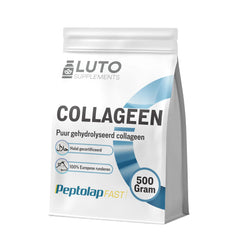
- Hydrolyzed collagen (collagen peptides): cut into small pieces, making it easy to dissolve and flavorless. Our hydrolyzed beef collagen (type I and III) is an example of this.
- Powder: practical if you want to stir a slightly higher dosage (for example 10 grams) into coffee, water, or a smoothie.
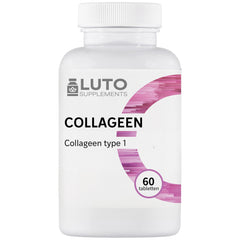
- Capsules: easy to take with you, but you need more of them to get a proper dose. There are also combinations, such as Collagen Plus Type 1.
Which collagen is the best? What should you look for
Type and origin
Choose the type that suits your goal: type I and III (beef or fish) for skin and general connective tissue, type II (chicken) for cartilage. Also check if the origin is clearly stated.

Hydrolyzed (peptides)
Hydrolyzed collagen dissolves better and is flavorless. For powder, this is convenient because you can stir it into a drink without it being noticeable.
Dosage per serving
Compare how many grams of collagen you get per serving, not just the price per container. Many powders work with a daily dose of around 10 grams; with capsules, the dose per piece is smaller.
As pure as possible
Look for a short ingredient list without unnecessary additives. A combination with vitamin C can be practical, as vitamin C contributes to normal collagen formation.
How do you use collagen?
Dissolve powder in something of your choice: water, coffee, tea, yogurt, or a smoothie. Hydrolyzed collagen dissolves most easily and does not clump quickly. Many take a fixed daily dose (often around 10 grams of powder) at a time they will not forget, for example at breakfast.
For collagen, it makes little difference whether you take it in the morning or evening; consistency is more important than the time. Are you pregnant, breastfeeding, do you have an illness, or are you taking medication? Then speak with your doctor first. A dietary supplement is no substitute for a varied diet.
Frequently asked questions about collagen
What is collagen naturally found in?
In animal sources such as connective tissue, skin, and bones. Think of bone broth or fish with skin. Plants do not contain collagen.
Which collagen is the best?
That depends on your goal: type I and III (beef or fish) for skin and connective tissue, type II (chicken) for cartilage. For powders, preferably choose a hydrolyzed form.
How much collagen per day?
Powders usually work with a daily dose of around 10 grams. Stick to the recommendation on the packaging.
What is the difference between collagen and hydrolyzed collagen?
Hydrolyzed collagen (peptides) is cut into small pieces, making it dissolve better and taste neutral. The source is the same.
Is there plant-based or vegan collagen?
No, collagen only comes from animal sources. Vegan "Collagen Booster" products deliver building blocks and vitamin C, not collagen itself.
When is the best time to take collagen?
The time makes little difference; choose a fixed moment that you can easily stick to. Consistency counts more than the time of day.
Conclusion
Collagen is the most important structural protein in your body, with type I, II, and III as the best-known forms and beef, fish, and chicken as the common sources. As a supplement, you choose according to your goal, the type, and then whether it is hydrolyzed, and pay attention to the dosage per serving.
Want to try collagen yourself? Compare the forms and sources in the collagen collection, and perhaps think of a source for vitamin C to go with it.

