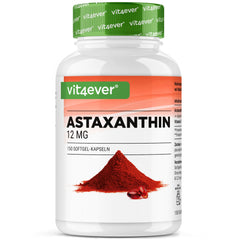
Astaxanthin by Vit4ever
With Astaxanthin by Vit4ever, you choose a clear formula centered around a strikingly red pigment from nature. Each capsule delivers 12 mg of astaxanthin, extracted from the microalga Haematococcus pluvialis under the name AstaGuard®. The substance is dissolved in extra virgin olive oil, and the capsule is plant-based. Ideal for anyone who wants to deliberately add this specific raw material to their own routine without unnecessary extras.
What astaxanthin actually is
Astaxanthin is a deep red to orange pigment from the carotenoid family, the same group that includes beta-carotene, lutein, and lycopene. You probably know the color better than you think: astaxanthin gives salmon, shrimp, lobster, and even flamingos their pink to red hue. The substance originally comes from microalgae. The richest natural source is the green alga Haematococcus pluvialis, also known as blood-red algae. This alga produces the pigment itself during difficult times, such as intense sunlight, drought, or cold: the red pigment then acts as a kind of built-in sunscreen for the algal cell. Your body does not produce astaxanthin itself. You only obtain it through food, such as fatty fish, or through a dietary supplement. What many do not know: the natural form from algae differs in molecular structure from the synthetic version, which is primarily used in feed for farmed salmon. Both forms are chemically related, but not identical in how the molecules are spatially arranged.
Why the astaxanthin is in olive oil
This is where the olive oil comes in. Astaxanthin is fat-soluble, so it dissolves in fat and not in water. This makes it easier for your body to absorb when a fat source is included. Vit4ever therefore dissolves the astaxanthin in extra virgin olive oil, directly in the capsule. So you do not have to find a fatty meal to go with it yourself, even if you take the capsule with food for smoother absorption. Furthermore, astaxanthin from algae is naturally already bound to fatty acids as a so-called ester. This fat-bound form fits well with the oily base of this product. In short: the oil is not a filler, but a carefully considered carrier for a fat-soluble substance. And extra virgin olive oil is a clean choice here; it is one of the purest plant oils available and also contains natural antioxidants such as polyphenols, which help preserve the quality of the oil over time.
Why you take this capsule every 2 days
This is where this product differs. Each capsule contains 12 mg of astaxanthin, a generous amount. Nevertheless, you only take it every two days. There is a reason for this. The European Food Safety Authority (EFSA) has assessed astaxanthin-rich oleoresins from Haematococcus pluvialis up to 8 mg per day for adults. By taking the capsule every two days, you average 6 mg per day and stay safely within this limit. That is also why it explicitly states that you should not combine it with other astaxanthin supplements on the same day: the EFSA limit applies to the total intake from all sources combined, not just from this one product. AstaGuard® is the certified raw material used for this purpose. This way, you know exactly what the source is and how to categorize it. Many who work with astaxanthin for the first time expect to take it daily like an ordinary vitamin. The two-day rhythm may therefore take some getting used to, but in practice, it is easy to remember by, for example, linking the capsule to a fixed weekly schedule.
How astaxanthin compares to other carotenoids
Astaxanthin is often mentioned in the same breath as beta-carotene and lutein, but the molecules differ in structure. Your body can convert beta-carotene into vitamin A, but not astaxanthin. You find lutein mainly in the yellow part of the eye, while astaxanthin is distributed more broadly through the body's fatty tissue. The difference is also in the intensity of the color: astaxanthin has one of the strongest color pigments among the known carotenoids, which partly explains why even small amounts produce a distinctly red hue in organisms that store it. For anyone comparing astaxanthin with other red or orange dietary supplements, this is a useful distinction: it is a substance of its own with its own chemical identity, not a variant of better-known carotenoids.
Pure astaxanthin from algae, generously dosed and in an olive oil base. For anyone who wants to consciously and carefully add this red carotenoid to their supplement cabinet, this is a well-thought-out option. You know exactly what you have in your hands: a certified algal source, an olive oil base, and nothing else unnecessary.