


What is CLA?
CLA stands for conjugated linoleic acid. It is a fatty acid from the omega-6 family that occurs naturally in meat and dairy products and is usually derived from safflower oil in supplements.
Bestsellers
View allBestsellers
View allCart
Your cart is empty

In stock. Delivery within 2-3 business days.
Not valid with discount codes.
Choose options
Not valid with discount codes.
Not valid with discount codes.
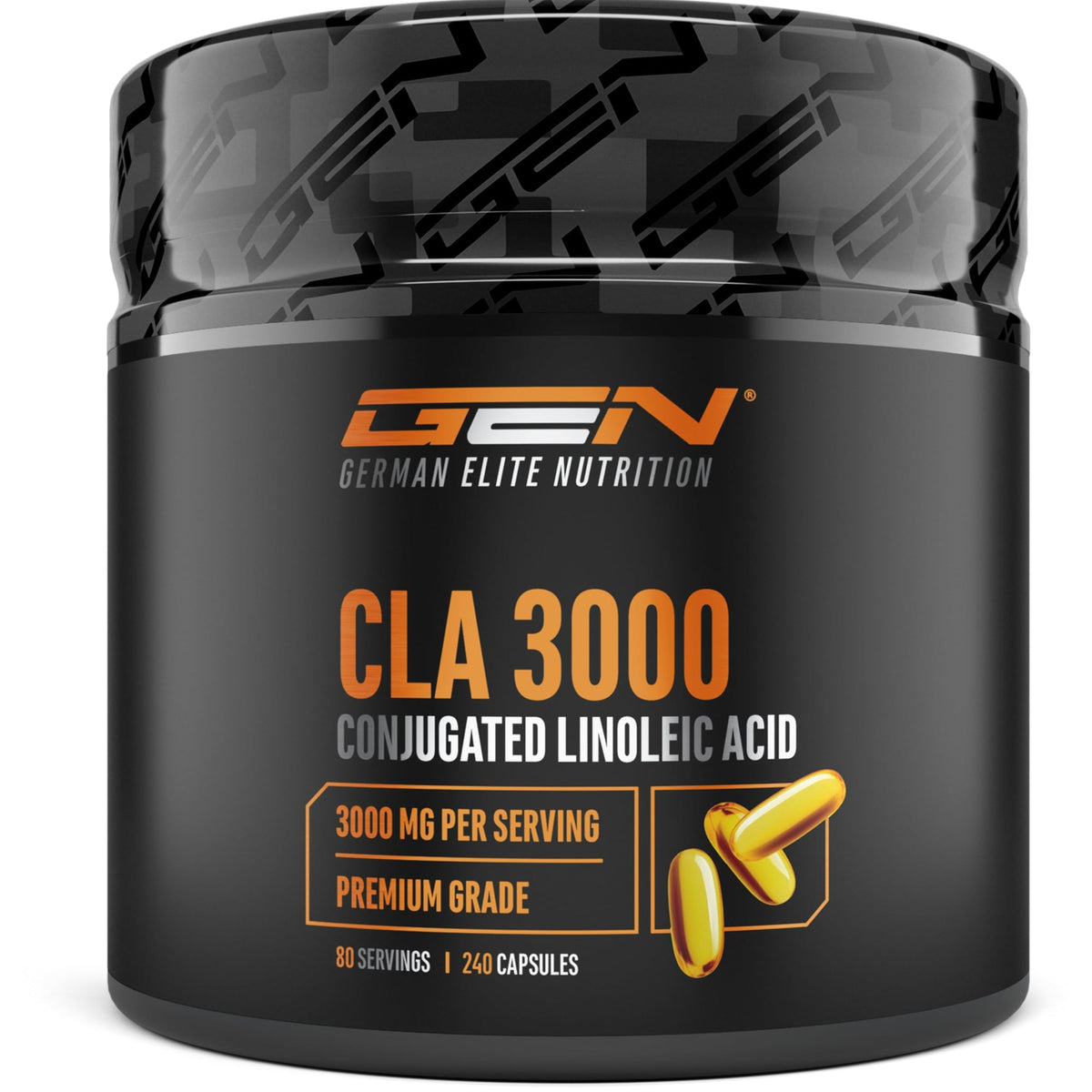
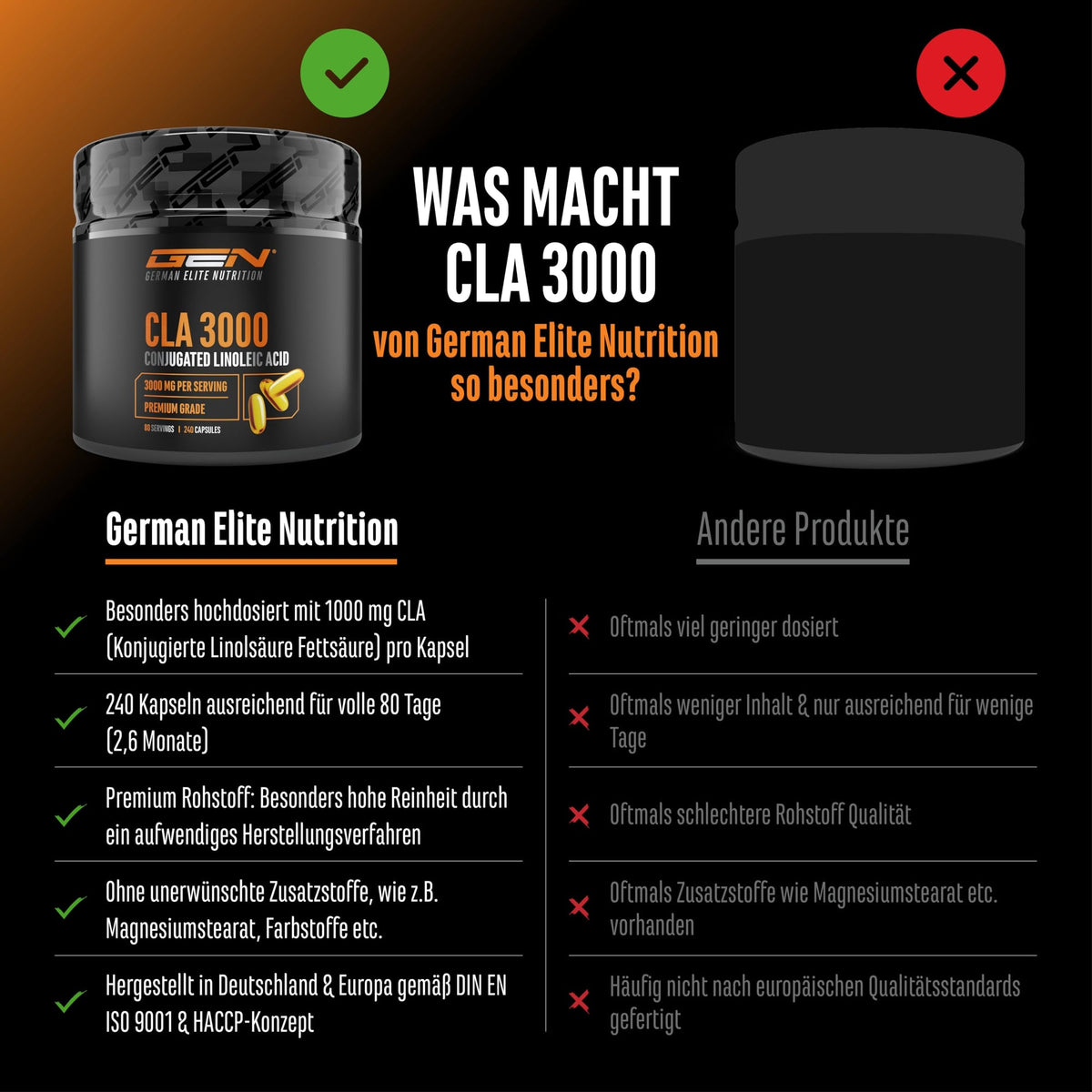
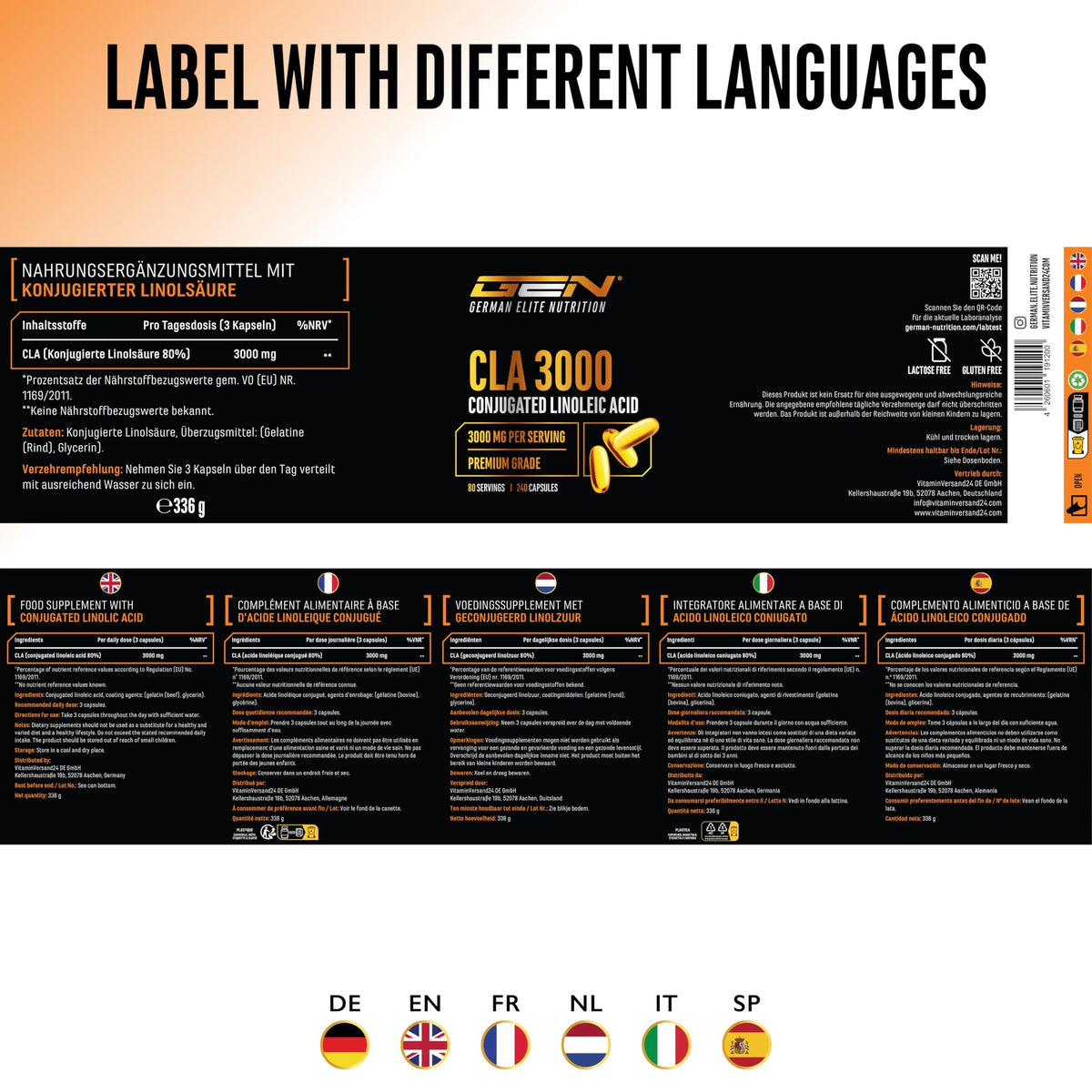
Are you looking for CLA in a high dosage per softgel? The CLA softgels from German Elite Nutrition deliver 1000 mg of conjugated linoleic acid per softgel. A daily serving of three softgels thus amounts to 3000 mg. CLA is a fatty acid from the omega-6 family, which is mostly obtained from plant-based safflower oil. One container contains 240 softgels. It is a product that athletes often take alongside their daily diet, in a fixed amount per day.
CLA stands for conjugated linoleic acid, which is conjugated linoleic acid. It is a fatty acid that naturally occurs in small amounts in meat and dairy products from ruminants, such as beef, cheese, and milk. In supplements, it is mostly obtained from safflower oil, a plant-based oil from the safflower plant. The safflower, also known as the safflower plant, is a plant from which the linoleic acid is concentrated into the CLA-rich oil in these softgels. The difference from regular linoleic acid lies in the structure of the molecule: In CLA, the double bonds are in a different position, and that is exactly what the word conjugated means. These shifted bonds make CLA its own group of fatty acids with different variants, called isomers. The oil extract in these softgels is standardized to 80% CLA isomers, including the well-known c9 and t11 forms. Among athletes, CLA is one of the better-known fatty acid supplements, which is often taken alongside the daily diet. Since the effect of CLA is not listed as an approved claim in the EU database, we only describe here what it is and how it is structured. Good to know: The amount of CLA you get from a normal diet is relatively low, especially if you eat little meat or dairy products. A supplement provides a fixed, significantly higher amount per day, so you know exactly what you are getting. This is the reason for many users to choose a softgel instead of getting it from their diet.
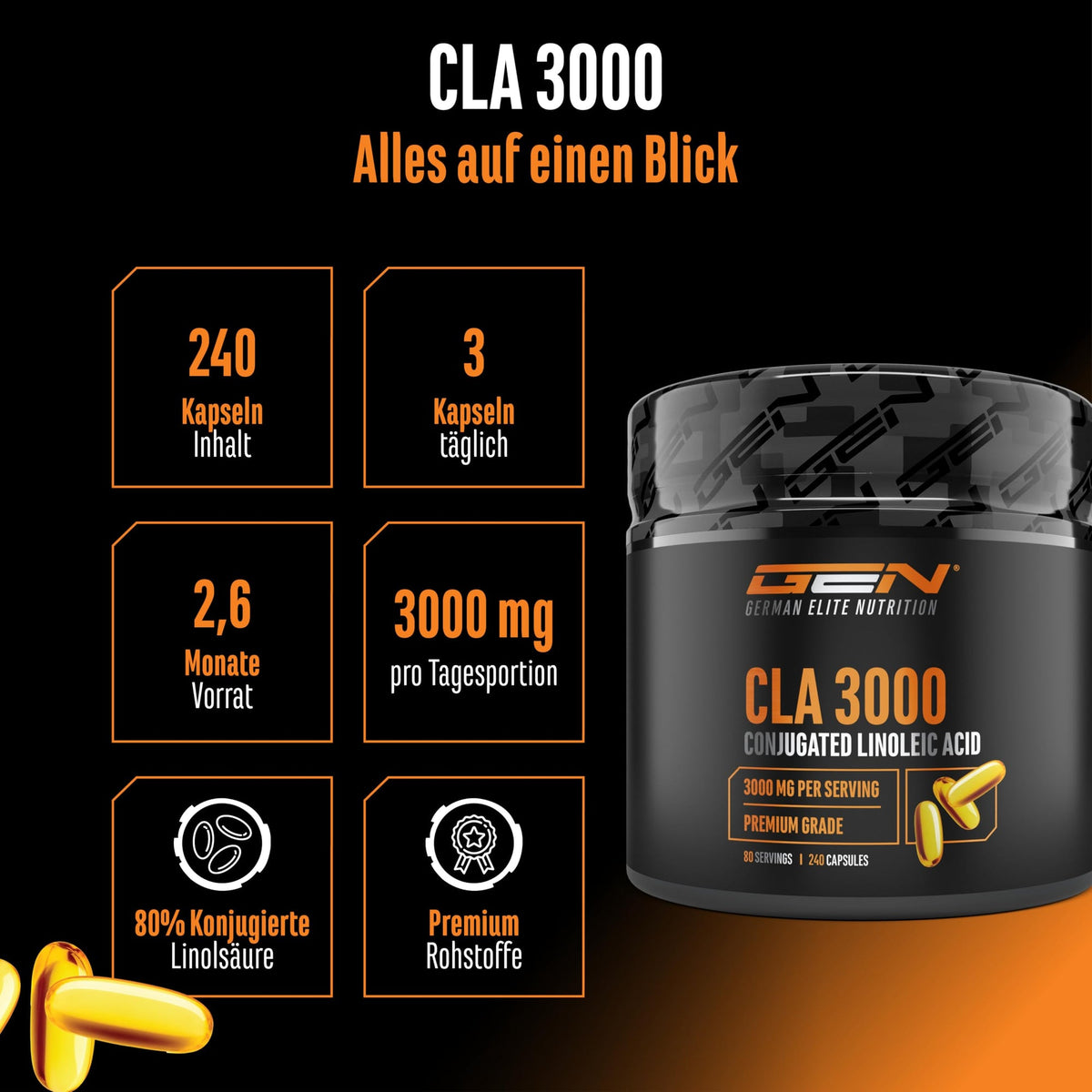
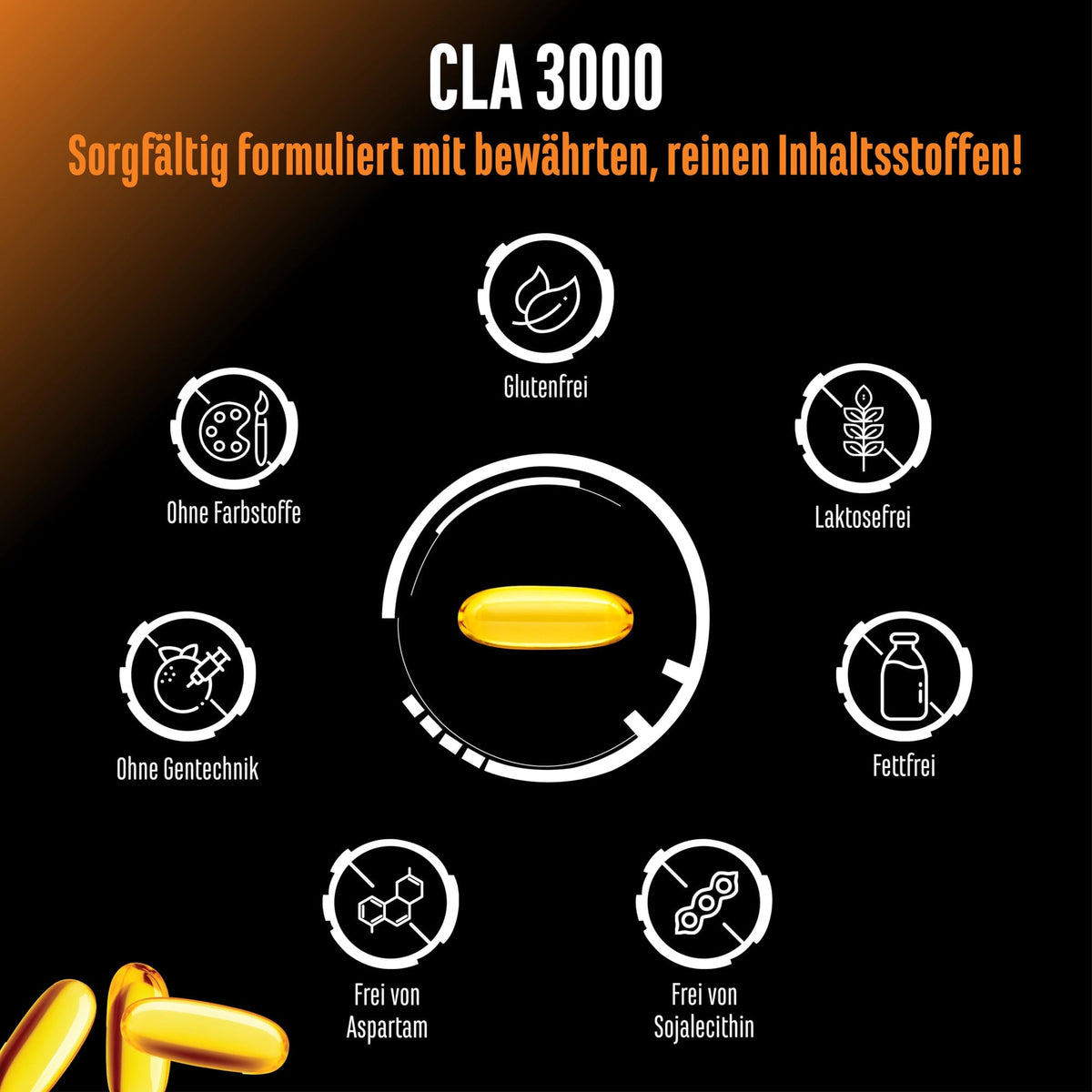
Each softgel contains 1000 mg of conjugated linoleic acid. Three softgels per day add up to 3000 mg of CLA, the amount you frequently encounter with this type of product. The softgels are gluten-free and lactose-free and contain no magnesium stearate, no colorings, and no flavorings. The softgels have a standard format that most people can swallow without any problems. You take them throughout the day with water, for example around meals. Many users take one with breakfast, one with lunch, and one with dinner, so that the intake is spread throughout the day. There is no fixed time; choose what fits into your routine. A container with 240 softgels lasts well over two months at three per day, so you have a long period with one container.
A softgel is a soft capsule in which the oil is enclosed. This is practical with a fatty acid that you would otherwise have to take as a liquid. Many people find a neutral softgel easier than a spoonful of oil: You don't have to measure anything and you don't have to mix anything under your food, and you don't taste the oil. The oil is also shielded in the shell, so you don't spill it and the amount per dose is always the same. This way you get a fixed amount per dose. In short, the softgel form makes the daily intake easier than loose safflower oil.
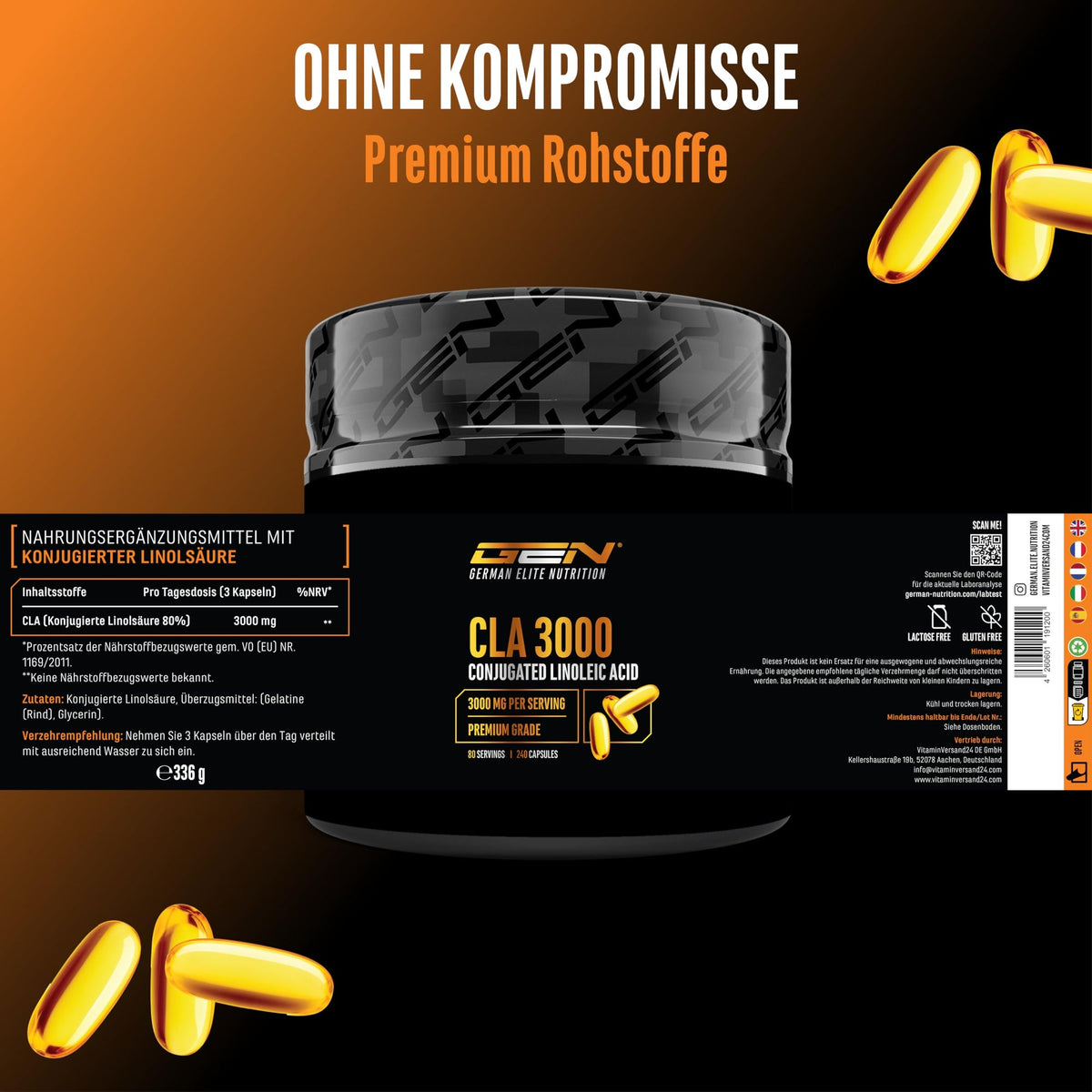
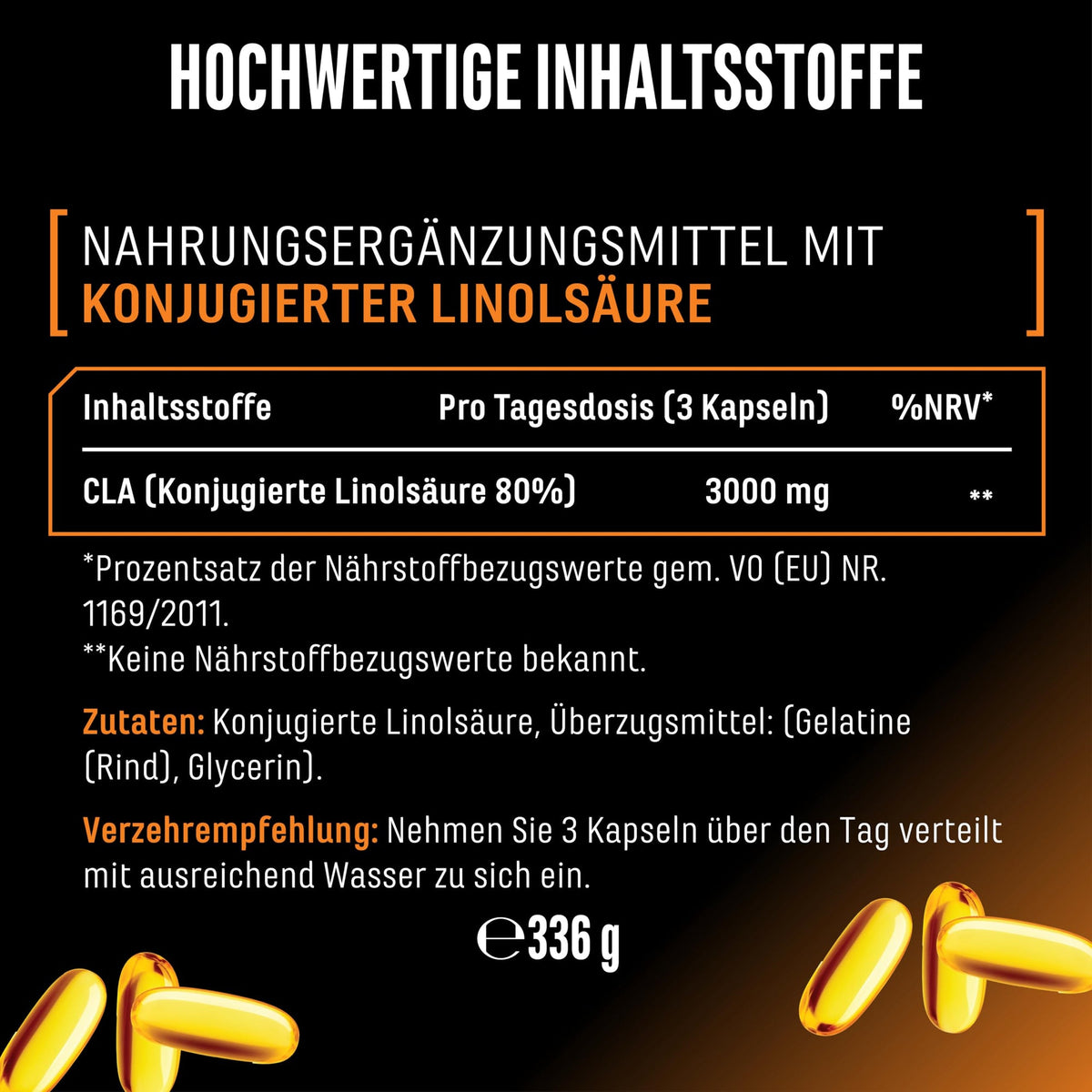
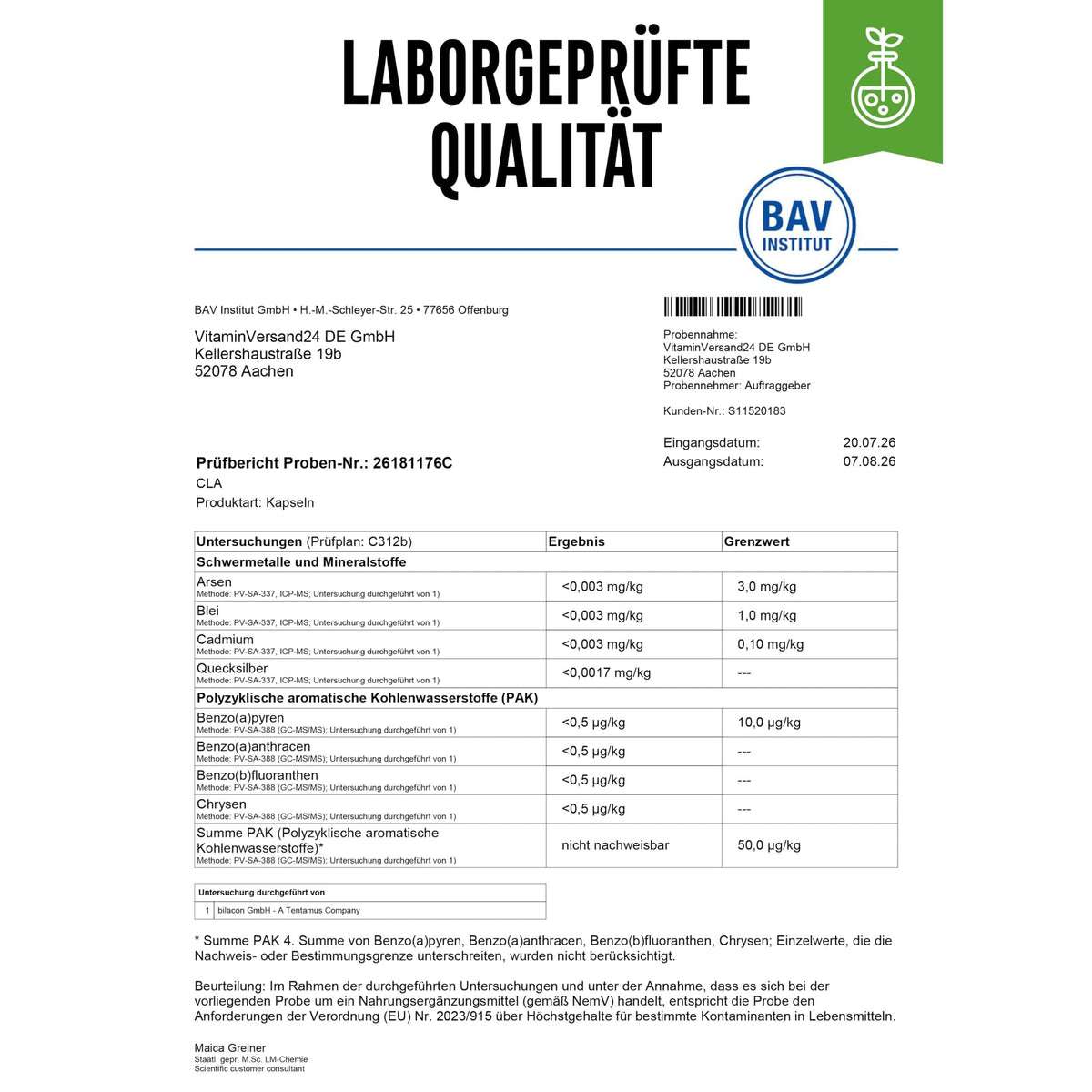
Important to know: The shell of the softgel consists of beef gelatin. This product is therefore not vegan and not vegetarian, even though the CLA fatty acid itself is of plant origin. In addition to the gelatin, the shell contains glycerin as a plasticizer, which keeps the softgel flexible. Gelatin is the most commonly used material for softgels because it encloses the oil well and shields it from air. Each batch is produced in Europe under HACCP and GMP standards and tested for, among other things, heavy metals and microbiological purity. These standards describe how a production site must regulate hygiene and control, so that every container has the same quality. In short, this is a high-dose CLA with 1000 mg per softgel and 3000 mg per daily serving, in a container with 240 pieces. Consider the beef gelatin in your choice, because this makes this product unsuitable if you want to avoid animal ingredients. Anyone who has no problem with it gets a clean, laboratory-tested form of CLA with a clear content per piece with these softgels.
Each softgel delivers 1000 mg of conjugated linoleic acid, standardized to 80% CLA isomers, including the c9 and t11 forms.
Three softgels contain a total of 3000 mg of CLA, which is the standard amount for this type of product.
Gluten-free, lactose-free, and free from magnesium stearate, colorings, or flavorings. Every batch is tested in Europe for heavy metals and microbiological purity.
A value bottle that lasts a good two months with three softgels per day.
CLA stands for conjugated linoleic acid. It is a fatty acid from the omega-6 family that occurs naturally in meat and dairy products and is usually derived from safflower oil in supplements.
The daily serving is three softgels, spread throughout the day with sufficient water. Together they provide 3000 mg of CLA. One container of 240 pieces thus lasts a good two months.
No. The softgel capsule is made from beef gelatin, so the product is not vegan or vegetarian. However, the CLA fatty acid itself is of plant origin.
The CLA in this product is derived from vegetable oil, usually safflower oil in this type of supplement. The extract is standardized to 80% CLA isomers.
There is no set time. Many people spread the three softgels throughout the day, for example around mealtimes. Choose what fits into your routine.
The difference lies in the structure of the molecule. In CLA, the double bonds are in a different position than in regular linoleic acid, and that is what the word conjugated indicates. Otherwise, like linoleic acid, it is a fatty acid from the omega-6 family.