Gepuffertes Vitamin C Pulver LUTO Supplements – Nahrungsergänzungsmittel | kaufen in Deutschland und Österreich
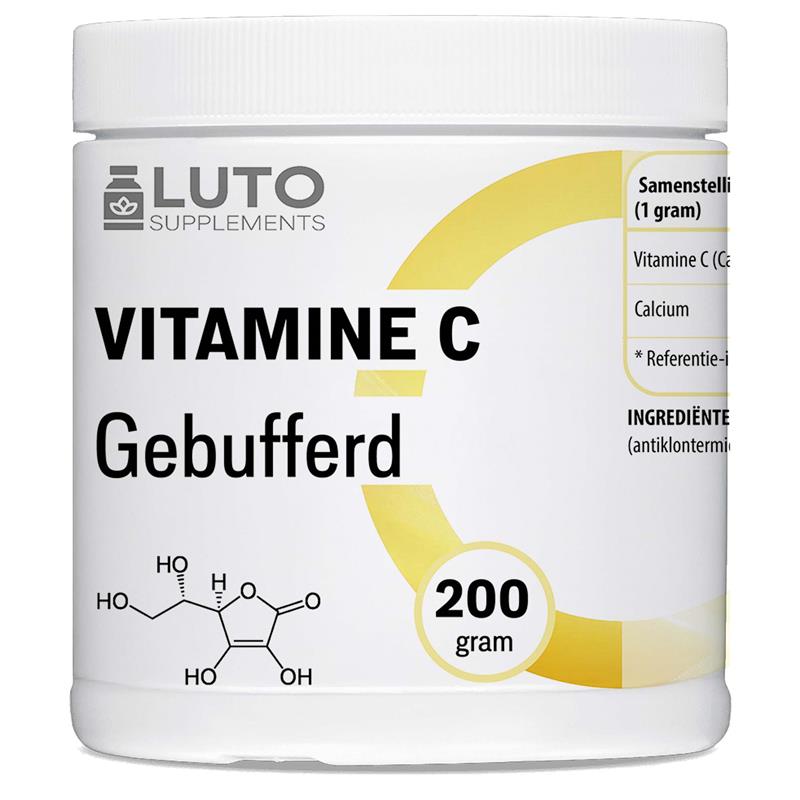
Gepuffertes Vitamin C Pulver LUTO Supplements – Produktverpackung Vorderseite
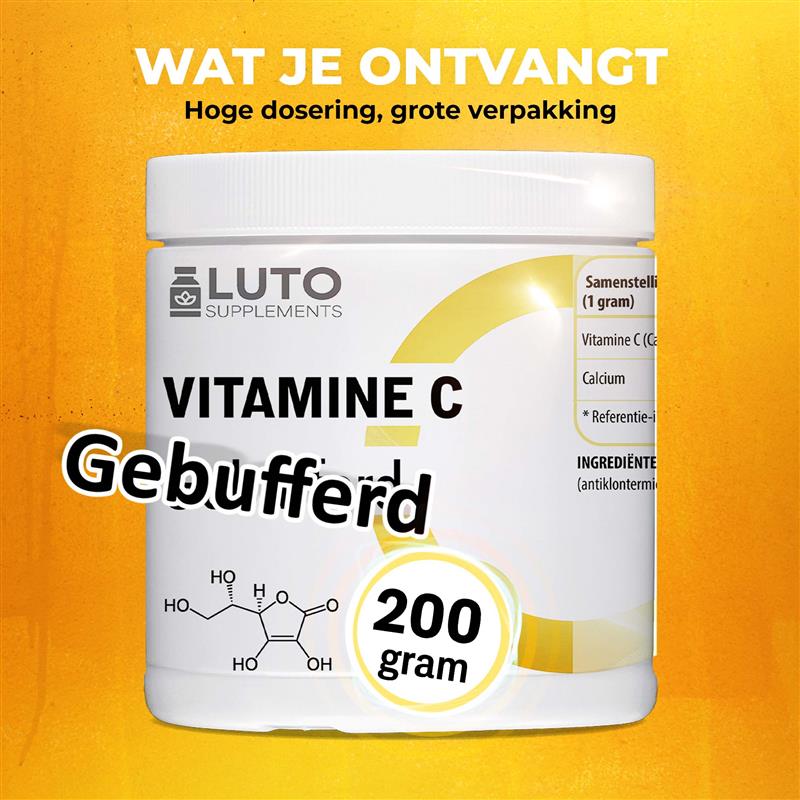
Gepuffertes Vitamin C Pulver LUTO Supplements – Verpackung mit Etikett und Produktinformationen
Gepuffertes Vitamin C Pulver LUTO Supplements – Nährwerte und Inhaltsstoffe auf der Verpackung
Gepuffertes Vitamin C Pulver LUTO Supplements – Produkt aus der Nähe

LUTO Supplements

Buffered Vitamin C Powder | 200 Grams | LUTO Supplements

Actieprijs€14,90

In stock. Delivery within 2-3 business days.

Volume discount

Not valid with discount codes.

Specificaties

Categorie Vitamins
Artikelcode luto-051
Barcode 8721055250579
Houdbaar tot Op aanvraag
Batchnummer Op aanvraag
Inhoud 200 grams
Aantal doseringen 200

Buffered Vitamin C Powder That Is Gentle on the Stomach

Are you looking for a vitamin C powder that is gentle on your stomach? Then this buffered version from LUTO Supplements is worth a look. You get 873 mg of vitamin C in the form of calcium L-ascorbate per gram of powder. This is a buffered form, which means that the vitamin C is bound to calcium. This makes the powder less acidic than regular ascorbic acid. This is practical if your stomach is sensitive to acidic dietary supplements.

What Makes Calcium L-Ascorbate Different from Regular Vitamin C

Most vitamin C dietary supplements contain pure ascorbic acid. This works perfectly, but it is quite acidic. Not everyone tolerates it well, especially not in higher doses. This is where calcium L-ascorbate comes in. In this form, the ascorbic acid is linked to calcium, making the pH level almost neutral. Your stomach therefore notices it significantly less. The vitamin C content itself works in your body in the same way as regular ascorbic acid. The difference lies purely in tolerability. By the way, the 97 mg of calcium you get per gram is not a full calcium dose. The calcium is included primarily as a component of this buffered compound.

How Your Body Absorbs Vitamin C

What many people do not know: Your body cannot absorb an unlimited amount of vitamin C from a single dose. Absorption takes place via special transporters in your intestine, and these become saturated at a certain point. At lower doses, your body absorbs a higher percentage than at very high doses. At 873 mg per gram, you are well above the basic requirement. Do you want to get the most out of your vitamin C powder? Then spread out the intake throughout the day. Calcium contributes to normal energy metabolism, and vitamin C itself releases electrons in the aqueous parts of your body. In short: It works as a kind of redox molecule that is needed, among other things, for the formation of collagen and certain neurotransmitters.

A Powder Form Has Its Advantages

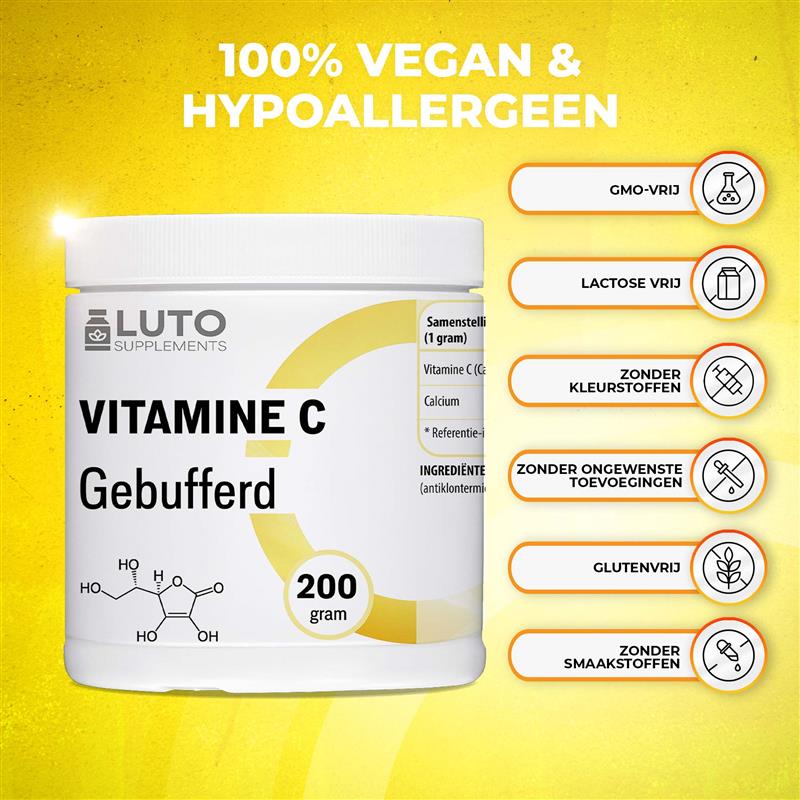
A capsule or tablet always contains a fixed amount. With a powder, you decide how much you take. Half a teaspoon is approximately one gram, but you can just as easily take a quarter of a spoon if you want a lower dose. The powder dissolves in water or juice. The taste is quite neutral due to the buffering, without that sharp acidity you know from pure ascorbic acid. This vitamin C powder is vegan, gluten-free, lactose-free, and GMO-free. It contains no flavorings or fillers, only an anti-caking agent based on hydroxypropyl methylcellulose. This is a plant-based substance that prevents the powder from clumping in the container.

Are 873 mg of Vitamin C per Serving a Lot

The recommended daily amount of vitamin C for adults is around 75–80 mg. With 873 mg per gram, you are therefore well above that. This may sound like overkill, but in the world of dietary supplements, doses between 250 and 1000 mg are quite common. Calcium is needed to maintain normal bones, and although the amount of calcium in this product is modest, every contribution counts toward your total intake. The container holds 200 grams of powder. At one gram per day, you therefore have a good six months' supply of this buffered vitamin C.

This vitamin C powder from LUTO Supplements is an uncomplicated product. One ingredient as the active substance, buffered for a gentler experience on the stomach, and flexible to dose. No bells and whistles, just vitamin C in a form that your body tolerates well.

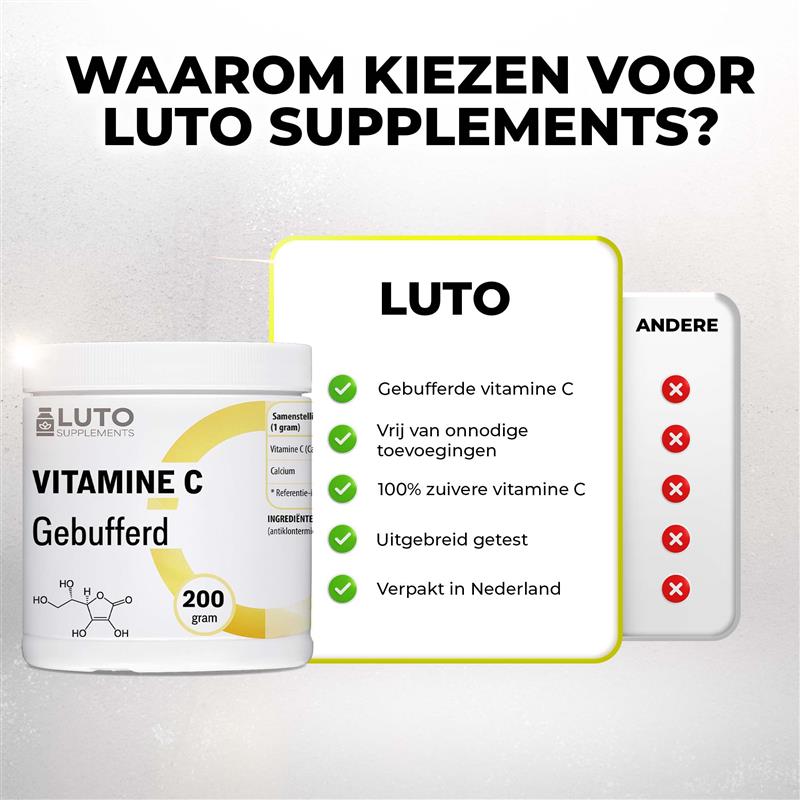
Why buffered Vitamin C powder from LUTO Supplements?

873 mg of vitamin C per gram as calcium L-ascorbate

Each gram of powder provides 873 mg of buffered vitamin C. This is more than ten times the recommended daily intake and is within the range typical for high-dose dietary supplements.

Buffered and therefore gentle on the stomach

Pure ascorbic acid has a low pH and can cause stomach discomfort at higher doses. In this powder, the vitamin C is bound to calcium, making the acidity level almost neutral. This makes it suitable for people who are sensitive to acidic dietary supplements.
Self-dose with half a teaspoon

With a powder, you determine exactly how much you take. Half a teaspoon is approximately one gram, but you can just as easily take less if you want a lower dose. With 200 grams in the container, you have a good six months' supply if you use one gram daily.

No fillers, flavorings or colorings

This powder contains only calcium L-ascorbate and a plant-based anti-caking agent. No flavorings, no colorings, no fillers. The product is vegan, gluten-free, lactose-free and GMO-free.

Frequently Asked Questions

What exactly is buffered vitamin C?

Buffered vitamin C is ascorbic acid bonded to a mineral—in this case, calcium. This bonding makes the pH almost neutral, so the powder is significantly less acidic than pure ascorbic acid. Your body absorbs the vitamin C in the same way. The only difference is how your stomach reacts to it.

When is the best time to take vitamin C powder?

With a meal, because your stomach is already active and the powder mixes well with your food. Want to get the most out of your dose? Then split the intake into two times a day, for example, with breakfast and dinner. Your intestines absorb smaller portions of vitamin C more efficiently than one large dose at a time.

Is Vitamin C Powder Better Than Capsules or Tablets?

Not necessarily better, but more flexible. With a powder, you decide how much to take. Want a half dose? Then use a quarter teaspoon. With a capsule or tablet, you are tied to a fixed amount. In addition, powder usually contains fewer excipients than tablets, which require binders and coatings to maintain their shape.

Isn't powder impractical compared to a capsule?

It takes some getting used to, but in practice, it's not that bad. You add half a teaspoon to a glass of water or juice, stir briefly, and drink it. That might take you twenty seconds longer than swallowing a capsule. In return, you have complete control over the dosage yourself, and this buffered powder has a fairly neutral taste, without the sharp acidity of regular ascorbic acid.

Why doesn't my body absorb all the vitamin C at once?

Vitamin C is absorbed through special transporters in your intestine, known as SVCT transporters. These have a maximum capacity. At lower doses, your body absorbs a higher percentage than at very high doses because the transporters are not yet saturated. What is not absorbed leaves your body through your urine. That is why it may be a good idea to spread out your intake throughout the day instead of taking it all at once.

What is the difference between calcium L-ascorbate and regular ascorbic acid?

In both cases, the active ingredient is vitamin C. The difference lies in the acidity. Pure ascorbic acid has a low pH and can cause stomach discomfort at higher doses. In calcium L-ascorbate, the ascorbic acid is bound to calcium, making the pH almost neutral. Your stomach therefore experiences significantly less of it. In terms of absorption and effectiveness in your body, the two forms are comparable.