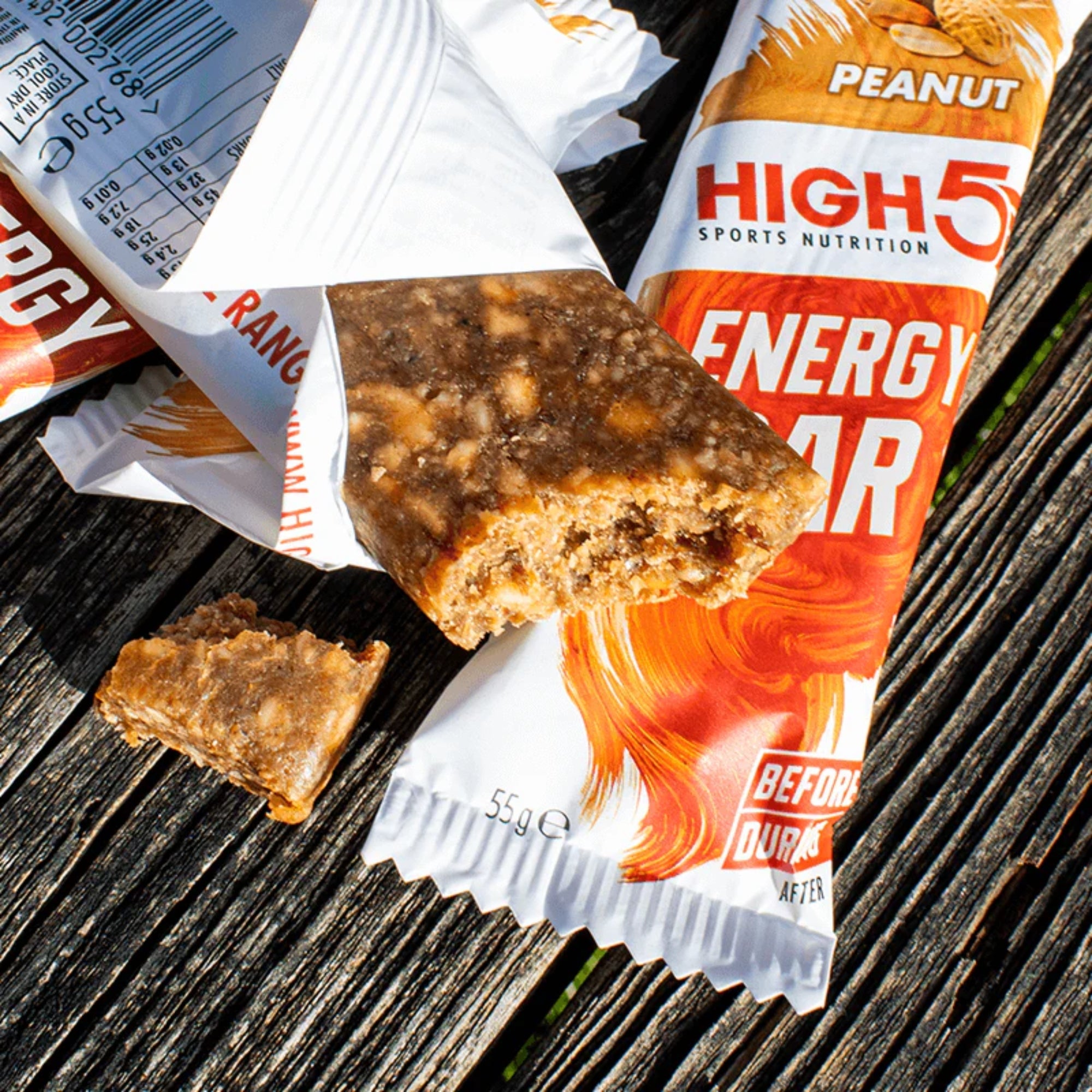
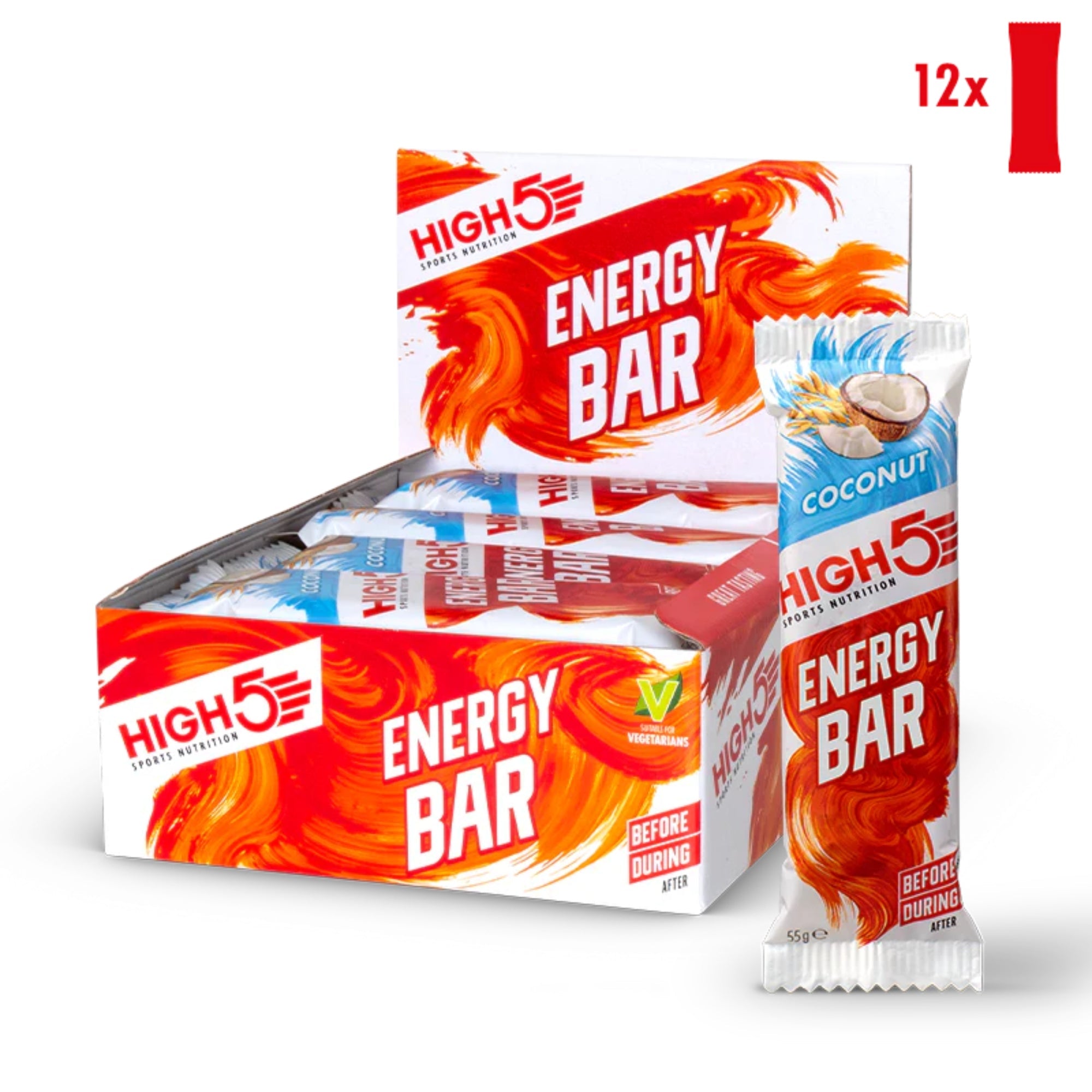
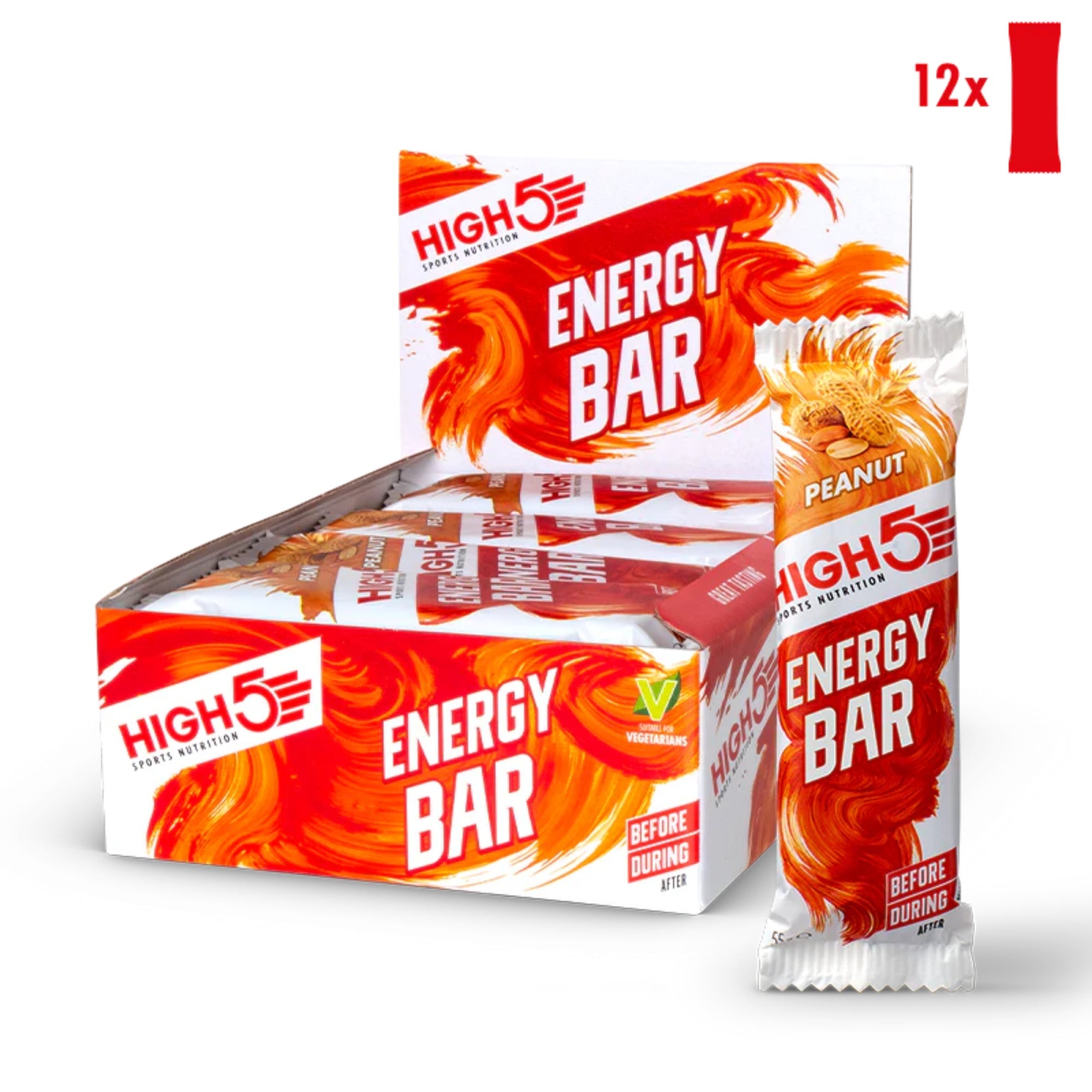
Peanut high5 Energy Bar 55 grEnergierepen
HIGH5 Energy Bar Energieriegel – Produktverpackung Vorderseite
HIGH5 Energy Bar Energieriegel – Verpackung mit Etikett und Produktinformationen
HIGH5 Energy Bar Energieriegel – Nährwerte und Inhaltsstoffe auf der Verpackung
HIGH5 Energy Bar Energieriegel – Produkt aus der Nähe
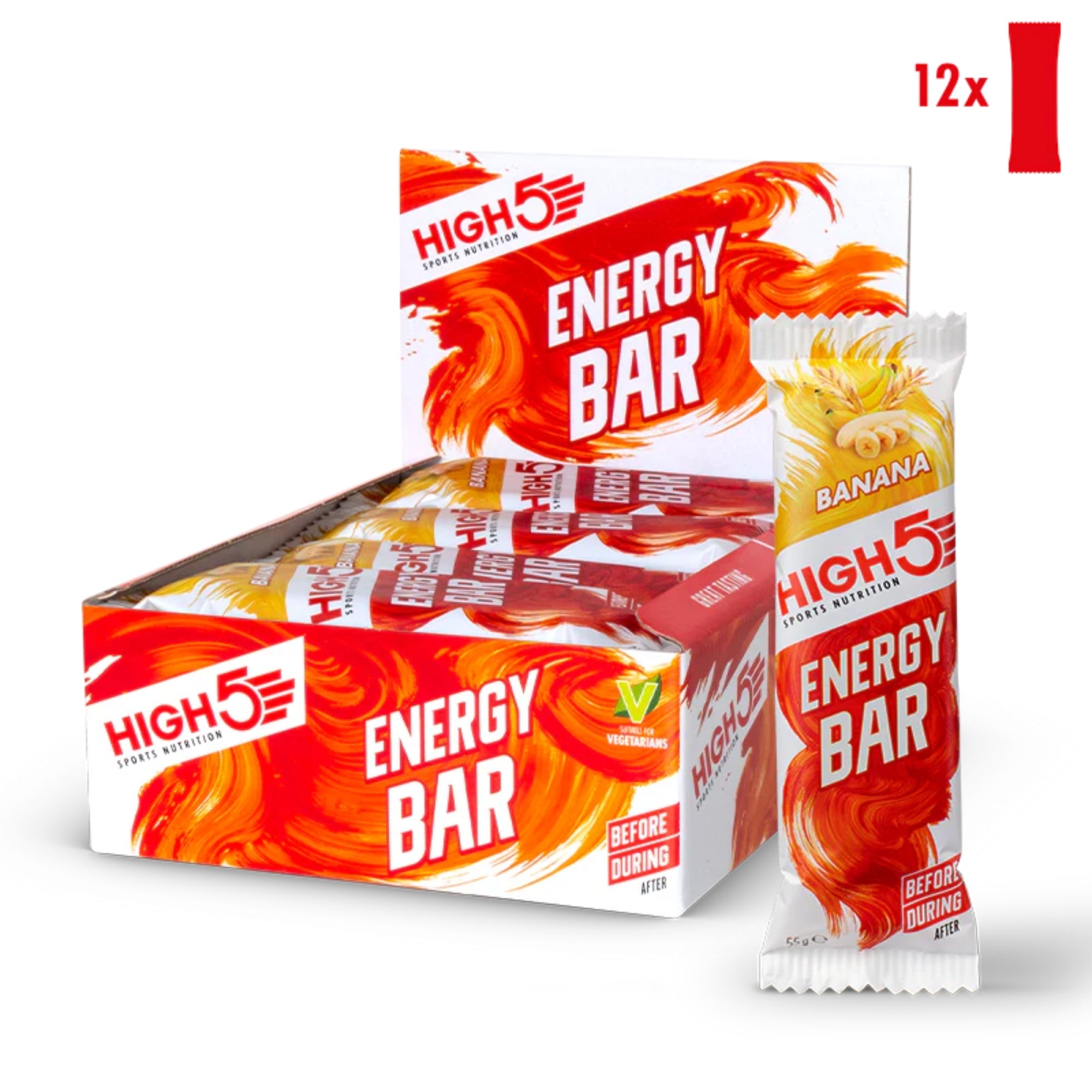
Banana high5 Energy Bar 55 grEnergierepen
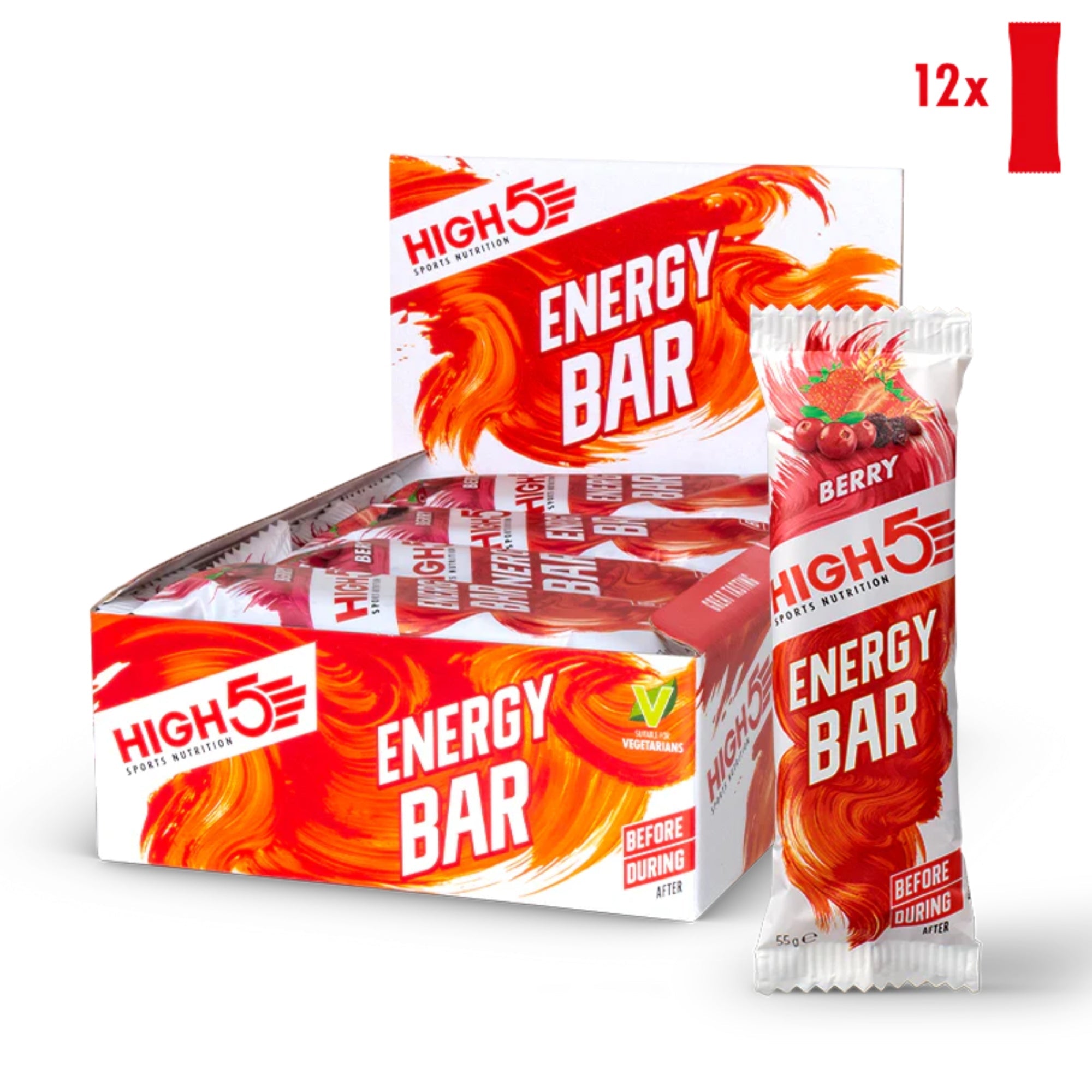
Berry high5 Energy Bar 55 grEnergierepen
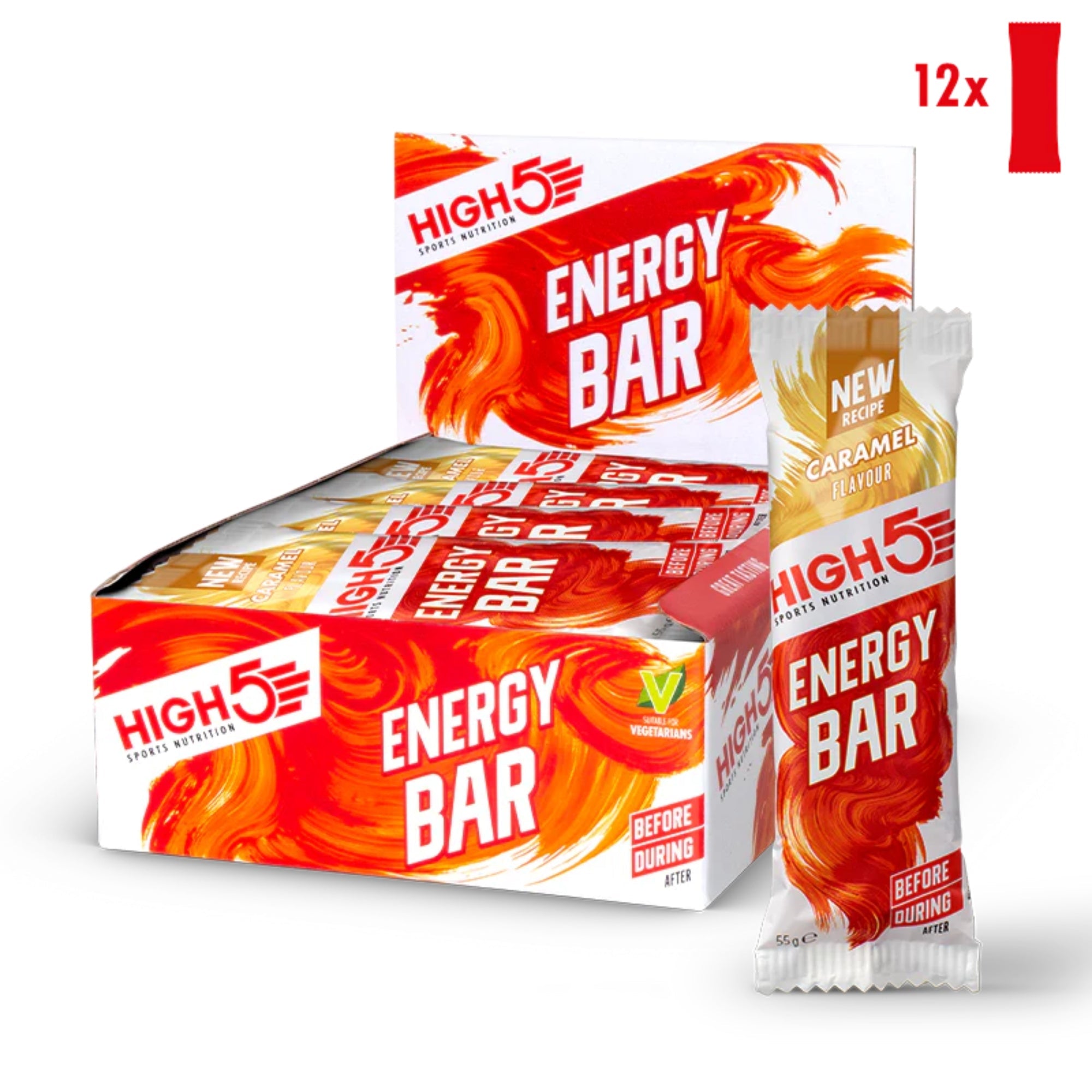
Caramel high5 Energy Bar 55 grEnergierepen
Coconut high5 Energy Bar 55 grEnergierepen

High5

HIGH5 Energy Bar | 12 x 55 g | HIGH5

Sale price€4,90 Regular price€19,90

Out of stock.

Volume discount

Not valid with discount codes.

Taste:

Taste

Specifications

Brand High5
Item code high5-001
Barcode 5027492006230
Best before On request
Batch number On request
Content 12 bars
Number of servings 12

HIGH5 Energy Bar, energy from fruit and oats

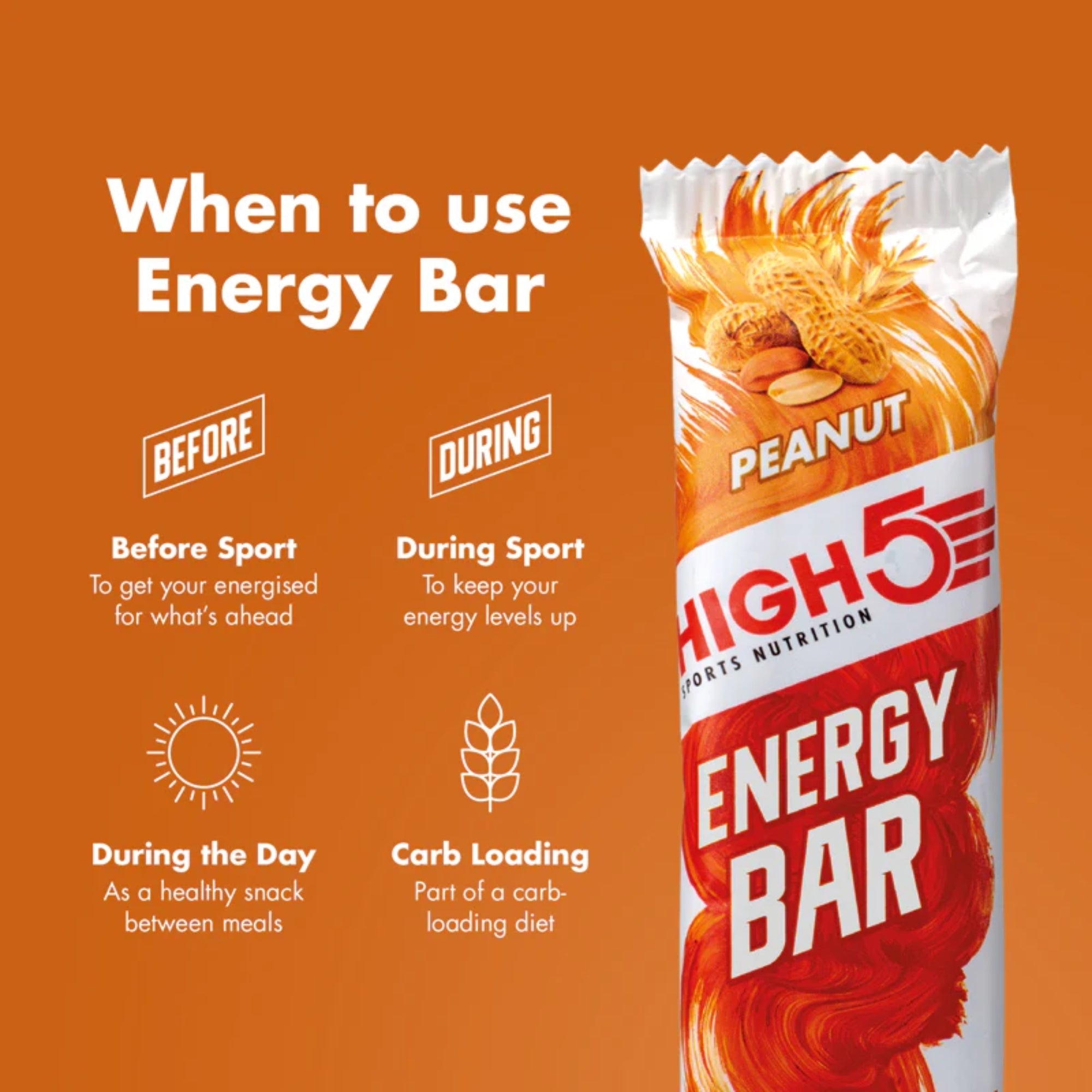
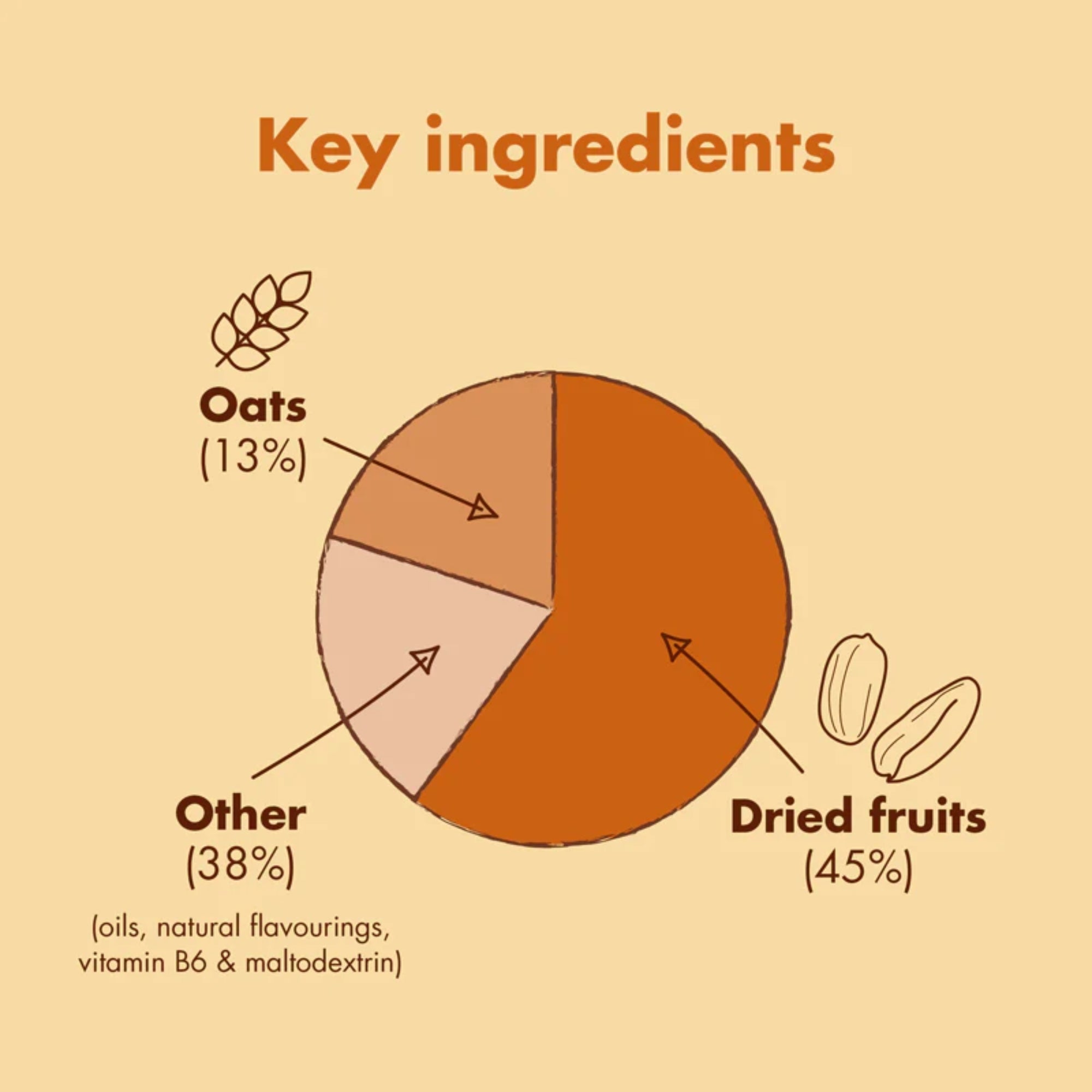
A soft energy bar that you can chew even with cold fingers or one hand on the handlebars. The 55-gram bar is made primarily of dried fruit and oats and provides around 35 grams of carbohydrates. For cyclists, runners, and hikers who prefer taking real food instead of just gels.

What 35 grams of carbohydrates per bar can do for you

Depending on the flavor, the dried fruit makes up 44 to 61 percent of the bar and provides fast-acting sugar. The oats provide starch, which is released more evenly: energy for now and for the hour after. At around 180 kcal per bar, this is a high carbohydrate density; many bars in this category only offer 20 to 30 grams. Each bar also contains vitamin B6, which contributes to normal energy metabolism and helps reduce tiredness and fatigue. And the math is easy: one bar per hour covers the standard recommendation of 30 grams of carbohydrates per hour for leisurely cycling or hiking.

Bar or gel, which do you choose when

The rule of thumb: solid food during the first, easier part of your activity, gels and sports drinks when the intensity increases. Chewing and digesting requires more effort the harder you push yourself. An energy bar has one advantage that gels do not: it makes you feel full and prevents that empty, gnawing feeling on long tours. If you want to aim for 60 to 90 grams of carbohydrates per hour, combine the bar with a gel or a sports drink.

Five vegan flavors, all without coating

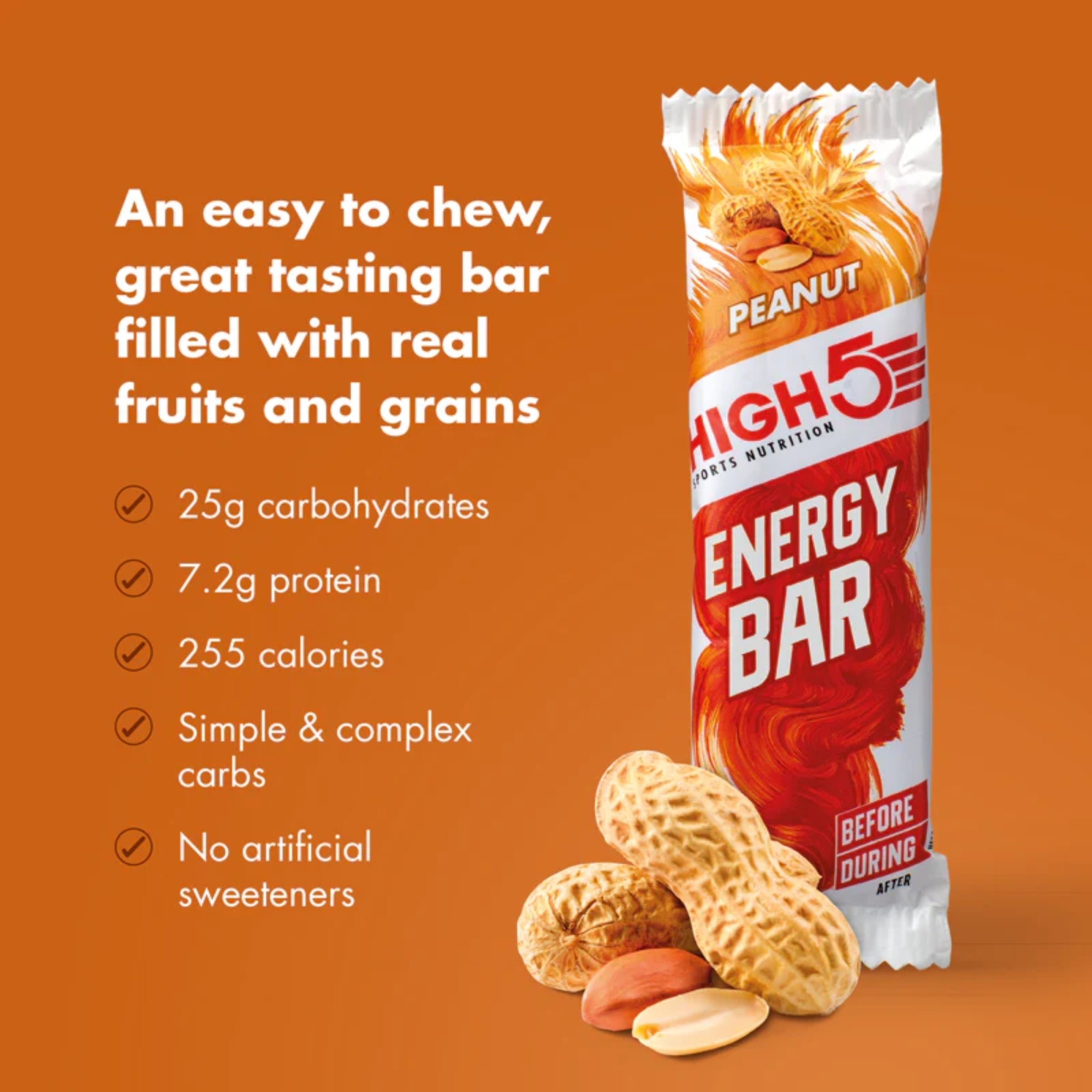
Banana, Berry, Caramel, Coconut, and Peanut are all suitable for vegans. None of the bars have a chocolate coating, and that is intentional: nothing will melt in your back pocket in summer, and the bar stays soft in cold weather. Peanut is the exception: 38 percent peanuts, 25 grams of carbohydrates, and more protein and fat, making it more of a nut bar. The bar also contains no palm oil or artificial colors or preservatives. Also great to take along outside of training: hikers and commuters don't need a refrigerator for it.

HIGH5 has been making sports nutrition for endurance athletes since 1994, and this energy bar has been part of standard equipment for years, from enduro stages to polar expeditions. Simply put: fruit, oats, and a wrapper around it.

Why the HIGH5 Energy Bar?

Around 35 g of carbohydrates per bar

Carbohydrates from fruit and oats, a mix of fast and slower sources. One bar per hour provides a large portion of the 30 to 60 g of carbohydrates per hour commonly recommended in endurance nutrition.

Soft, easy-to-chew texture

Slightly moist fruit and oat-based bar that is easy to chew even under strain and in cool weather.

Solid food for long rides

Good foundation for the first half of long workouts, ideal to combine with gels and sports drinks for the more intense phases.

Five vegan flavors in a box of twelve bars

Banana, Berry, Caramel, Coconut and Peanut are all five suitable for vegans. Variety prevents taste fatigue on long tours and multi-day events.

Frequently Asked Questions

When should I eat an energy bar while cycling or running?

Plan the first bar early, not just when you start to feel empty. On workouts lasting over an hour, you will easily meet the recommended 30 to 60 g of carbohydrates per hour with about one bar per hour. Solid food takes a little longer to digest, so it pays to start early.

What is the difference between an energy bar and an energy gel?

A bar is solid food: It keeps you full, provides more sustained energy, and is pleasant during the first part of a long workout. A gel is concentrated and quick-acting, practical during intense moments or in the final phase when chewing becomes difficult. Most endurance athletes use both together rather than one or the other.
Which is better, an energy bar or a gel?

Both have their place. An energy bar provides solid food and a longer-lasting feeling of fullness, ideal for steadier sections and the first half of long rides. Gels are quicker to consume and are better suited for intense phases. Many endurance athletes combine both.

Is the bar easy to eat during sports?

Yes. The consistency is soft and slightly moist, making it easy to chew and swallow even during exertion. On a bike ride, it is easiest to eat during steady sections, while when running, you should plan to eat it at a more relaxed point.

What carbohydrates are in the bar?

The carbohydrates come from dried fruit and oats, so from a mixture of fast and slightly slower sources. Per 55 g bar, that is around 35 g of carbohydrates. This provides energy that carries more evenly over the distance.

How does the Peanut bar differ from the other flavors?

The Peanut bar is more of a nut bar than a fruit bar: 38 percent peanuts, 25 grams of carbohydrates, 7 grams of protein, and 13 grams of fat per bar (255 kcal). In contrast, the fruit bars provide 35 to 39 grams of carbohydrates and are low in fat. Choose the fruit bars for maximum energy per bite during exercise, or the Peanut bar if you want a more filling, savory snack.