OstroVit Inositol Powder
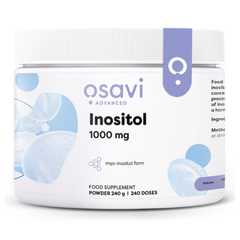
Are you looking for pure inositol without capsules, fillers, or flavorings? This OstroVit bag contains 200 grams of myo-inositol powder and nothing else. Take one heaped scoop of 1 gram daily and dissolve it in a glass of water or juice. The powder tastes slightly sweet, about half as sweet as sugar, so you will barely notice it in your drink.
What myo-inositol actually is
Inositol used to be called vitamin B8, but that is not entirely accurate. Your body produces it itself from glucose, mainly in the kidneys. Chemically, it is a sugar alcohol with a ring-shaped structure made of six carbon atoms. There are nine variants that differ slightly in structure. Myo-inositol is by far the most common form in your body and in your food. You can find it in citrus fruits, beans, whole grains, and nuts, among other things. An average Western diet provides about one gram per day. Your body also produces a few more grams per day. How much you get from your food varies greatly from person to person. Those who eat a lot of oranges, melon, legumes, and whole-grain bread get more. Those who mainly eat processed products get less. Supplement manufacturers usually extract myo-inositol from corn or rice, in which it naturally occurs bound as phytic acid. After purification, a white, crystalline powder remains—exactly what is in this bag.
What inositol does in your cells
Many people wonder exactly what inositol does. In short: It is a building block of your cell walls and part of the messaging system within your cells. Myo-inositol is found in phospholipids (fat-like molecules) in the membrane of every cell. When a hormone or messenger molecule knocks on the outside of a cell, a piece of one of these phospholipids is cut off. This piece, inositol trisphosphate, then passes the message to the inside of the cell. Scientists call this a second messenger. You can compare it to a doorbell: The hormone presses the button, and inositol makes sure the signal is heard inside. Because almost every tissue works this way, myo-inositol is found in high concentrations in your brain, ovaries, liver, and muscles.
Why powder is more convenient than capsules
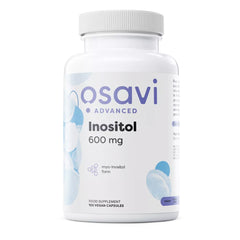
Studies on myo-inositol often use doses of 2 to 4 grams per day. With 500 mg capsules, that quickly means four to eight capsules per day. With powder, you simply scoop out what you need. OstroVit recommends 1 gram per day, one heaped scoop of 1 ml. This is an introductory dose, comparable to what you get from food. If you want to deviate from this, consult a doctor or orthomolecular therapist. Another advantage of powder is its purity: no capsule shell, no magnesium stearate, and no fillers. Myo-inositol dissolves quickly in cold water and remains stable in warm drinks like tea. You can also mix it into a smoothie or quark.
With 200 grams and a serving of 1 gram per day, one bag will last you a good six months. A simple product for anyone who knows what they want to use inositol for and simply wants the pure powder without any fuss.