Kalium mit Fruits & Greens LUTO Supplements – Nahrungsergänzungsmittel | kaufen in Deutschland und Österreich
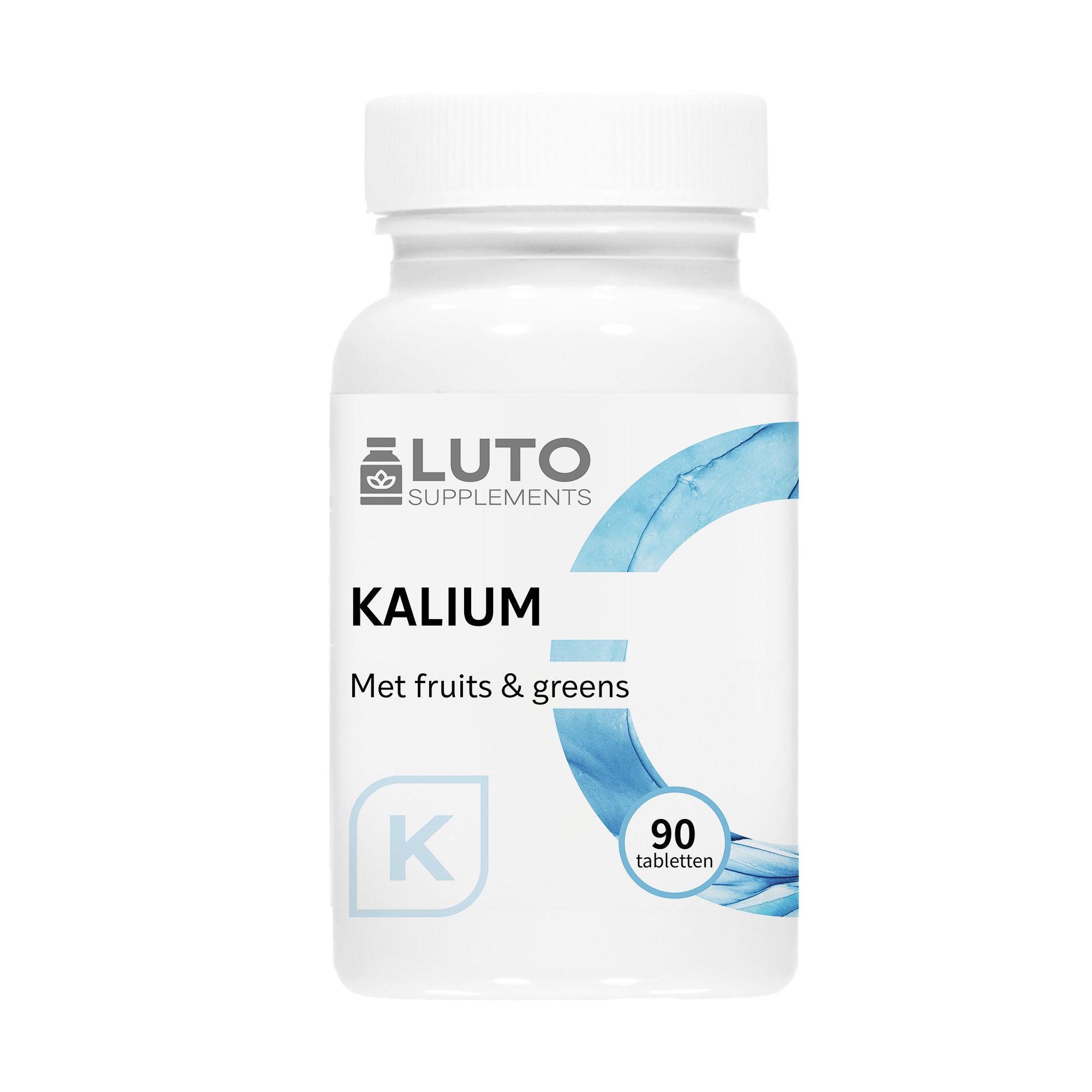
Kalium mit Fruits & Greens LUTO Supplements – Produktverpackung Vorderseite
Kalium mit Fruits & Greens LUTO Supplements – Verpackung mit Etikett und Produktinformationen
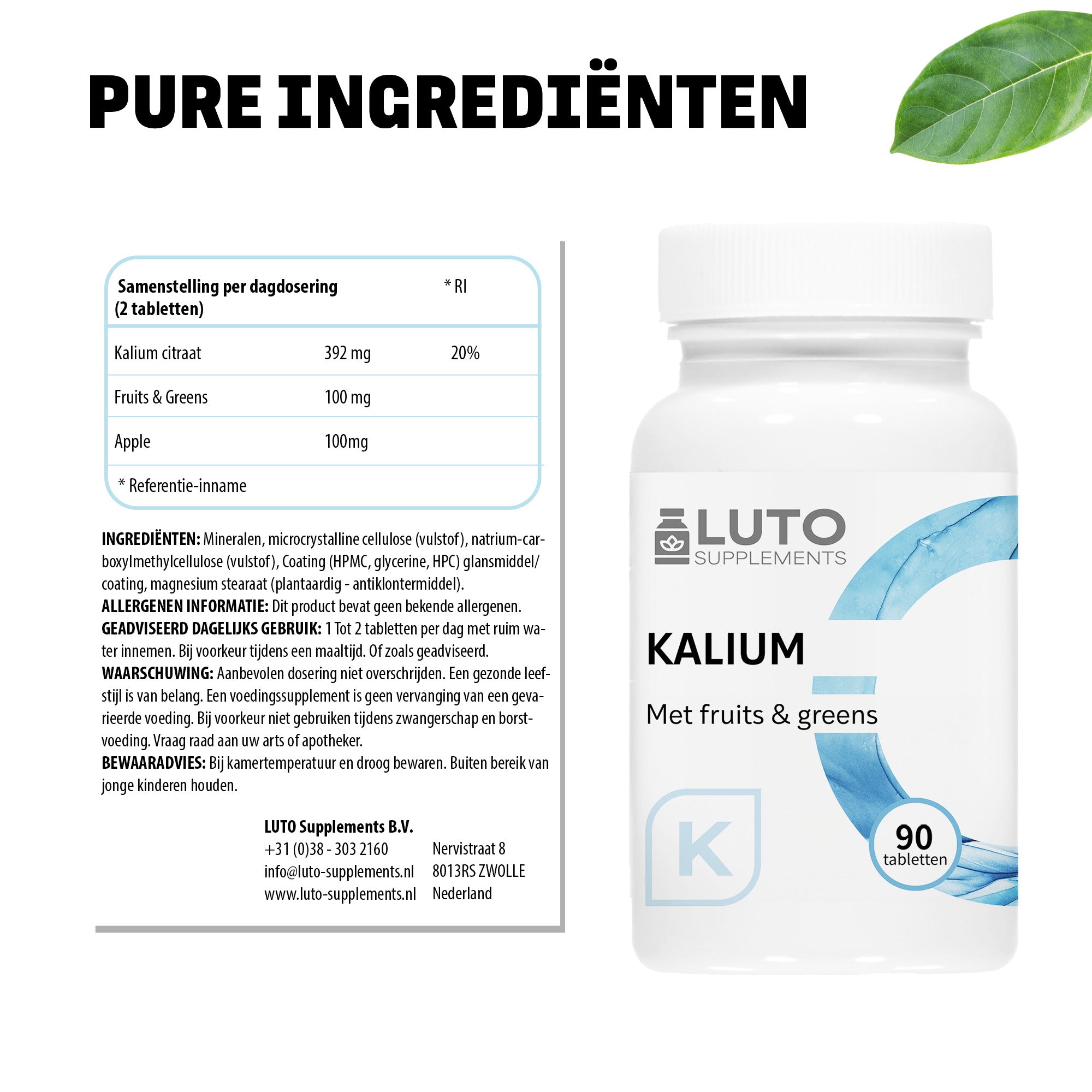
Kalium mit Fruits & Greens LUTO Supplements – Nährwerte und Inhaltsstoffe auf der Verpackung
Kalium mit Fruits & Greens LUTO Supplements – Produkt aus der Nähe

LUTO Supplements

Potassium with Fruits & Greens | 90 Tablets | LUTO Supplements

Actieprijs€11,90

In stock. Delivery within 2-3 business days.

Volume discount

Not valid with discount codes.

Specificaties

Categorie Minerals
Artikelcode luto-021
Barcode 8720865080857
Houdbaar tot Op aanvraag
Batchnummer Op aanvraag
Inhoud 90 tablets
Aantal doseringen 45

Potassium Tablets with Fruits and Greens Complex

Do you get enough potassium? Most people don't think about it. Yet potassium is a mineral that your body needs every day. This supplement from LUTO Supplements provides 196 mg of potassium per tablet, derived from potassium citrate. A highly absorbable form, complemented by a small blend of plant and fruit extracts. The bottle contains 90 tablets with a plant-based coating.

What potassium does in your body

Potassium is a mineral with a whole range of functions. It contributes to normal muscle function and normal nervous system function. This may sound abstract, but it boils down to this: every time you contract a muscle or a nerve transmits a signal, potassium plays a role. It works together with sodium via a kind of cellular pump system, the Na+/K+-ATPase. This pump transports potassium into your cells and sodium out. It is this difference in charge that makes your nerves and muscles work. Furthermore, potassium helps maintain normal blood pressure. For athletes, people who sweat a lot, or anyone who consciously pays attention to minerals, this is relevant information.

Why potassium citrate as a form

Not every potassium preparation is the same. The difference lies in the compound to which the potassium is linked. In this product, it is citrate, the salt of citric acid. Potassium citrate dissolves well and is quickly absorbed by your gastrointestinal tract. What many people do not know: the citrate part is converted into bicarbonate in your body. This has a slightly alkalizing effect. Compared to, for example, potassium chloride, this form therefore brings something extra. You get 196 mg of potassium per tablet. If you take two tablets, you get 392 mg. This is a solid supplement, but it does not cover your entire daily requirement. This is around 3500 mg, and you get most of it from foods such as bananas, potatoes, spinach, and beans. This supplement is therefore exactly that: a supplement to your diet.

The Fruits & Greens blend in perspective

In addition to potassium citrate, each tablet contains 50 mg of a Fruits & Greens blend and 50 mg of apple powder. This sounds attractive, and the idea behind it is clear: add plant substances for additional phytonutrients. But let's be honest, 50 mg is a modest amount. Compare it to a piece of apple or a leaf of spinach. The actual properties of this tablet lie in the potassium itself. The blend is a nice addition, but do not expect miracles from it. You should know this before you buy it.

Are 196 mg of potassium per tablet enough

Many people wonder how much potassium they actually need. The daily requirement is considerable, around 3500 mg. Most of it comes from your diet. Potassium preparations are deliberately dosed lower, and there is a reason for this. Too much potassium at once can irritate your stomach, and in people with kidney problems or taking certain medications, the potassium level can rise too high. The 196 mg per tablet from LUTO is therefore a conscious decision. You supplement what you are missing without entering the danger zone. Do you take ACE inhibitors, potassium-sparing diuretics, or do you have impaired kidney function? Then speak to your doctor first.

Potassium is not a spectacular supplement. It does not attract as much attention as magnesium or vitamin D. But it is a mineral that quietly does its work, from your muscles to your nerves to your blood pressure. These tablets from LUTO Supplements provide you with a reliable, highly absorbable dose of potassium citrate in a simple form. No unnecessary extras, just a solid mineral supplement.

Why potassium with Fruits & Greens from LUTO Supplements?

Potassium citrate as a highly absorbable source

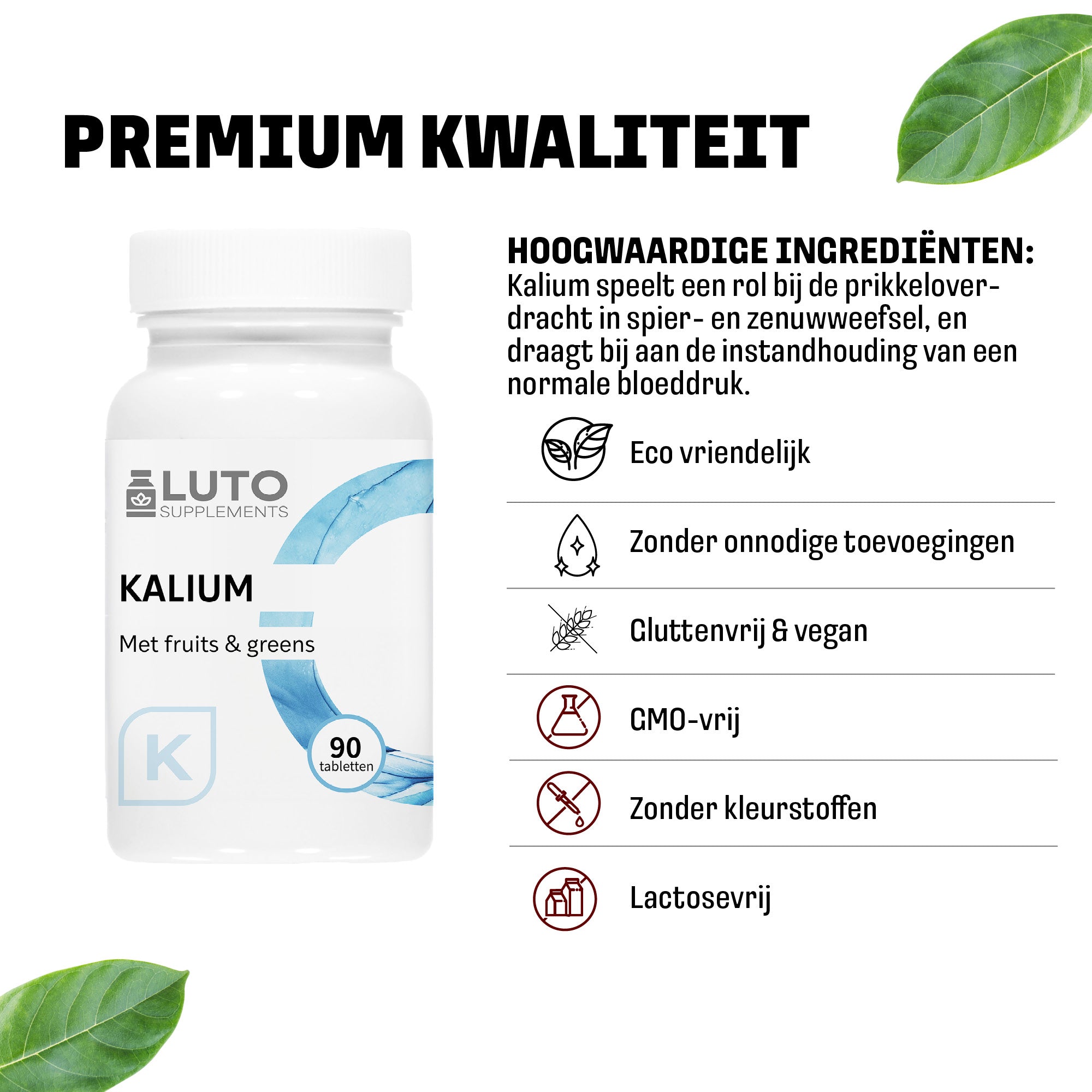
The potassium in this tablet comes from potassium citrate, a form that dissolves well and is rapidly absorbed. The citrate component is converted into bicarbonate in your body, which has a slightly alkalizing effect. This makes it gentler on the stomach than, for example, potassium chloride.

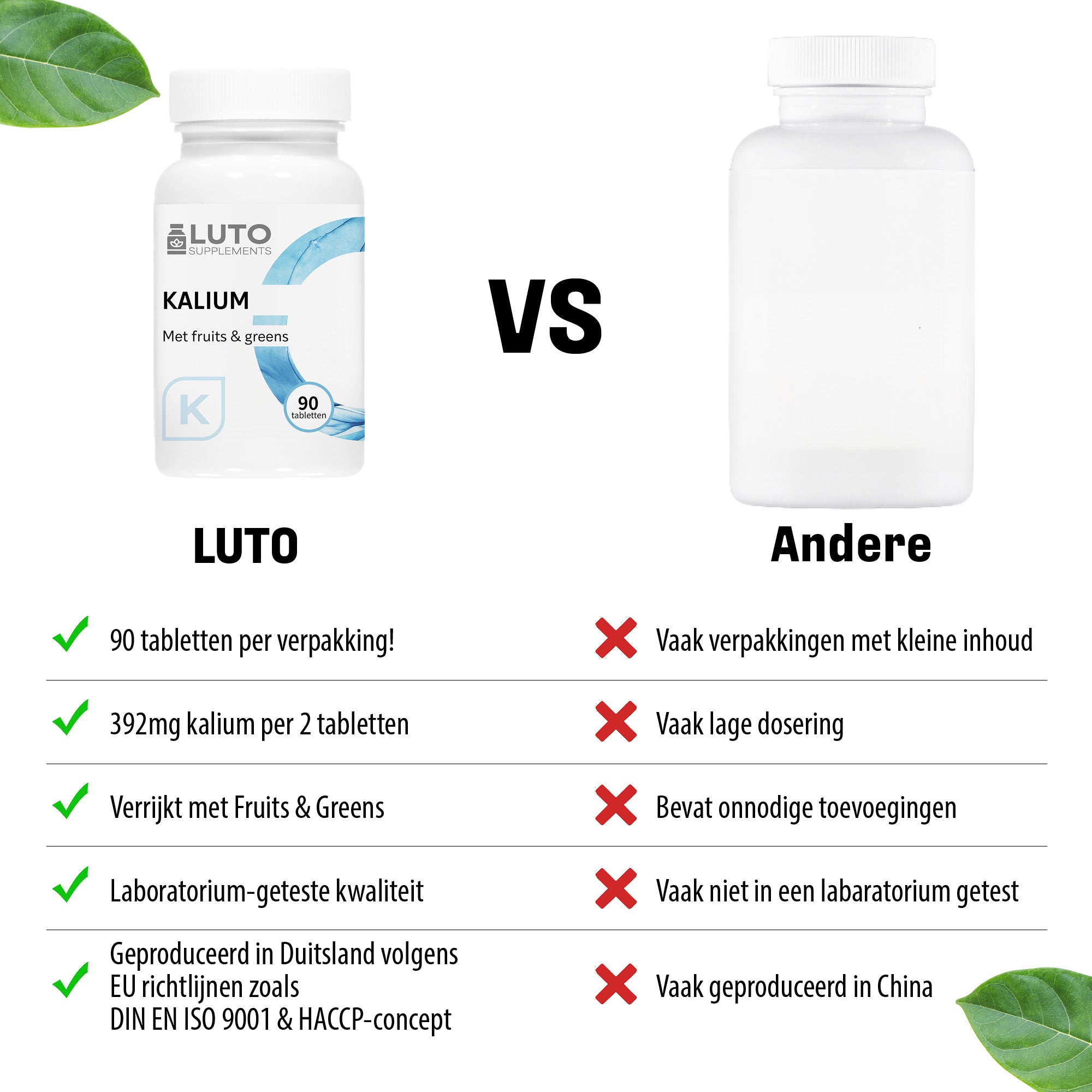
392 mg of potassium per daily dose of two tablets

Two tablets together provide 392 mg of elemental potassium. This falls within the common supplement range of 99 to 300+ mg and provides targeted supplementation to your daily diet.

90 tablets with plant-based coating

The container contains 90 tablets, sufficient for 45 days at the recommended dosage of two tablets per day. The tablets have a plant-based coating based on HPMC, without gelatin.

Enhanced with a Fruits & Greens Blend and Apple Powder

In addition to potassium citrate, each tablet contains 50 mg of a plant and fruit extract blend and 50 mg of apple powder. It is a modest addition, but makes the formula slightly broader than a standard potassium tablet.

Frequently Asked Questions

How much potassium do you need per day?

The daily requirement is approximately 3500 mg. You get the majority of this from your diet: bananas, potatoes, spinach, beans. This supplement provides 196 mg per tablet (or 392 mg with two tablets) and is intended to complement your diet, not replace it. Potassium supplements are deliberately formulated with lower doses because too much potassium at once can cause stomach discomfort or pose risks for people with certain medical conditions.

What are the signs of low potassium intake?

Common signs include muscle cramps, fatigue, bloating, and an irregular heartbeat. People who sweat a lot, exercise intensely, or take certain medications (such as diuretics) are at a higher risk of deficiency. If in doubt, a blood test ordered by your doctor is the most reliable way to check your potassium levels.

Can I combine potassium with other minerals?

Yes, you can. Physiologically, potassium works together with sodium and magnesium, among other things, to regulate fluid balance and muscle contraction. There are no known problems with taking potassium at the same time as other mineral supplements. However, make sure that your total potassium intake from all sources does not become too high, especially if you also eat foods rich in potassium.

Isn't 196 mg per tablet very little?

It may seem that way when compared to the daily requirement of 3,500 mg. But potassium supplements are deliberately formulated with a low dose. Too much potassium at once can irritate your stomach, and in people with kidney problems or those taking certain medications, potassium levels can become dangerously high. With 1 to 2 tablets per day, you specifically supplement what you are missing in your diet without any risk. That is exactly the idea behind a supplement.

Why is potassium citrate used instead of another form?

Potassium citrate dissolves well in water and is quickly absorbed in your gastrointestinal tract. Compared to, for example, potassium chloride, it has an additional property: The citrate part is converted into bicarbonate in your body, which has a slightly alkalizing effect. In practice, this means a slightly milder strain on your stomach. This makes citrate one of the most commonly used and best tolerated forms for potassium supplementation.
What is the difference between potassium citrate and potassium gluconate?

Both forms are highly soluble and are absorbed quickly. The difference lies in the compound to which the potassium is bonded. In potassium citrate, it is citric acid, while in potassium gluconate, it is gluconic acid. Potassium citrate has the additional advantage that the citrate component is converted into bicarbonate, which has a slightly alkalizing effect. Potassium gluconate lacks this effect. In practice, both forms are widely used, but citrate is more frequently chosen because of this additional property.