












What is L-carnitine?
L-carnitine is a substance naturally produced by the body that is related to amino acids. Your body produces it itself from lysine and methionine, and it is found primarily in meat.
Bestsellers
View allBestsellers
View allCart
Your cart is empty




In stock. Delivery within 2-3 business days.
Not valid with discount codes.
Choose options
Not valid with discount codes.
Not valid with discount codes.
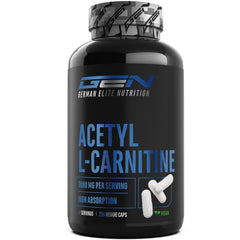
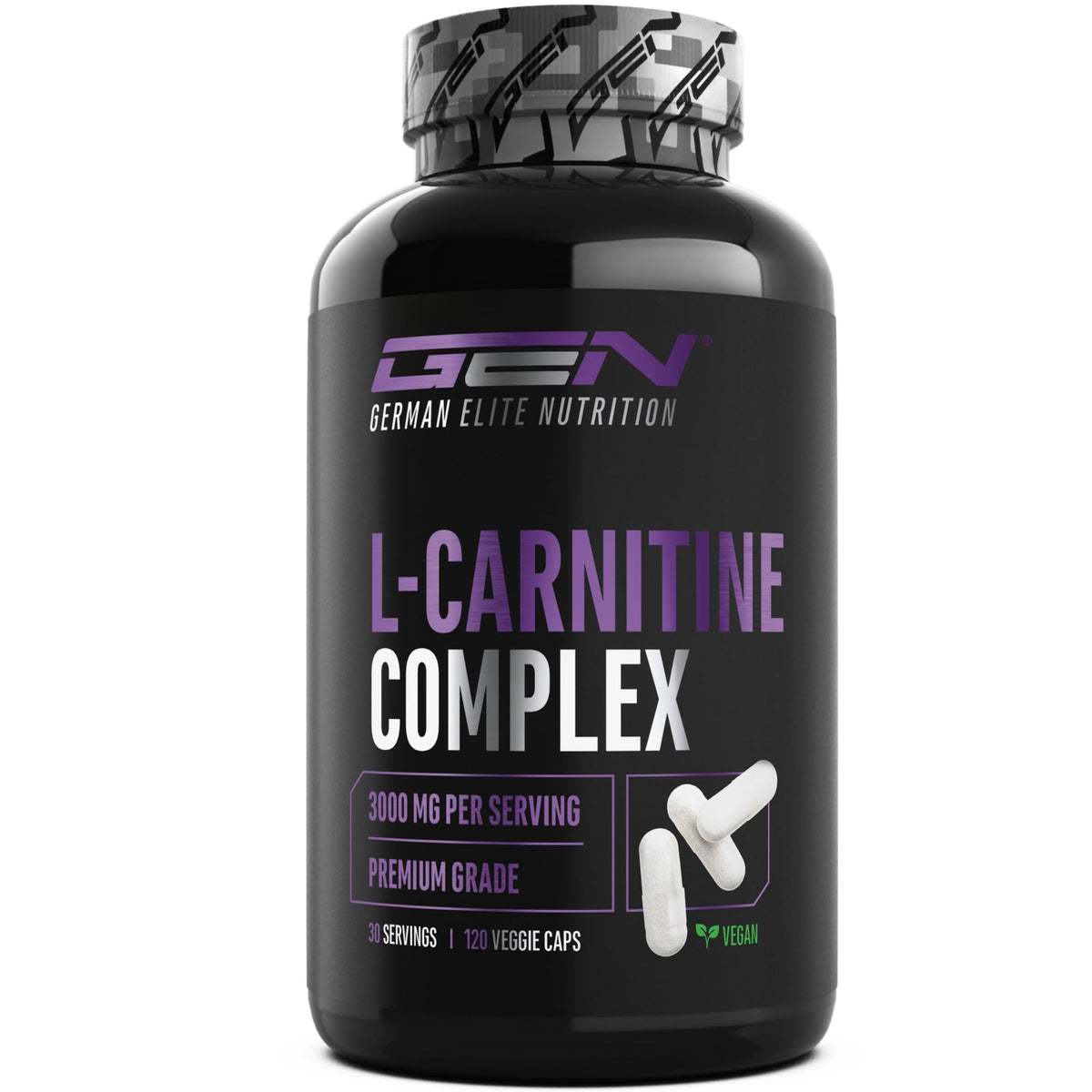
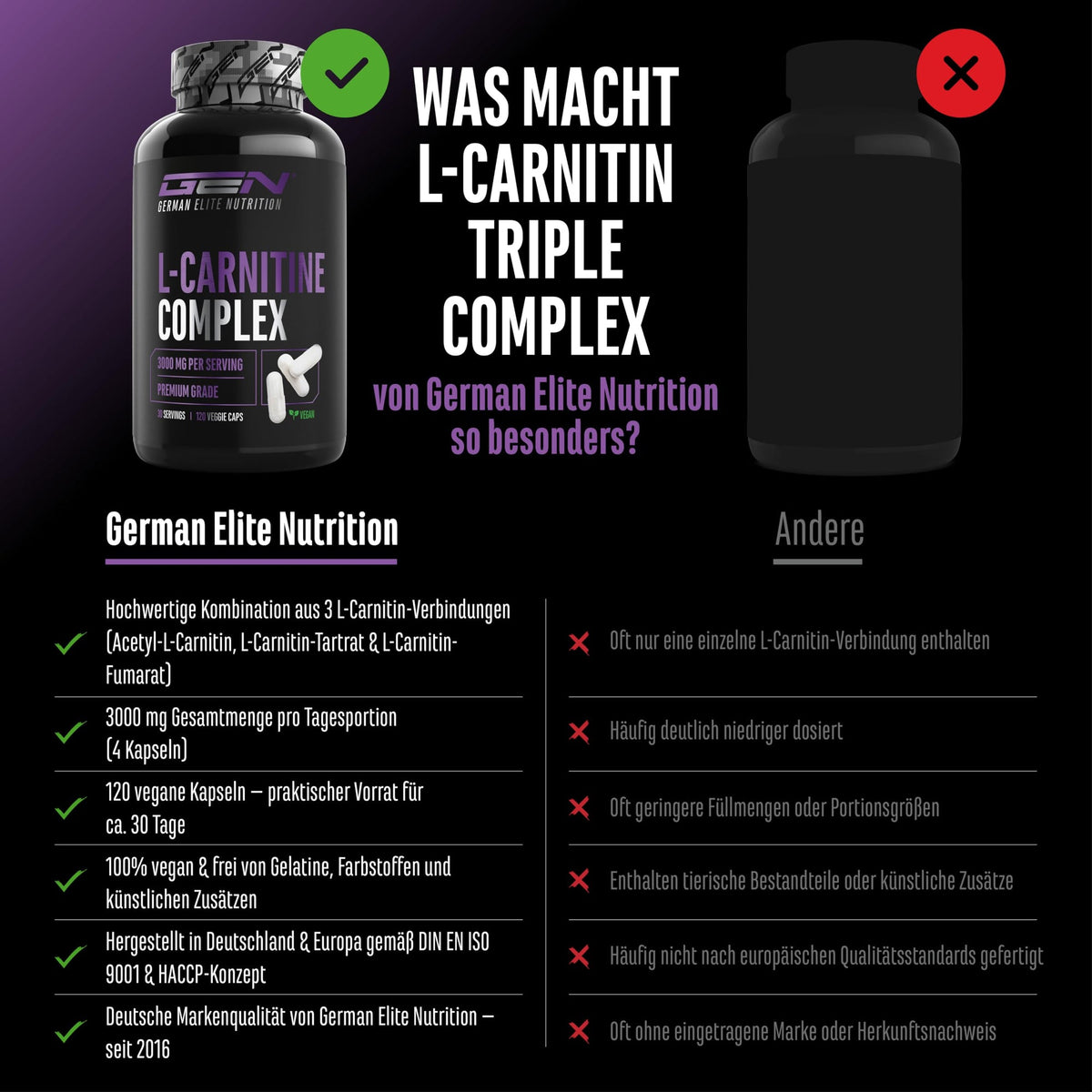
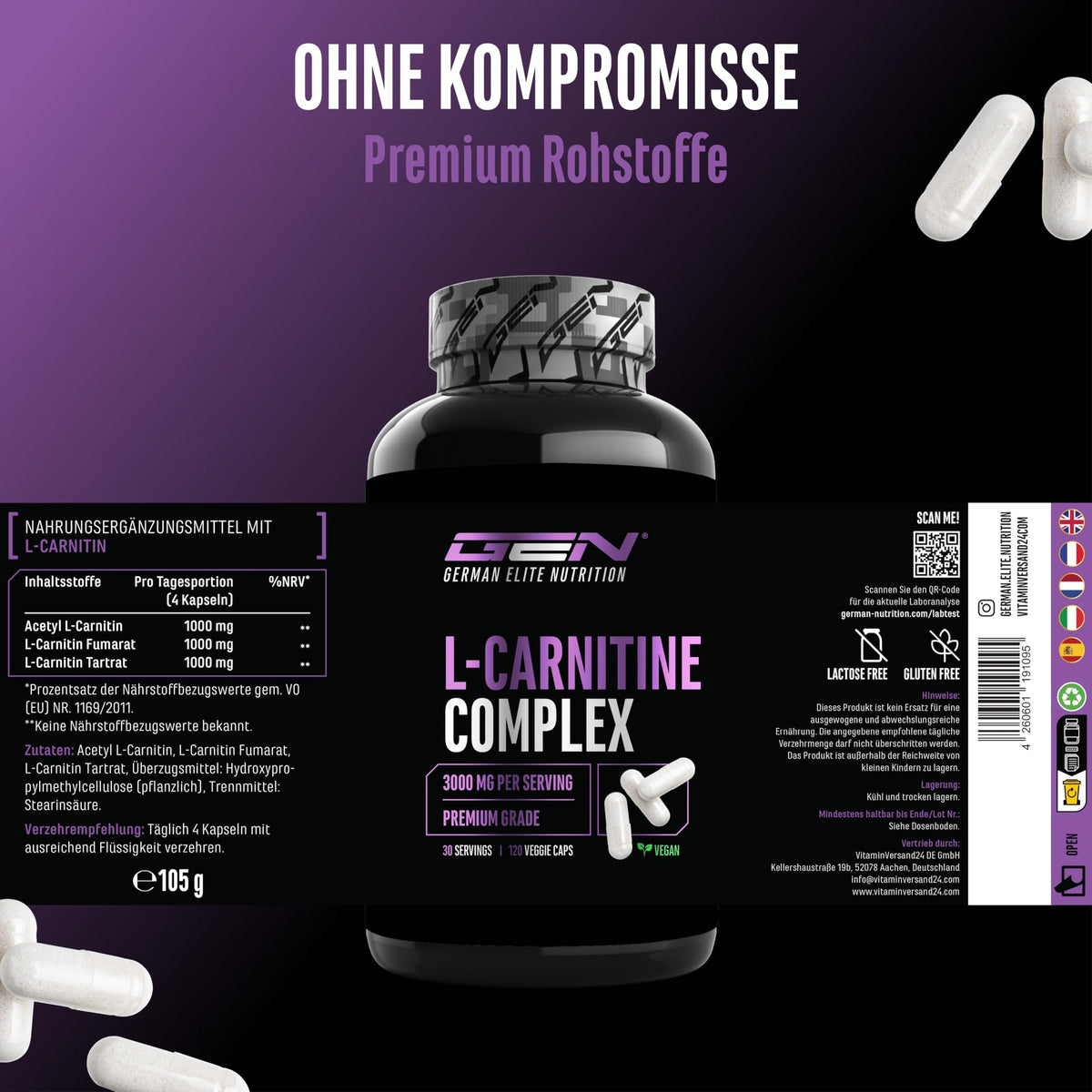
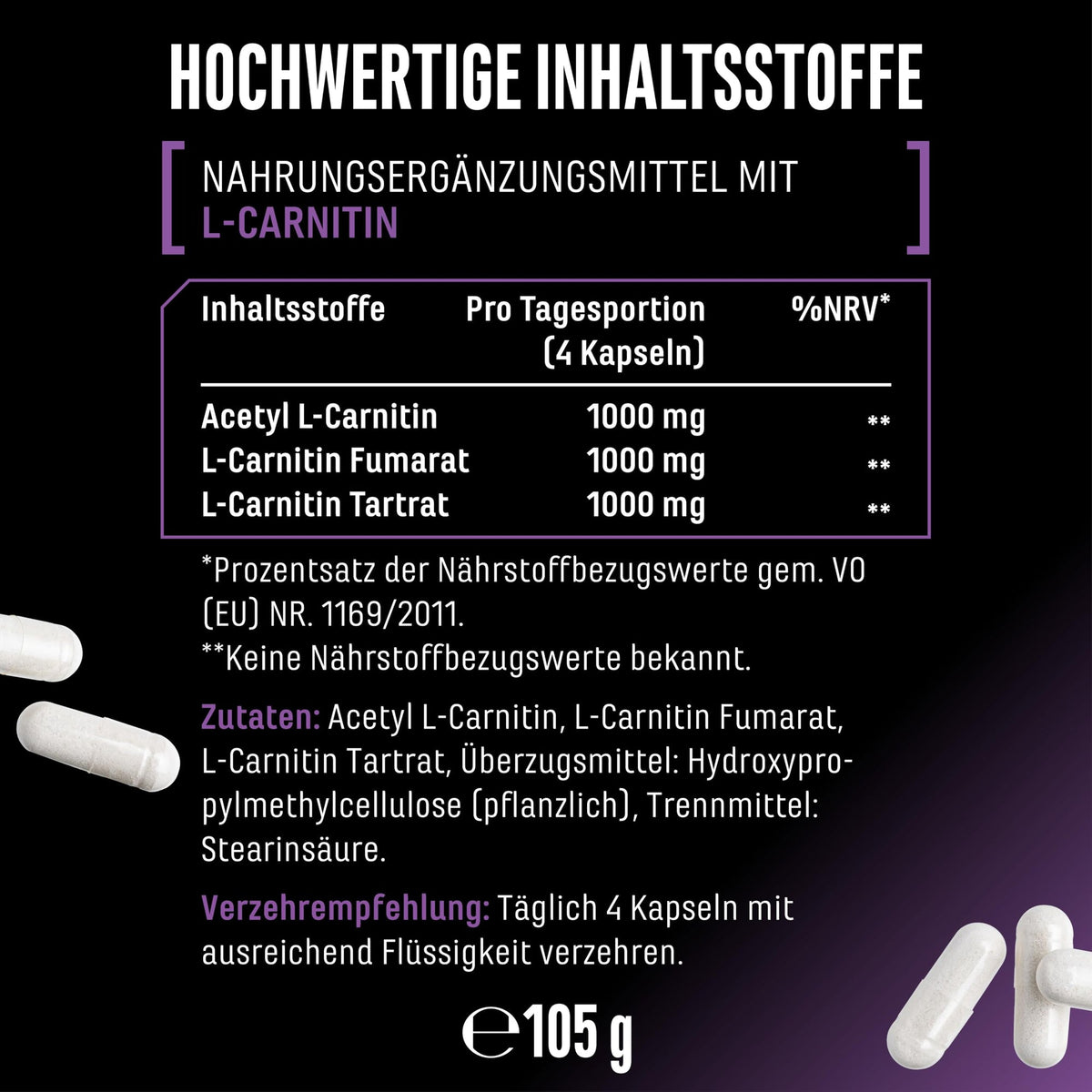
Are you looking for L-carnitine in more than one form? German Elite Nutrition's L-Carnitine Triple Complex combines three forms of L-carnitine in a single capsule. A daily dose of four capsules provides a total of 3000 mg of carnitine compounds, consisting of acetyl-L-carnitine, L-carnitine tartrate, and L-carnitine fumarate. Each bottle contains 120 vegan capsules, enough for 30 daily doses. L-carnitine is a well-known name among athletes, especially those who do a lot of cardio or pay close attention to their diet, and this formula brings together three of the most common forms.
L-carnitine is a substance naturally produced by the body that is related to amino acids. Your body produces it itself from the amino acids lysine and methionine, and it is also found primarily in meat; the name comes from the Latin word for meat. In the cell, L-carnitine plays a role in transporting long-chain fatty acids to the mitochondria, the cell components in which energy is released. This is a neutral biochemical fact that describes what the substance does and says nothing about the effect of this supplement in itself. There are currently no approved European health claims for L-carnitine. Therefore, we only describe the substance as an ingredient and leave open what people use it for. Vegetarians and vegans generally get less carnitine through their diet than meat-eaters, which explains why they are often the ones looking for a single supplement.
What makes this formula special is the combination of three forms of L-carnitine, each of which is structured slightly differently. Acetyl-L-carnitine is L-carnitine with an attached acetyl group. L-carnitine tartrate is carnitine bound to tartaric acid (tartrate), a form you often find in sports nutrition. L-carnitine fumarate is carnitine bound to fumaric acid, a substance that naturally has a place in the cell's energy metabolism. In all three cases, it is the same carnitine, just coupled with a different partner. By combining them, you get carnitine from several sources at once without having to buy three separate bottles. In practice, each form has its own followers; one swears by tartrate for training, while the other prefers acetyl-L-carnitine for daily intake. With this complex, you do not have to make this choice. The formula also contains no unnecessary additives such as individual fillers or anti-caking agents.
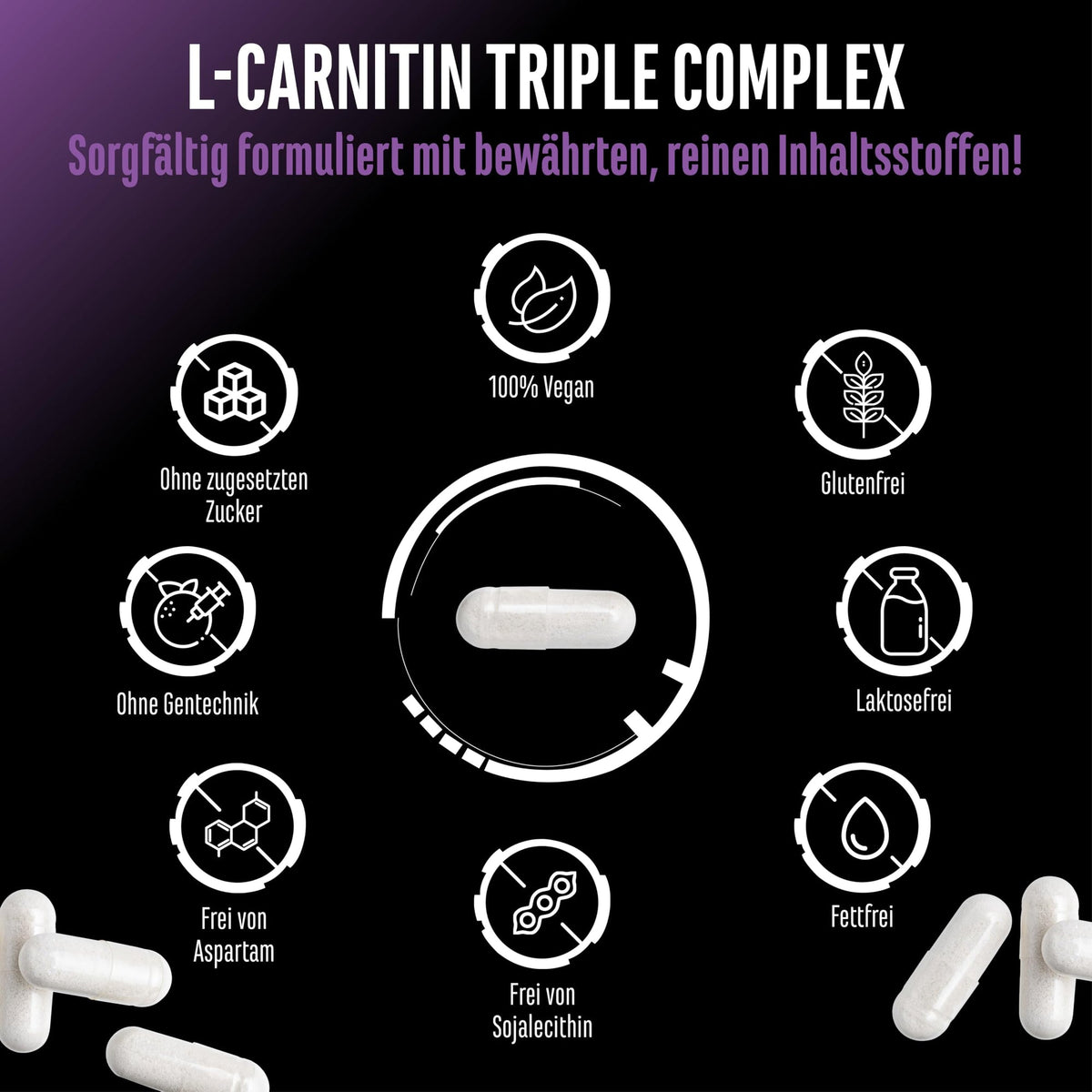
The daily dose consists of four capsules that together provide 3000 mg of carnitine compounds, divided among the three forms. This comes to 750 mg per capsule. Since the dosage is already in the capsules, you do not have to weigh or mix anything yourself, as is the case with loose carnitine powder. The capsules are vegan: The shell is plant-based and contains no gelatin. This is not a given with carnitine products, because carnitine has always been associated with meat. However, the carnitine here comes from a production process without animal-based raw materials, making the product also suitable for a plant-based diet. One bottle of 120 capsules lasts exactly one month at four capsules per day, after which you can reorder on a regular basis. Since everything is already measured out, you know exactly how much carnitine you get with every dose.
Most users take four capsules per day with sufficient water, either spread out or all at once. Many athletes choose to take them around their training, for example before a cardio session or strength training, even though there is no fixed time prescribed. You can also spread the four capsules throughout the day, for example at two meals. L-carnitine can be easily combined with other components of a sports nutrition routine, from a pre-workout to a protein shake afterwards. Take the capsules as a supplement alongside a varied diet and stick to the stated daily dose. Four capsules per day is the upper limit specified by the manufacturer; do not exceed this daily amount.
In short: This is L-carnitine from three forms, with 3000 mg per daily dose and 120 vegan capsules per bottle. A choice for athletes who prefer to take carnitine from several sources at once rather than from a single form, and who prefer the convenience of a pre-measured capsule over loose powder that you have to weigh yourself.
Acetyl-L-carnitine, L-carnitine tartrate and L-carnitine fumarate combined, rather than a single form.
Four capsules together provide 3000 mg of carnitine compounds, i.e. 750 mg per capsule.
The carnitine is produced without animal-derived raw materials, and the capsule shell is plant-based.
Just the three forms of carnitine in a plant-based capsule. 120 capsules, enough for 30 days.
L-carnitine is a substance naturally produced by the body that is related to amino acids. Your body produces it itself from lysine and methionine, and it is found primarily in meat.
It is the same carnitine every time, but coupled to a different partner: acetyl-L-carnitine has an acetyl group, tartrate is bound to tartaric acid, and fumarate to fumaric acid.
The daily dose is four capsules, totaling 3000 mg of carnitine compounds. Take them with plenty of water, spread throughout the day or around your workout.
Yes. Although carnitine is naturally found mainly in meat, the carnitine here comes from a production process without animal-derived raw materials. The capsule shell is plant-based.
Acetyl-L-carnitine is L-carnitine with an attached acetyl group. It is one of the common forms of carnitine used in sports nutrition, alongside the tartrate and fumarate forms.
Yes, L-carnitine can be easily combined with other components of a sports nutrition routine. Just stick to the recommended daily dose of this product.