L-Tyrosin mit Biotin 1200 mg LUTO Supplements – Nahrungsergänzungsmittel | kaufen in Deutschland und Österreich
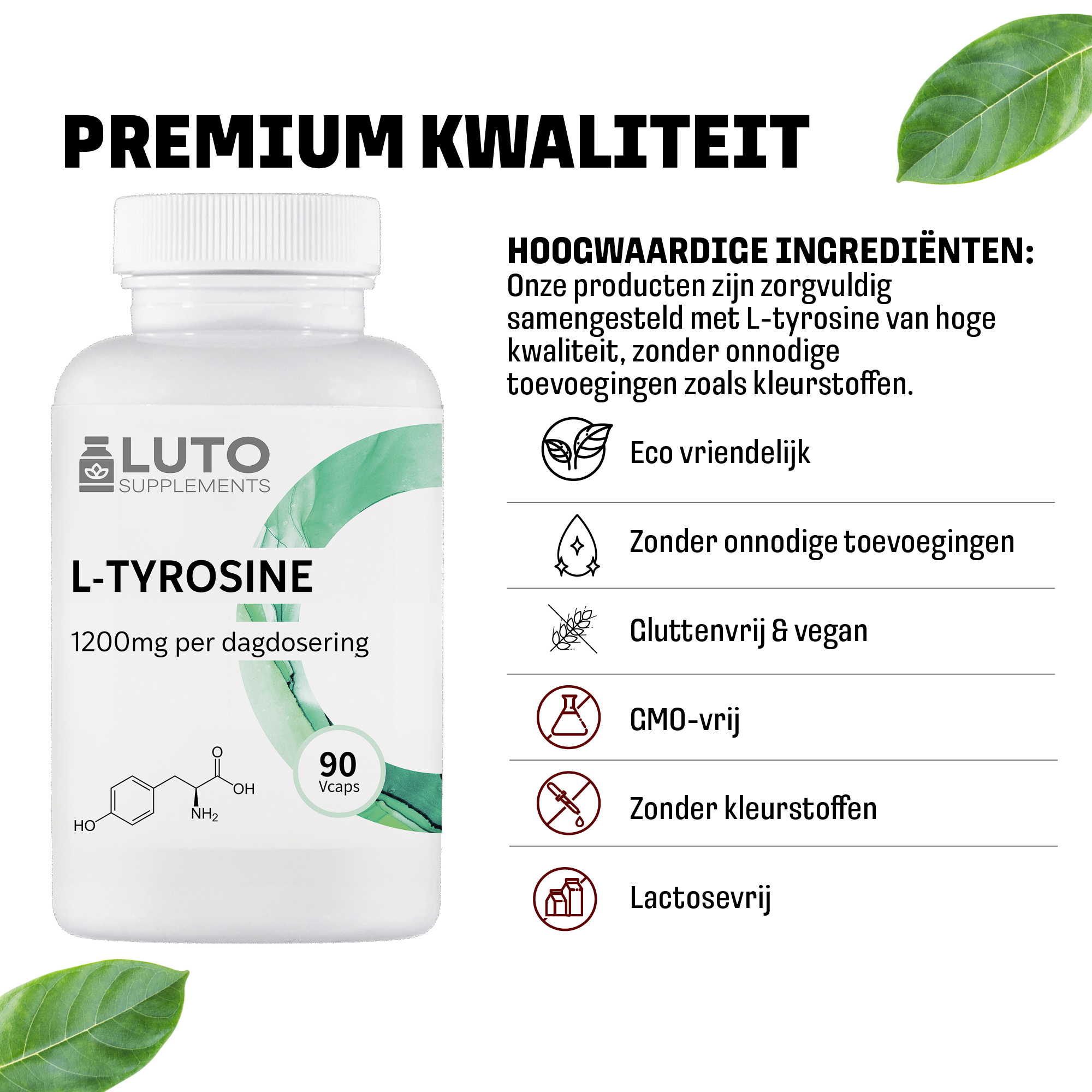
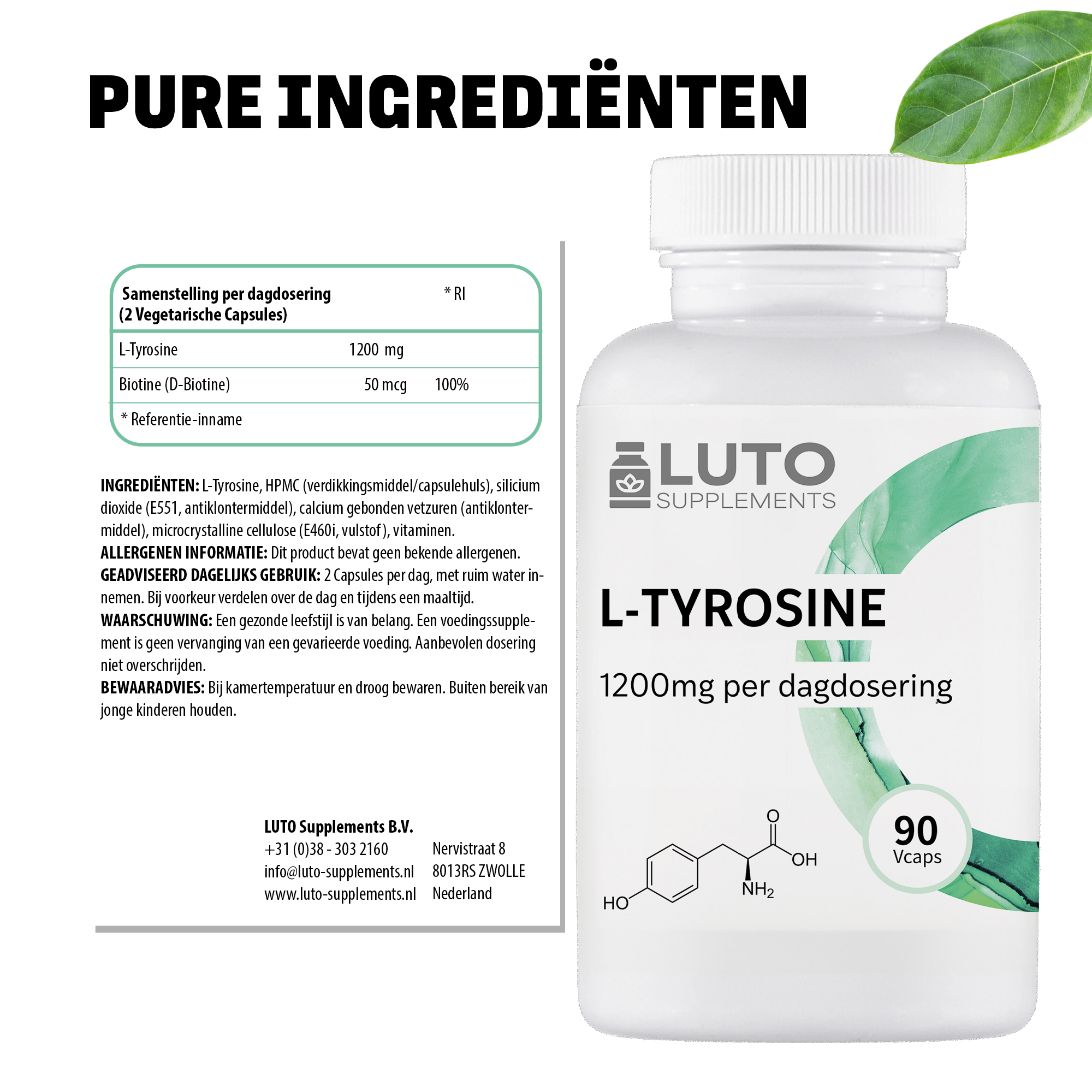
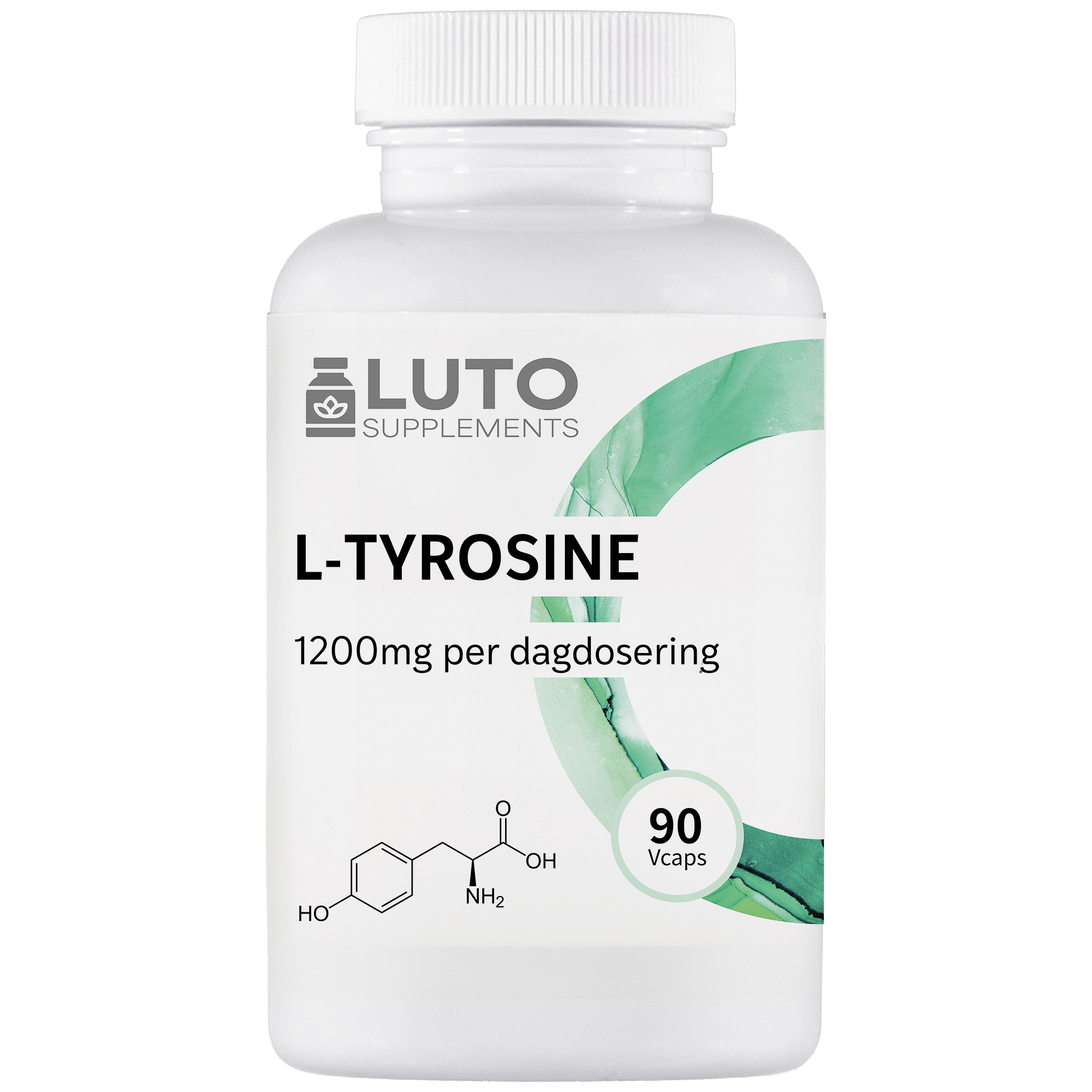
L-Tyrosin mit Biotin 1200 mg LUTO Supplements – Produktverpackung Vorderseite
L-Tyrosin mit Biotin 1200 mg LUTO Supplements – Verpackung mit Etikett und Produktinformationen
L-Tyrosin mit Biotin 1200 mg LUTO Supplements – Nährwerte und Inhaltsstoffe auf der Verpackung
L-Tyrosin mit Biotin 1200 mg LUTO Supplements – Produkt aus der Nähe

LUTO Supplements

L-Tyrosine with Biotin 1200 mg | 90 Capsules | LUTO Supplements

Actieprijs€20,90

In stock. Delivery within 2-3 business days.

Volume discount

Not valid with discount codes.

Specificaties

Categorie Amino acids
Artikelcode luto-001
Barcode 8720865080826
Houdbaar tot Op aanvraag
Batchnummer Op aanvraag
Inhoud 90 capsules
Aantal doseringen 45

L-Tyrosine 1200 mg Capsules with Biotin

Do you know that feeling when your head is overflowing? Strenuous workweeks, too many open tabs, and somewhere in between you are still trying to think clearly. During such phases, many people look for ways to supplement their amino acid intake. L-Tyrosine is one such amino acid. This supplement from LUTO Supplements delivers 1200 mg per daily dose, spread over two plant-based capsules. And it contains biotin (vitamin B8). A striking addition that you won't find in every tyrosine supplement.

What L-Tyrosine Exactly Does in Your Body

L-Tyrosine is an amino acid that your body normally produces itself from phenylalanine, another amino acid from your diet. Think of chicken, eggs, dairy products, or nuts. In your cells, L-Tyrosine acts as a building block. Your body converts it step by step: first into L-DOPA, then into dopamine, and finally into noradrenaline and adrenaline. These are neurotransmitters that play a role throughout your brain. The difference compared to tyrosine from a steak? In capsules, it is available in free form. Not bound to proteins, so your body does not have to break it free first. What many people do not know: The absorption of L-Tyrosine competes with other large amino acids at the blood-brain barrier (the gate between your blood and your brain). If you take it with a high-protein meal, more amino acids are in the queue. That is why taking it on an empty stomach or outside of meals is often more effective.

Why Biotin Is Included in This Formula

In addition to the amino acid, each daily dose contains 50 µg of biotin. That is exactly 100% of the reference intake. Most L-Tyrosine capsules on the market contain only the amino acid itself. Here, this vitamin is included as standard. Biotin contributes to normal energy metabolism and the normal metabolism of macronutrients. But it does not stop there. Biotin also contributes to the normal function of the nervous system and normal psychological function. The combination makes sense: L-Tyrosine provides the building block, while biotin plays a role in your energy metabolism and nervous system.

Where 1200 mg of L-Tyrosine Per Day Fall in the Dosage Range

Each capsule contains 600 mg of L-Tyrosine. With two capsules per day, you get a total of 1200 mg. In practice, this means: You are at the upper end of what is common for amino acid supplements in this category. In scientific research, higher amounts are sometimes used, about 100 to 150 mg per kilogram of body weight. For someone weighing 75 kilos, that quickly becomes 7500 mg or more. That is a completely different story. But for daily use as a supplement, 1200 mg is a solid dosage. One container contains 90 capsules, so with the recommended intake, it lasts for 45 days.

Free L-Tyrosine Compared to the Acetyl Variant

There are several forms of this amino acid on the market. The two best known are regular L-Tyrosine and N-Acetyl-L-Tyrosine (NALT). The difference lies in the absorption. Regular L-Tyrosine is the best-researched and most common supplement form. NALT sounds interesting on paper, but in practice, it turns out that this variant is less well-documented when it comes to increasing the level of free tyrosine in your blood. LUTO Supplements has chosen the classic free form here. By the way, the capsules themselves are made of HPMC, a plant-based cellulose base. No gelatin, no animal ingredients. The product is also free from gluten and lactose and is manufactured in the Netherlands.

In short: a straightforward amino acid supplement with a well-thought-out addition of biotin. Plant-based capsules, made in the home country, and with the most common form of L-Tyrosine. For anyone who wants to supplement their daily intake during stressful phases without unnecessary additives.

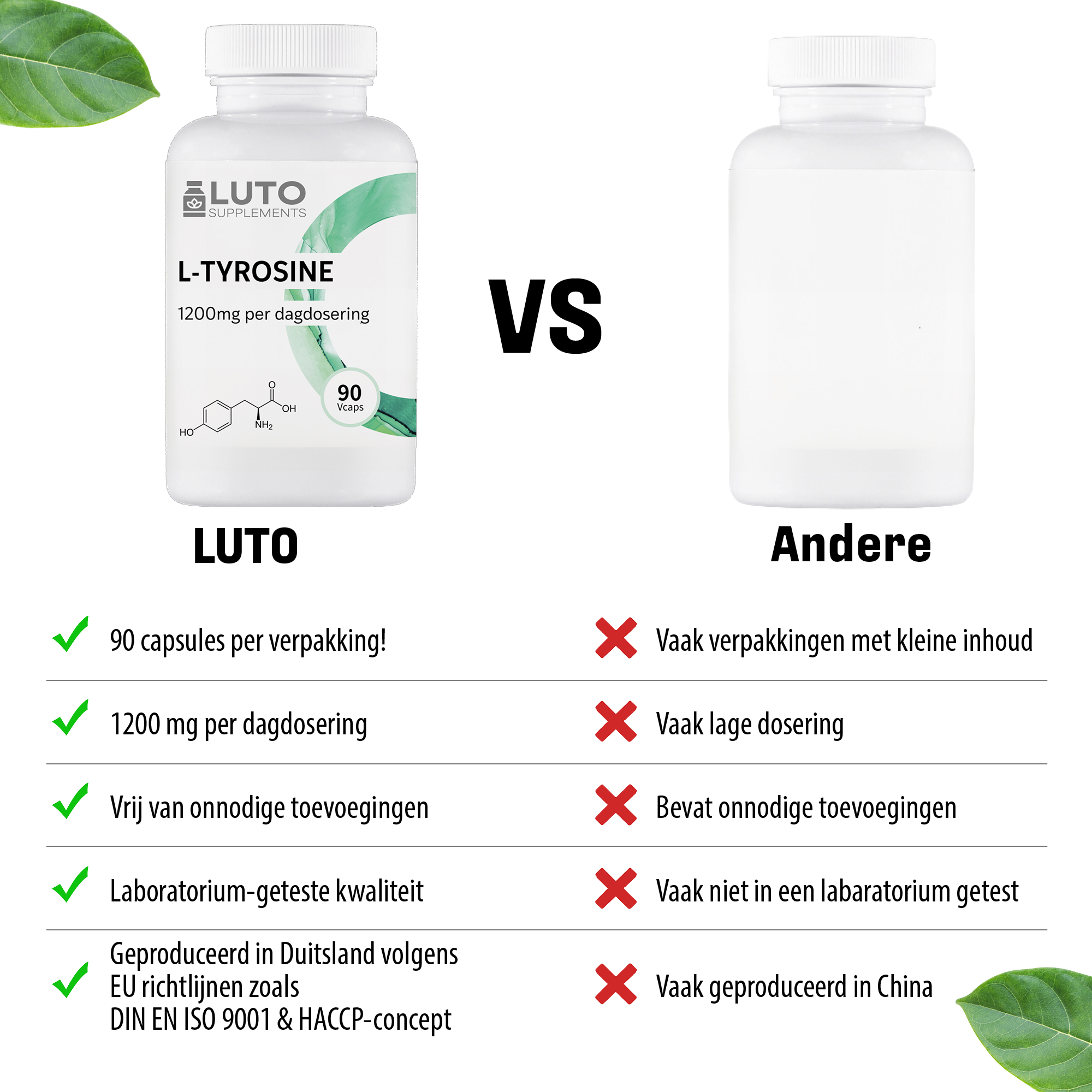
Why L-Tyrosine with Biotin 1200 mg from LUTO Supplements?

Free L-Tyrosine, the best-researched form

This product contains regular free L-tyrosine, not the acetylated version (NALT). Free L-tyrosine is the best-researched supplement form and raises the tyrosine levels in your blood more effectively than NALT. Your body does not have to first break down the amino acid from proteins, making it directly available.

1200 mg per daily dose in two capsules

Two capsules together provide 1200 mg of L-tyrosine. This puts you at the upper end of what is common for amino acid supplements in this category. The dosage is divided into two 600 mg capsules, so you can easily spread them throughout the day.

Biotin as a fixed component of the formula

Most L-tyrosine capsules on the market contain only the amino acid. This product contains 50 µg of biotin (vitamin B8) as standard, exactly 100% of the reference intake. Biotin contributes to the normal function of the nervous system and to normal energy metabolism.

Plant-based capsules, made in the Netherlands

The capsules are made from HPMC, a plant-based cellulose. No gelatin and no animal ingredients. The product is gluten- and lactose-free and is made in the Netherlands.
Frequently Asked Questions

What exactly is L-tyrosine?

L-tyrosine is an amino acid that your body normally produces itself from phenylalanine, another amino acid from your diet. In your cells, it serves as a building block for neurotransmitters such as dopamine, noradrenaline, and adrenaline. It occurs naturally in high-protein foods such as chicken, eggs, dairy products, and nuts. In supplement form, it is available as a free amino acid, meaning it is not bound to proteins. Your body therefore does not need to break it free first.

When is the best time to take L-tyrosine?

Preferably outside of a high-protein meal. This is because the uptake of L-tyrosine into your brain competes with other large amino acids at the blood-brain barrier. If you take it with a lot of protein, more amino acids will be waiting in line. On an empty stomach or between meals, absorption is more favorable.

Is L-tyrosine suitable for daily use?

Yes, at the dosage of this product (1200 mg per day), it is consistent with standard supplement use for daily intake. Some scientific research uses much higher doses, but these are intended for specific acute situations. Stick to the recommended dosage and consult your doctor if in doubt.

Isn't 1200 mg per day too low compared to research dosages?

In studies on acute cognitive load, higher dosages are indeed used, often around 100-150 mg per kilogram of body weight. For someone weighing 75 kilos, that quickly adds up to 7500 mg or more. That is a different type of application. For daily supplementation of your tyrosine intake, 1200 mg is at the upper end of what is common for amino acid supplements in this category. So it is a solid maintenance dosage, not an acute research dosage.

How does L-tyrosine work in your body?

L-tyrosine serves as a direct precursor for a chain of neurotransmitters. The enzyme tyrosine hydroxylase first converts it into L-DOPA. This is then converted into dopamine, and subsequently into noradrenaline and adrenaline. These are neurotransmitters that play a role throughout your brain. Furthermore, tyrosine is a building block for the thyroid hormones T3 and T4. In free form, such as in capsules, your body does not need to first extract it from proteins, making it more readily available.

What is the difference between L-tyrosine and N-acetyl-L-tyrosine (NALT)?

The difference lies in absorption and the scientific evidence. Regular L-tyrosine is the best-researched supplement form and effectively increases the level of free tyrosine in your blood. N-acetyl-L-tyrosine sounds interesting on paper because of the acetyl group, but in practice, this variant is less well-supported when it comes to actually increasing these levels. This product contains the free form, which is the standard choice for this type of supplement.