Magnesium Taurate 200 mg by Vit4ever
This magnesium taurate from Vit4ever provides 200 mg of elemental magnesium per daily dose of three capsules, which is 53% of the reference intake. What makes it special is the binding: the magnesium is bonded to taurine, an amino acid-like substance that occurs naturally in your body. It is a choice for anyone who consciously opts for this specific form instead of a more common form such as citrate or oxide, with 240 capsules in a bottle that will last for months.
Taurine, the amino acid that holds the magnesium here
Taurine is often called an amino acid, although strictly speaking it is an amino sulfonic acid—a minor nuance that makes little difference in practice for the use of the product. Your body produces it itself from the amino acids methionine and cysteine, and it also occurs naturally in animal-based foods such as fish and meat. On an exclusively plant-based diet, dietary intake is usually lower, simply because the most important natural sources are animal-based. In your body, taurine is found primarily in tissues that consume a lot of energy, such as muscle tissue, the heart muscle, the brain, and the retina of the eye. There, it plays a role, among others, in regulating cell volume and forming bile salts—processes that are particularly relevant in tissues with high energy demands. In magnesium taurate, taurine is not added freely but is chemically bonded to magnesium to form a molecule. This is a different approach from a preparation in which you would find magnesium and taurine as two separate substances side by side in a capsule, something you may indeed encounter with some combination products.
Why this form is often chosen for the heart and muscles
Magnesium taurate regularly appears in the range of forms that people consider when thinking specifically about heart or muscle tissue, and this is no coincidence: both magnesium and taurine occur naturally in relatively high concentrations in the heart muscle and skeletal muscles. This is a factual statement about where these substances are located in the body, not a health-related claim about what the preparation would do for your heart. Manufacturers therefore choose this specific binding primarily because it corresponds to the tissue in which both building blocks are naturally present, not because the absorption per milligram is higher than with other organic forms. It is therefore more a matter of logical composition than a proven additional effect: you are combining two substances that the body already uses side by side in the same tissue. If you want a form that is purely focused on the highest absorption per milligram, then bisglycinate or citrate are equally logical considerations.
Taurate compared with bisglycinate, citrate, and oxide
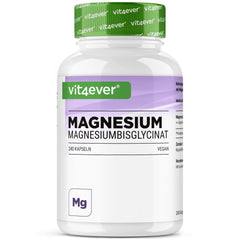
Magnesium never occurs freely; it is always bonded to another substance, and this bond determines both the absorption and the character of the preparation. Bisglycinate is bonded to the amino acid glycine, is considered well absorbed, and is often perceived as gentle on the stomach, even by people who sometimes experience an unsettled stomach from other forms. Citrate is bonded to citric acid, is close to bisglycinate in terms of absorption, and is one of the most commonly used forms in preparations, partly because the raw material is relatively widely available. Oxide is bonded to oxygen, contains by far the most elemental magnesium per gram, but is absorbed less efficiently per milligram than the organic forms, which is why you often see a higher dosage per capsule with oxide. Taurate is close to bisglycinate and citrate in terms of absorption, with the taurine that holds the magnesium as the distinguishing factor—something none of the other forms offer. Because magnesium taurate itself contains only about 8% elemental magnesium, the daily dose of 2,550 mg of magnesium taurate is substantial to still achieve a clean 200 mg of elemental magnesium. According to the manufacturer, the raw material used has a purity of 98%, meaning that the vast majority of each capsule actually consists of the taurate compound.
For athletes and active people, and how to take it
Magnesium plays a role in many processes in the body, making it a mineral that active people and athletes like to keep at a good level. It contributes to normal muscle function and the normal function of the nervous system, to normal energy metabolism, and to the reduction of tiredness and fatigue. In addition, it contributes to normal psychological function, normal electrolyte balance, normal protein synthesis and cell division, as well as the maintenance of normal bones and teeth. Especially during strenuous exertion or a full training schedule, the demand for magnesium can increase, for example due to sweat loss during sports or because your muscles simply require more of your mineral reserves on heavy training days—something that can also be noticeable with a combination of strength training and endurance sports in the same week. For anyone who trains regularly, a form that is easy to incorporate into your daily routine is therefore practical, without you having to think about it. Distribute the three capsules throughout the day, for example one at breakfast, one around lunchtime, and one in the evening, and take each with sufficient water. This helps you avoid taking everything at once and distributes the absorption throughout the day. Some people prefer to take the last capsule in the evening simply because this is the easiest time to fit it into their routine. Others simply combine it with breakfast, lunch, and dinner, so that taking it automatically follows a fixed rhythm.
In short: a magnesium taurate with 200 mg of elemental magnesium per daily dose, bonded to taurine, distributed in 240 vegan capsules across three times a day. A targeted choice for anyone who consciously opts for the taurate form instead of bisglycinate, citrate, or oxide, and sees the combination with taurine as a plus.