



What exactly is matcha?
Matcha is finely ground green tea from Japan, made from tea leaves that are grown in the shade before harvest.
Bestsellers
View allBestsellers
View allWinkelwagen
Je winkelwagen is leeg
Out of stock.
Not valid with discount codes.
Kies opties
Not valid with discount codes.
Not valid with discount codes.
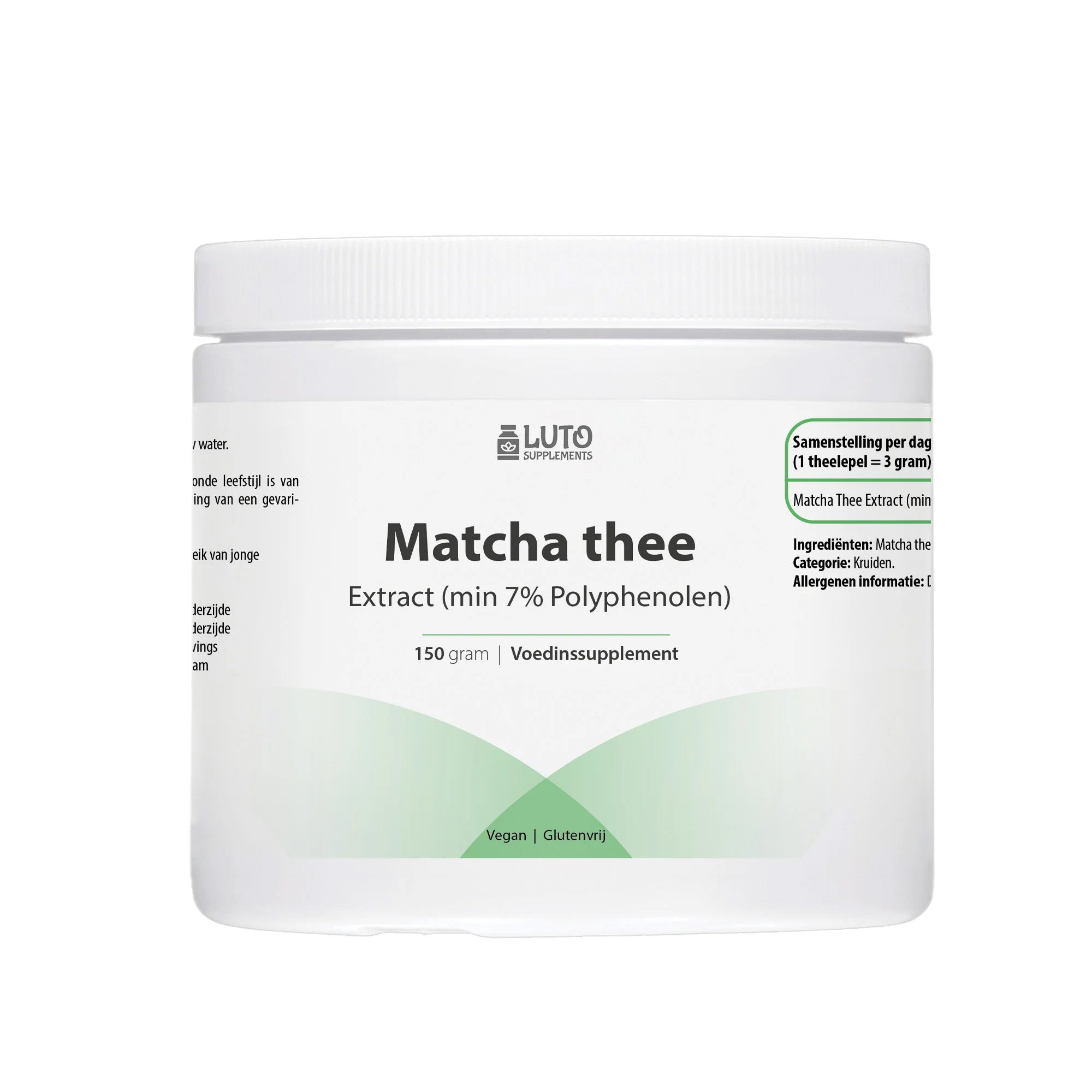
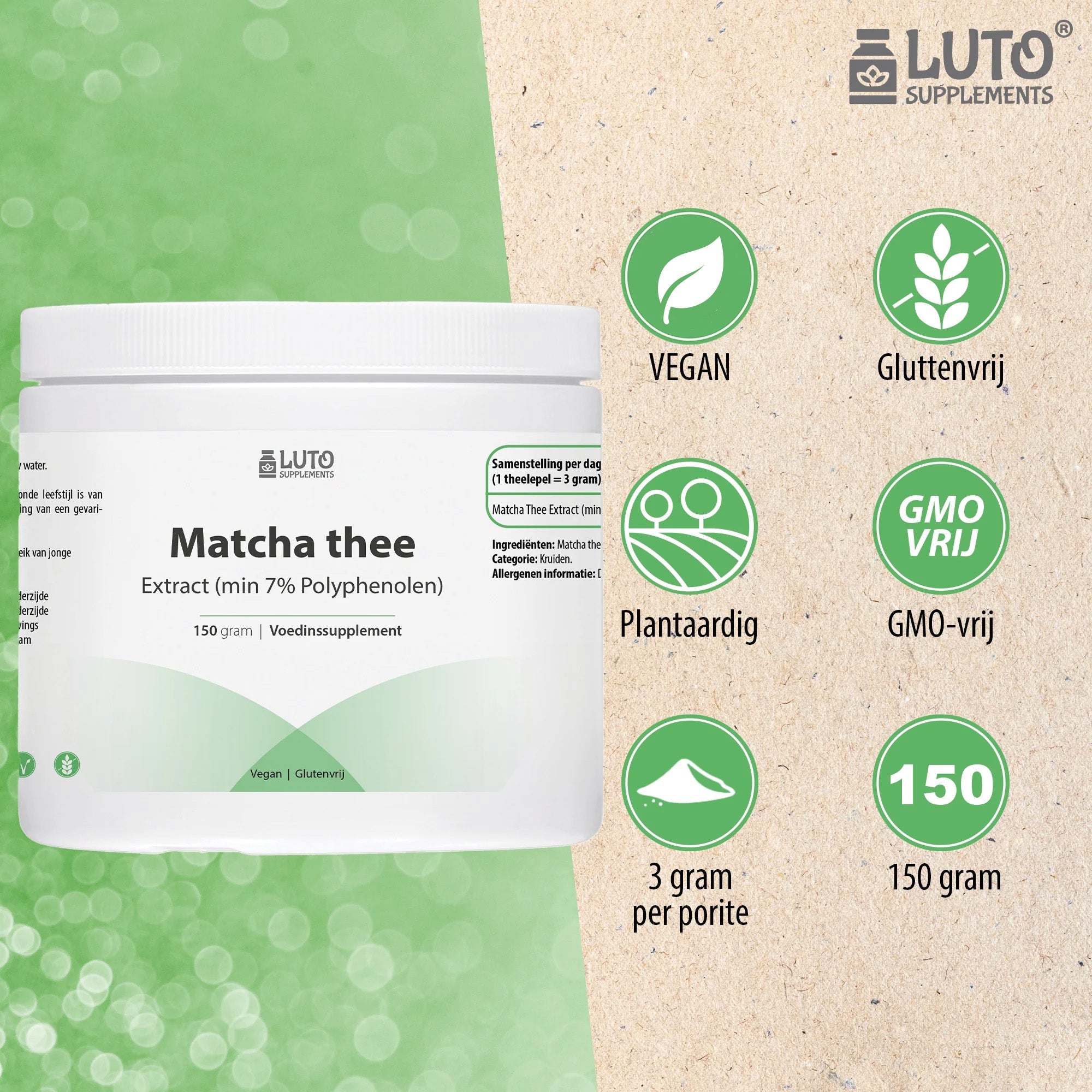
Matcha is finely ground green tea made from shade-grown tea leaves from Japan. This organic powder contains at least 7% polyphenols and naturally occurring caffeine. Suitable for tea, lattes, smoothies, and baked goods. 150 grams per package, enough for approximately 50 servings. Made by LUTO Supplements.
With regular green tea, you steep the leaves and then discard them. With matcha, you drink the whole leaf: The shade-grown tea leaves are ground into a fine powder that you dissolve instead of steeping. This allows you to consume all the components of the leaf, including the polyphenols to which this powder is standardized (at least 7%). Shade-growing just before harvest also gives matcha its characteristic bright green color.
This matcha has a mild, earthy flavor and a silky-smooth texture. The powder dissolves easily in water or plant-based milk. Traditionally, you whisk one teaspoon (approximately 3 grams) with hot, but not boiling, water to create a frothy texture, but the powder is equally suitable for a latte, a smoothie, or baked goods. Matcha naturally contains caffeine, making it a popular alternative to coffee.
Dissolve approximately 3 grams (1 teaspoon) in hot, not boiling, water or milk and whisk to create a frothy texture. The powder is organic, vegan, and gluten-free. Since matcha naturally contains caffeine, it is best not to consume it late in the day. There are no approved EU claims regarding its effects, so we make no statements about them.
Made from fine Japanese tea leaves and standardized to at least 7% polyphenols.
Matcha naturally contains polyphenols and fits well into a mindful daily routine.
Contains approximately 32 mg of caffeine per 3 g serving.
Free from additives, gluten and animal-derived ingredients.
Matcha is finely ground green tea from Japan, made from tea leaves that are grown in the shade before harvest.
Matcha is popular due to its natural polyphenols and caffeine. EU regulations limit the information we can provide about the effects of matcha.
Yes, matcha naturally contains caffeine. A 3 g serving contains approximately 32 mg of natural caffeine.
Yes, LUTO matcha tea is 100% plant-based, gluten-free, and free from artificial additives.
Dissolve about 3 g of matcha powder in hot, not boiling, water or milk. Whisk the powder thoroughly until it reaches a frothy consistency.
Matcha can be used for traditional matcha tea, matcha lattes, smoothies, yogurt, oatmeal, or baked goods.