Evening Primrose Oil by Vit4ever
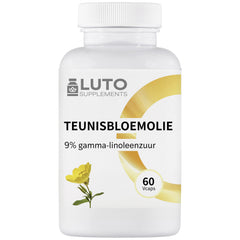
Evening primrose oil is oil extracted from the seeds of the evening primrose, a plant that originally comes from North America and today also grows in European dunes and along roadsides. Vit4ever cold-presses the seeds into a softgel with 2000 mg of oil per daily dose of two softgels. This contains 10 percent gamma-linolenic acid (GLA), or 200 mg per day, supplemented with natural vitamin E. One bottle is available with 180 or 365 softgels, enough for around three or five months at the recommended dosage.
What evening primrose oil exactly is
The evening primrose bears the Latin name Oenothera and opens its flowers only in the evening, hence the English name evening primrose. Oil is obtained from the small seeds of this plant through cold pressing, which consists largely of linoleic acid, a polyunsaturated omega-6 fatty acid. Your body does not produce linoleic acid itself. It must therefore come from food or a dietary supplement and serves as a building block for cell membranes throughout the body. Many do not know that ordinary food often contains little evening primrose oil, while the plant has been known for centuries for its special fatty acid profile. The plant itself was used by the indigenous peoples of North America, both the root and the seeds, and later European settlers brought the seed oil home with them.
10 percent GLA and what that means
In addition to linoleic acid, evening primrose oil also contains gamma-linolenic acid, abbreviated GLA. This is a fatty acid that can be produced in the body through its own conversion step, but evening primrose oil delivers it directly in finished form. In these softgels, the oil is standardized to 10 percent GLA. At the recommended two softgels per day, this corresponds to 200 mg of gamma-linolenic acid. The difference to ordinary vegetable oil lies exactly in this proportion: Where sunflower or corn oil contains hardly any GLA, evening primrose oil is one of the few plant sources in which this fatty acid naturally occurs in measurable amounts. Borage oil and blackcurrant seed oil also provide GLA, but evening primrose oil is the best known and best studied of these three. What many ask: Why not simply eat more vegetable oil? The answer lies in the concentration. To get to 200 mg of GLA through ordinary food, you would have to consume large quantities of a common cooking oil, and that usually does not even contain the fatty acid.
Cold-pressed and protected with vitamin E
Polyunsaturated fatty acids are sensitive to heat and light. That is why this evening primrose oil is cold-pressed: The seeds are mechanically pressed without heating, so that the fatty acids retain their structure. Vit4ever adds natural vitamin E. Vitamin E is a fat-soluble vitamin that naturally occurs in vegetable oils and is added here to keep the oil stable during storage. In short: The vitamin E protects the sensitive fatty acids from oxidation, which keeps the oil fresh in the softgel longer. This is also the reason why cold-pressed oils are often sold together with vitamin E: Without this protection, the fatty acids become rancid more quickly and lose quality before the bottle is empty.
180 or 365 softgels, with beef gelatin
The softgel form is smooth and slides down easily with a glass of water, which is more pleasant for many than a large capsule with powder. Good to know: The outer shell of the softgel consists of gelatin, and in this case, beef gelatin. This means that this product is not suitable for a vegan or vegetarian diet. The oil itself contains no artificial colors or flavors and is naturally free of gluten and lactose. Every batch is independently tested before it leaves the house, so you know what is in the softgel. With 365 softgels in the bottle and two per day, one package will last you a good five months, which makes it a practical choice if you do not want to reorder every month. In practice, you mainly notice the convenience: two softgels per day, you do not need to consider anything else.
What many do not know: Evening primrose oil is often mentioned in the same breath as fish oil, but they are completely different fatty acids. With fish oil, it is all about omega-3, with evening primrose oil about omega-6, with GLA in particular as a special component. Both oils therefore fill a different gap in your diet, and one does not replace the other. Thus, evening primrose oil retains its own place among fatty acid supplements, precisely because of this special GLA content, which only a few other vegetable oils naturally provide.