Wein OPC Traubenkernextrakt (95% PCO - 30% OPC) LUTO Supplements – Nahrungsergänzungsmittel | kaufen in Deutschland und Österreich
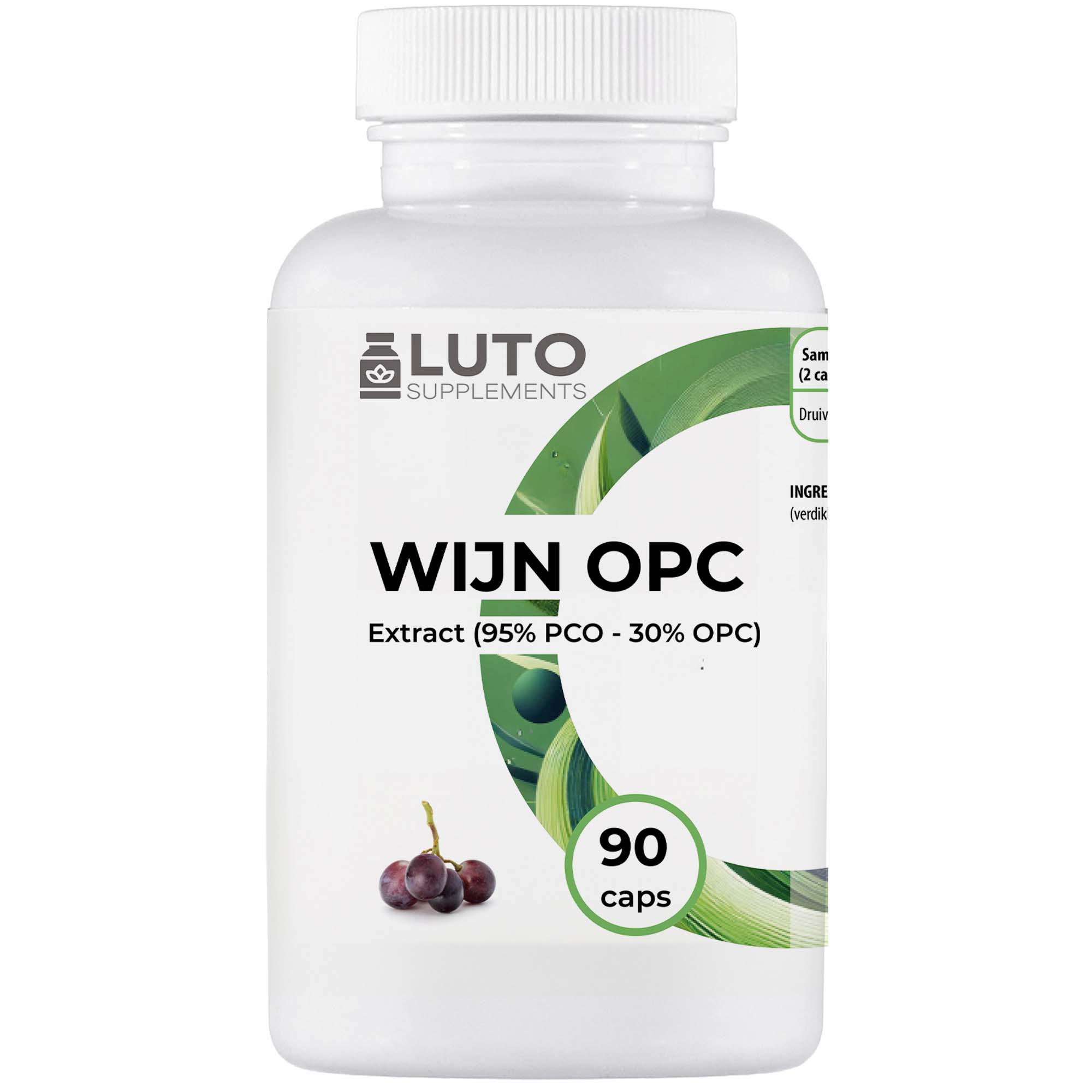
Wein OPC Traubenkernextrakt (95% PCO - 30% OPC) LUTO Supplements – Produktverpackung Vorderseite
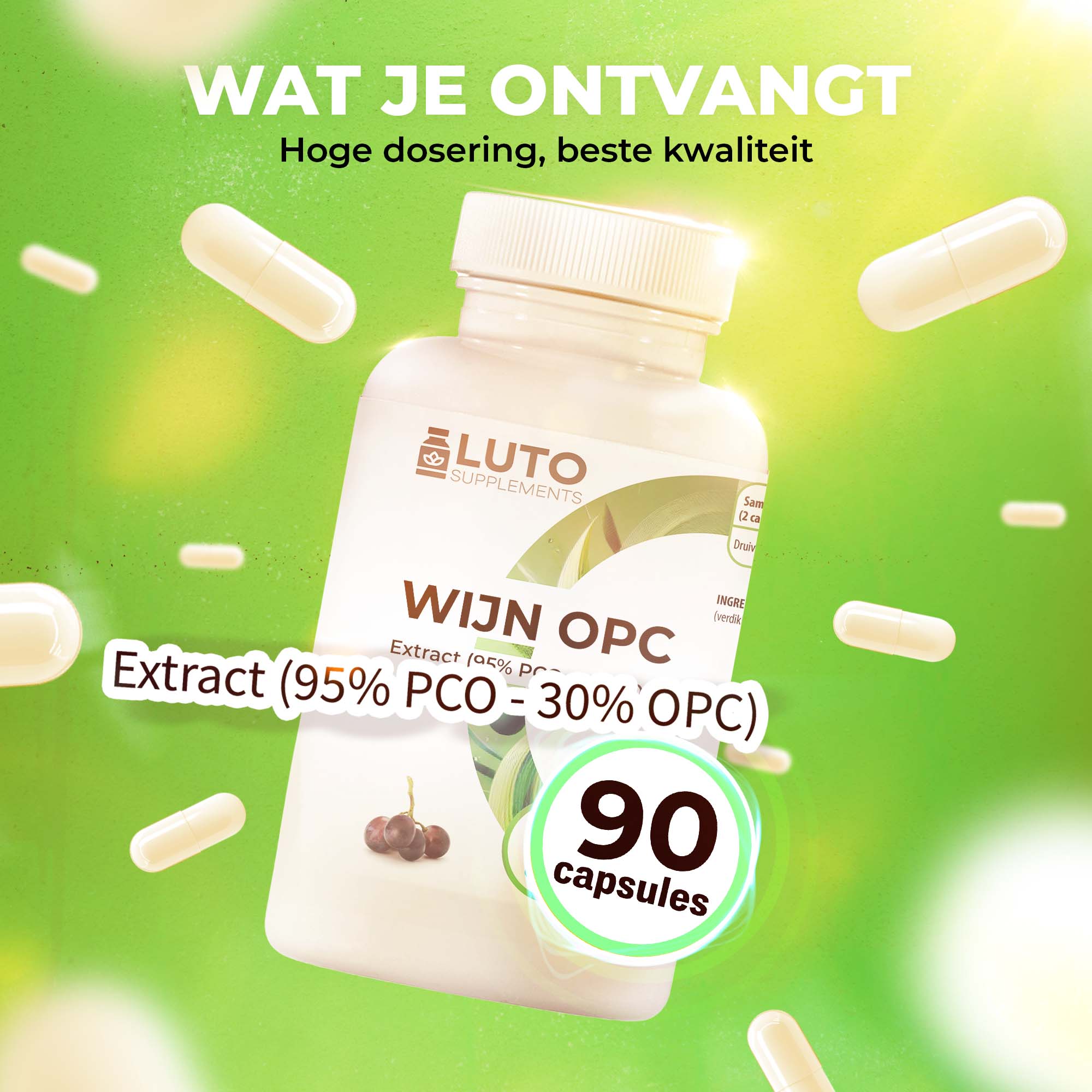
Wein OPC Traubenkernextrakt (95% PCO - 30% OPC) LUTO Supplements – Verpackung mit Etikett und Produktinformationen
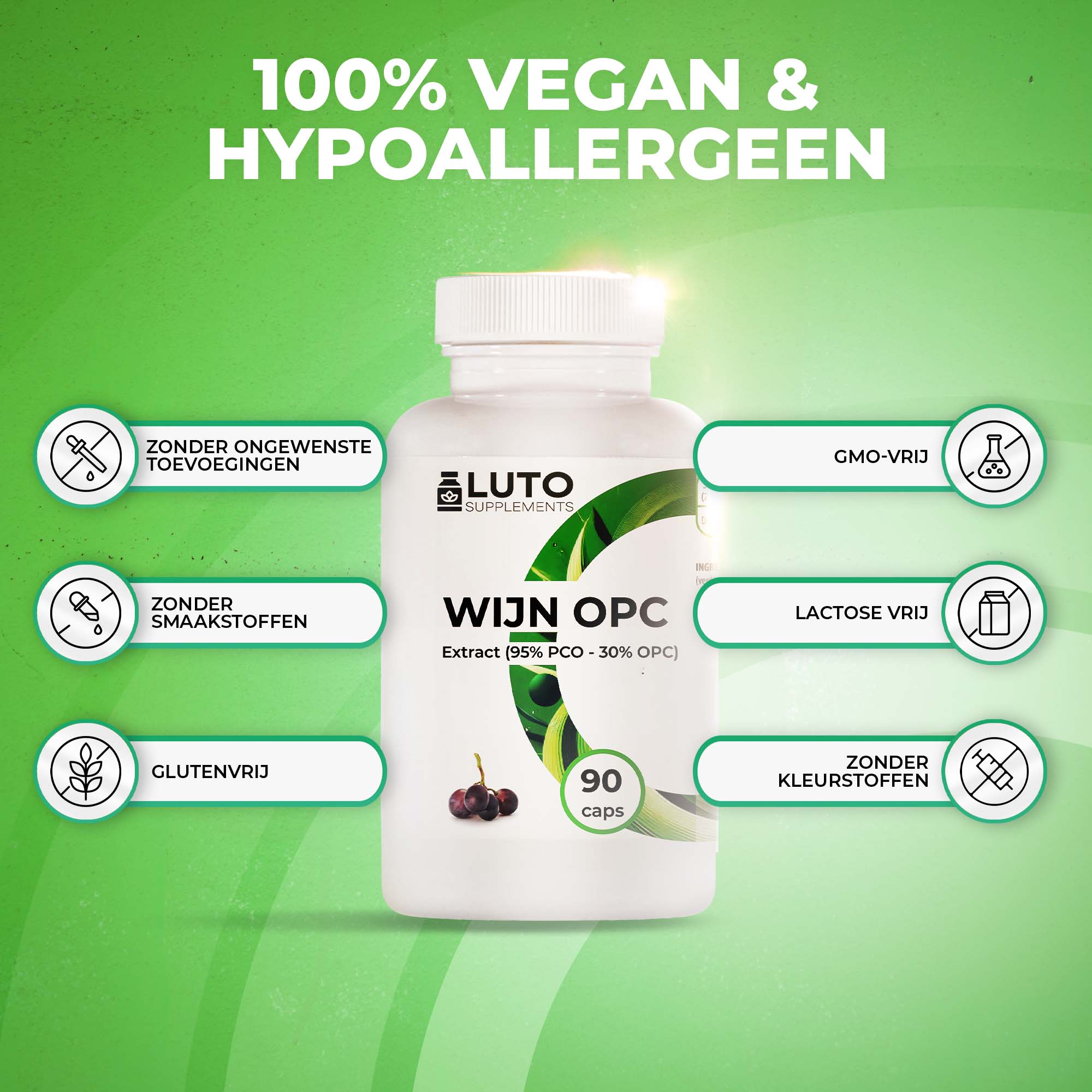
Wein OPC Traubenkernextrakt (95% PCO - 30% OPC) LUTO Supplements – Nährwerte und Inhaltsstoffe auf der Verpackung

LUTO Supplements

Grape Seed Extract (95% PCO - 30% OPC) | 90 Capsules | LUTO Supplements

Sale price€14,90

In stock. Delivery within 2-3 business days.

Volume discount

Not valid with discount codes.

Specifications

Category Herbs & Plants
Item code luto-048
Barcode 8721055250449
Best before On request
Batch number On request
Content 90 capsules
Number of servings 30

OPC Grape Seed Extract Capsules with 95% PCO

If you have ever looked into plant polyphenols, you have probably come across grape seed extract. It is packed with procyanidins, a group of compounds that occur naturally in grape seeds. This preparation from LUTO Supplements provides 166.7 mg of grape seed extract per capsule, standardized to 95% PCO and 30% OPC. These are not arbitrary abbreviations. They tell you exactly which part of the extract you are taking, and that is precisely where the difference lies.

OPC stands for oligomeric proanthocyanidins. PCO stands for procyanidin oligomers. It sounds complicated, but it boils down to this: Grape seeds contain all kinds of polyphenols. Some are small molecules, while others form long chains. The small, oligomeric variants—that is, the OPC and PCO—are processed differently by your body than the larger polymers. Smaller molecules pass through the intestinal wall more easily. That is why standardization makes a difference. A grape seed extract without specification can contain anything. With this product, you know that 95% of the extract consists of procyanidin oligomers. That is a powerful concentration.

The difference between 30% OPC and 95% PCO

Many people wonder why there are two percentages on the label. This has to do with testing methods. OPC and PCO partially overlap. They belong to the same family of polyphenols from grape seeds. The PCO content (95%) indicates the total oligomeric procyanidin fraction. The OPC content (30%) is a more narrowly defined subset of that. In practice, this means: You receive a broad spectrum of oligomeric polyphenols, with a guaranteed proportion of the smallest, most absorbable fractions. Grape seed extract without these specifications is often less transparent about exactly what is inside.

Polyphenols and olive oil in one capsule

What many do not know: In addition to grape seed extract, this product also contains olive oil. Olive oil serves as a carrier here and is a natural addition to the formula. Together with the grape seed extract, this creates a capsule that combines two sources of plant polyphenols. The formula is otherwise deliberately kept simple: potato starch as a filler and a gelatin capsule. No long list of additives.

Manufactured in Germany under ISO certification

LUTO Supplements has this grape seed extract manufactured in Germany. Production is subject to DIN EN ISO 9001 and HACCP, two quality systems that ensure the control of purity and consistency. Every batch is tested. For a preparation where standardization is so crucial, this makes a difference. After all, claiming an OPC content of 30% is only worth something if you actually measure and control it. With 90 capsules per pack, you have a 45-day supply at two capsules per day.

In short: This is a concentrated grape seed extract that makes it clear what is inside. No vague percentages, no unnecessary additives. Simply grape seed with a high oligomeric fraction, supplemented with olive oil. For anyone who consciously chooses plant polyphenols as a daily supplement.

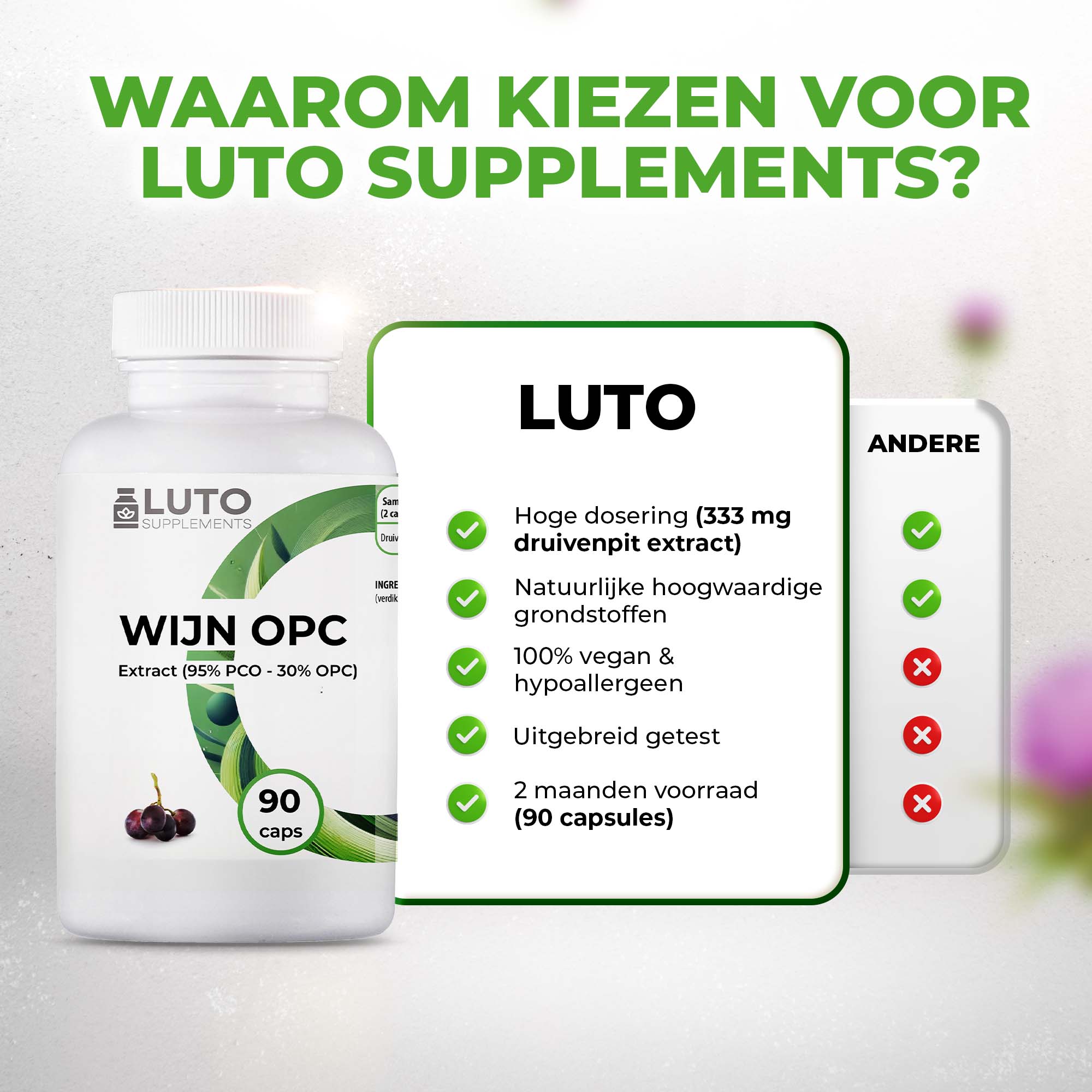
Why choose LUTO Supplements' OPC grape seed extract (95% PCO - 30% OPC)?

95% procyanidin oligomers per capsule

The extract is standardized to 95% PCO. This means that almost the entire extract consists of oligomeric procyanidins, the smaller polyphenols that your body absorbs most easily. Many grape seed extracts do not state a standardization level or are significantly lower.

333.4 mg extract per daily dose

With two capsules, you get 333.4 mg of grapeseed extract, standardized to 95% PCO and 30% OPC.

Grape Seed Extract Combined with Olive Oil

In addition to grape seed extract, each capsule contains olive oil. It serves as a carrier while also providing its own polyphenols. This allows you to combine two plant-based sources of polyphenols in a single capsule without any additional additives.

Manufactured in Germany under ISO 9001 and HACCP

Production takes place in Germany under DIN EN ISO 9001 and HACCP certification. Each batch is tested for purity. For a product where standardization is so crucial to quality, this control makes a concrete difference.

Frequently Asked Questions

What exactly is grape seed extract?

Grape seed extract is a concentrated extract from the seeds of grapes (Vitis vinifera). These seeds are packed with polyphenols, a broad group of plant compounds. Through extraction and standardization, the concentration of certain polyphenols, such as procyanidins, is increased compared to what you would get from eating grapes. The higher the standardization, the more precisely you know what is in each capsule.

What do OPC and PCO mean on the label?

OPC stands for oligomeric proanthocyanidins and PCO for procyanidin oligomers. Both terms refer to small chains of polyphenols from grape seeds. They largely overlap but are determined using different measurement methods. The PCO content of 95% indicates the total oligomeric fraction, while the OPC content of 30% is a more narrowly defined part of it. Together, they tell you that this extract is highly concentrated in the smaller, more absorbable polyphenols.

Can you take grape seed extract daily?

Yes, grape seed extract is intended for daily use. With regular intake, side effects are usually mild, such as slight stomach discomfort. Take the capsules with a meal, as this is easier on your stomach. If you take blood thinners or other medications, speak with your doctor first.

Aren't 90 capsules a bit low for the price?

At the recommended dosage of 2 to 3 capsules per day, you have a 30 to 45-day supply. This is comparable to most grape seed extracts on the market. The difference lies in standardization: 95% PCO is a potent concentration. Here, you are paying for an extract that is transparent about its contents, not for a large container with an unclear potency.

Why are oligomeric procyanidins better absorbed than other polyphenols?

Polyphenols come in different sizes. Some form long molecular chains (polymers), while others are short (oligomers). The short oligomeric variants pass through the intestinal wall more easily because their molecular size is smaller. Larger polymers are mostly not absorbed and leave your body unused. That is why it is important that this extract is standardized to the oligomeric fraction and not to the total polyphenol content.
What is the difference between grape seed extract and resveratrol?

Both come from grapes, but from different parts. Resveratrol is found mainly in the skin and is isolated as a single polyphenol. Grape seed extract comes from the seeds and contains a broad spectrum of procyanidins, which are chains of several interconnected polyphenols. They are therefore related but different substances with a different polyphenol profile. Which one you choose depends on what you are looking for: a single substance or a broader spectrum from the grape seed.