PEA (Palmitoylethanolamid) 1200 mg LUTO Supplements – Produkt | kaufen in Deutschland und Österreich
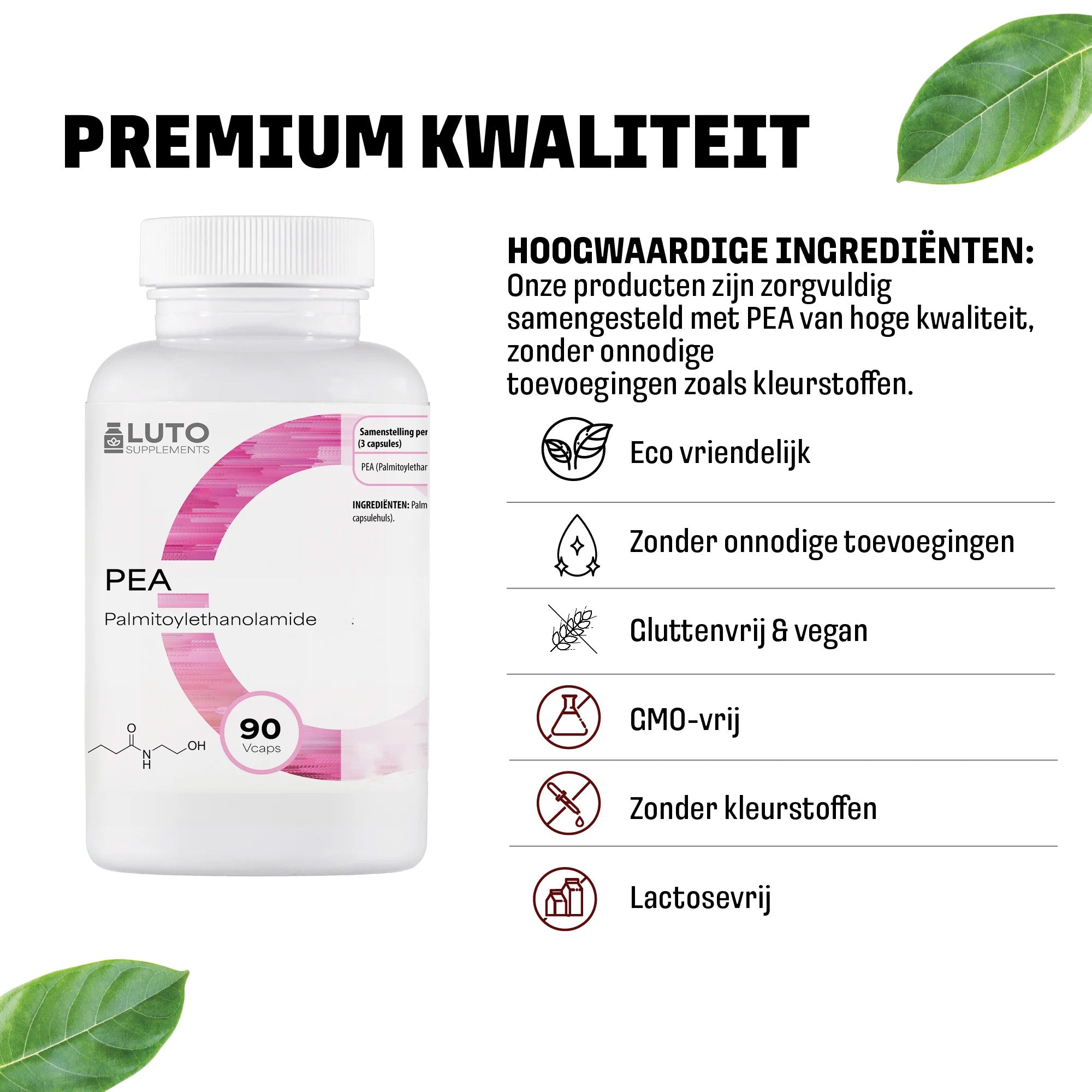
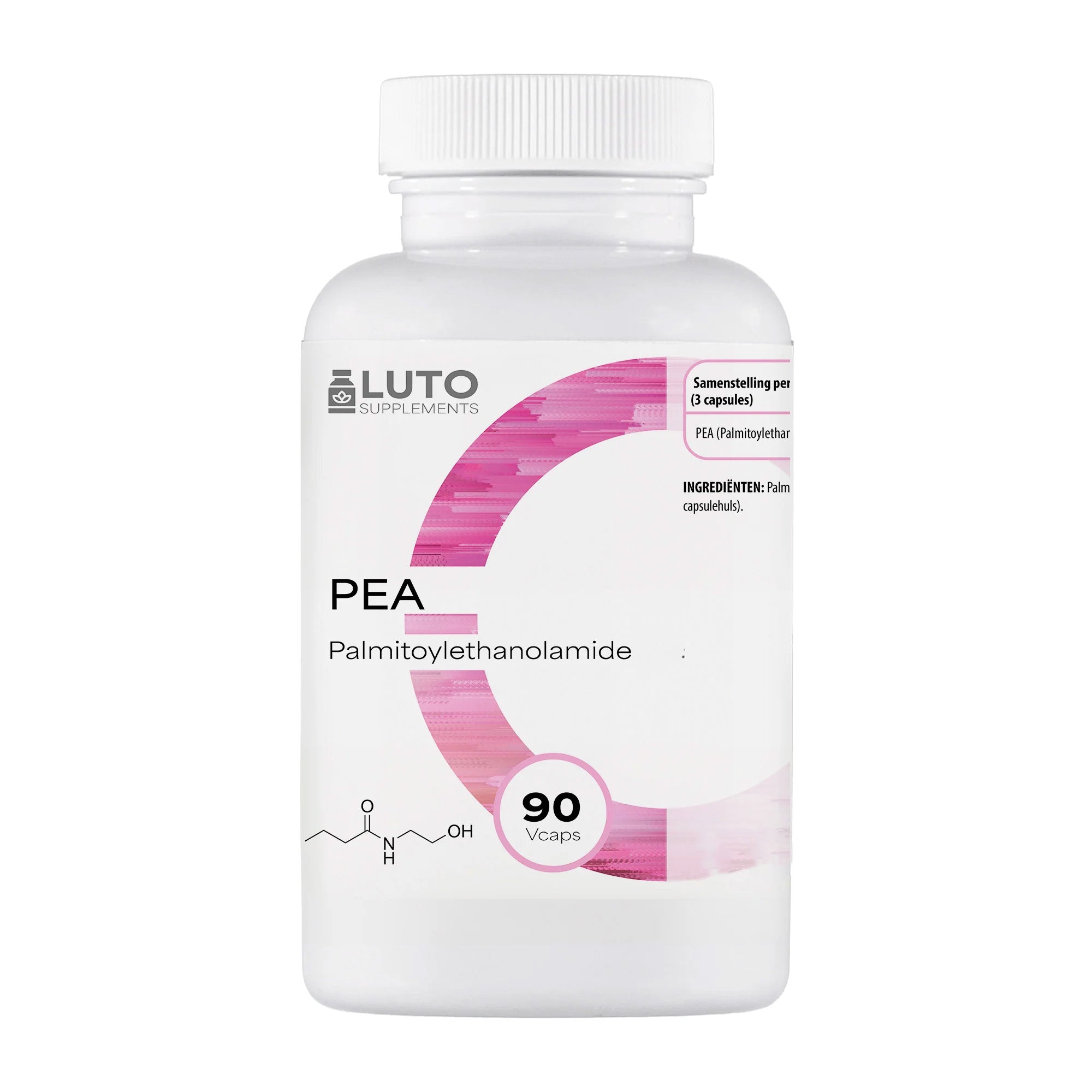
PEA (Palmitoylethanolamid) 1200 mg LUTO Supplements – Produktverpackung Vorderseite
PEA (Palmitoylethanolamid) 1200 mg LUTO Supplements – Verpackung mit Etikett und Produktinformationen
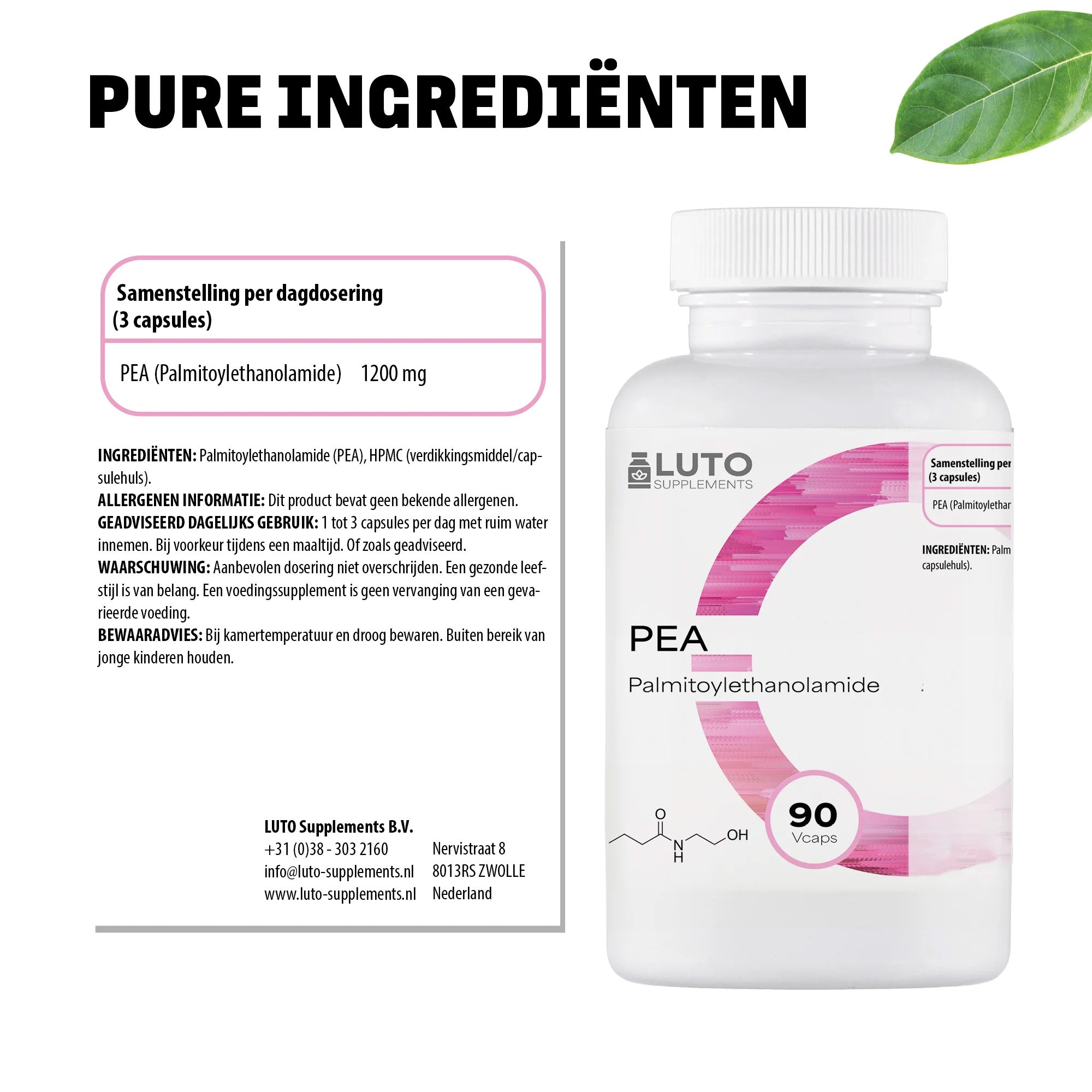
PEA (Palmitoylethanolamid) 1200 mg LUTO Supplements – Nährwerte und Inhaltsstoffe auf der Verpackung
PEA (Palmitoylethanolamid) 1200 mg LUTO Supplements – Produkt aus der Nähe

LUTO Supplements

PEA (Palmitoylethanolamide) 1200 mg | 90 Capsules | LUTO Supplements

Actieprijs€27,90

Out of stock.

Volume discount

Not valid with discount codes.

Specificaties

Categorie Other
Artikelcode luto-004
Barcode 8720865080895
Houdbaar tot Op aanvraag
Batchnummer Op aanvraag
Inhoud 90 capsules
Aantal doseringen 30

PEA Palmitoylethanolamide 1200 mg Capsules

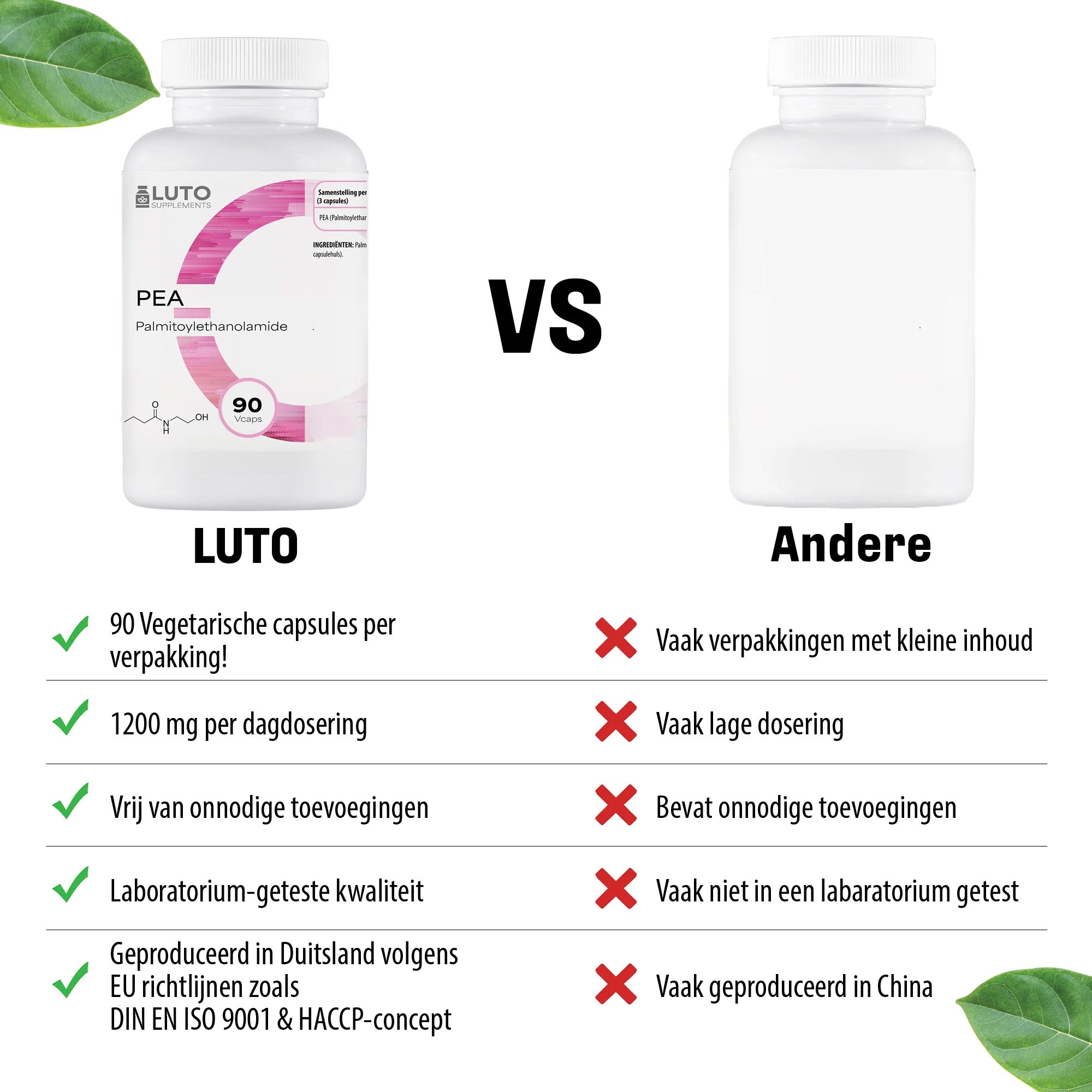
This product contains exactly one active ingredient: palmitoylethanolamide (PEA). No fillers, no colorings, no additional ingredients you don't need. Each capsule delivers 400 mg of pure PEA in a plant-based shell. The bottle contains 90 capsules. At three capsules per day, it lasts one month. Are you looking for a vegan PEA supplement that delivers on its promise—namely, to provide PEA and nothing else? Then this is exactly the kind of straightforward, conscious formula.

What palmitoylethanolamide actually is

Palmitoylethanolamide is a fatty acid amide. That sounds technical, but it boils down to this: It is a fat-like substance belonging to the group of N-acylethanolamides. Your body produces PEA itself from building blocks in your cell membranes. It also occurs in small amounts in food, such as egg yolks, soybeans, and peanuts. However, these amounts are quite small compared to what you receive in supplement form. The palmitoylethanolamide in this product is produced synthetically. This means that the substance is produced in a controlled environment and is not extracted from food sources. The advantage of this is consistent purity from batch to batch.

How PEA works at the cellular level

What many do not know: Palmitoylethanolamide (PEA) does not work through the same pathways as many better-known supplements. PEA targets a receptor inside your cells called PPAR-alpha. Think of it as a switch that influences the activity of certain genes, especially genes involved in fatty acid metabolism. PEA also has an indirect relationship with the endocannabinoid system. It does not bind strongly to the known cannabinoid receptors CB1 and CB2. Instead, it influences this system indirectly, which in science is referred to as the entourage effect.

400 mg per capsule and the studied amounts

In clinical studies on PEA, doses of 300 to 1200 mg per day are usually used. This product delivers 400 mg per capsule. With one capsule, you are at the lower end of this range. With three capsules, you reach 1200 mg, the upper end of the studied range. This flexibility is practical. You can adjust it yourself depending on your personal situation. Good to know: PEA is a lipophilic substance. It mixes better with fats than with water. Taking it with a meal that contains some fat can influence its absorption in your gastrointestinal tract. Many people wonder whether particle size plays a role. The literature mentions micronized and ultramicronized forms of PEA, in which the particles are ground smaller. This increases the surface area and can make absorption more predictable. For this product from LUTO Supplements, it is not explicitly stated whether the PEA is micronized. This is not an exclusion criterion, but something you should keep in mind.

A deliberately simple composition

The ingredient list of this PEA supplement is strikingly short: palmitoylethanolamide and HPMC, the plant-based capsule shell. That's it. No magnesium stearate, no silicon dioxide, no rice flour as a filler. For those who want to supplement gluten-free, lactose-free, and vegan, this formula meets all three criteria. The capsules are manufactured in Europe according to GMP standards (Good Manufacturing Practice, a quality standard for production processes). This simplicity is no coincidence. It fits an approach where you know exactly what you are taking, without extras you didn't ask for.

With 90 vegan capsules of 400 mg PEA each, this is a straightforward supplement. No complex formula, no long list of excipients. Simply palmitoylethanolamide in a plant-based capsule. For everyone who consciously chooses simplicity and wants nothing else.

Why PEA (Palmitoylethanolamide) 1200 mg from LUTO Supplements?

400 mg of pure PEA per capsule, flexibly dosable

Each capsule delivers 400 mg of palmitoylethanolamide. With three capsules per day, you get 1200 mg, the upper end of the range used in clinical studies. With one capsule, you get 400 mg. This way, you decide for yourself where you land in this range.

Two ingredients, nothing more

The ingredient list contains exactly two items: palmitoylethanolamide and a plant-based capsule shell (HPMC). No magnesium stearate, no silicon dioxide, no rice flour as a filler. You know exactly what you are taking.

Vegan, gluten-free and lactose-free

The HPMC capsule shell is entirely plant-based. In addition, the formula contains no gluten or lactose. Manufactured in Europe in accordance with GMP standards.
90 capsules for one month at full dosage

The bottle contains 90 capsules. At three capsules per day, you have exactly a one-month supply. If you take fewer per day, one bottle will last you longer.

Frequently Asked Questions

What exactly is palmitoylethanolamide (PEA)?

PEA is a fatty acid amide, a fat-like substance from the N-acylethanolamine group. Your body produces it itself from building blocks in your cell membranes. It is also found in small amounts in food, such as egg yolks, soybeans, and peanuts. However, these amounts are much smaller than what you take in through a supplement. The PEA in this product is synthetically produced in a controlled environment, ensuring consistent purity from batch to batch.

How many PEA capsules should you take per day?

The recommended dose is 1 to 3 capsules per day. Each capsule contains 400 mg of PEA. Three capsules provide 1200 mg, which corresponds to the upper limit of the amounts used in clinical studies. You can therefore adjust the dosage according to your personal situation.

Are these PEA capsules vegan?

Yes, this product is completely vegan. The capsule shell is made of HPMC (hydroxypropyl methylcellulose), a plant-based alternative to gelatin. In addition, the product contains no animal-derived excipients or additives.

Why is it not stated whether the PEA is micronized?

That is a valid question. The literature refers to micronized and ultramicronized forms of PEA, in which smaller particles offer a larger surface area. LUTO Supplements does not explicitly state on the label which particle size is used. What is certain: The dosage per capsule (400 mg) and the total daily dose with three capsules (1200 mg) are within the clinically studied range. If you have specific questions about this, please contact customer service.
How does PEA work at the cellular level?

PEA targets a receptor inside your cells called PPAR-alpha. This is a type of switch that influences the activity of certain genes, including genes involved in fatty acid metabolism. In addition, PEA has an indirect relationship with the endocannabinoid system. It does not bind strongly to the known cannabinoid receptors CB1 and CB2, but rather influences this system indirectly through what is known in science as the entourage effect.

What is the difference between PEA capsules and PEA powder?

The difference lies mainly in ease of use and dosing accuracy. With capsules, the amount of PEA per capsule is precisely measured, in this case 400 mg. With powder, you have to weigh and measure it yourself, which leaves more room for variation. Capsules are also easier to take with you. On the other hand, powder sometimes offers more flexibility if you want to measure out very specific amounts. The active ingredient itself is the same in both cases.