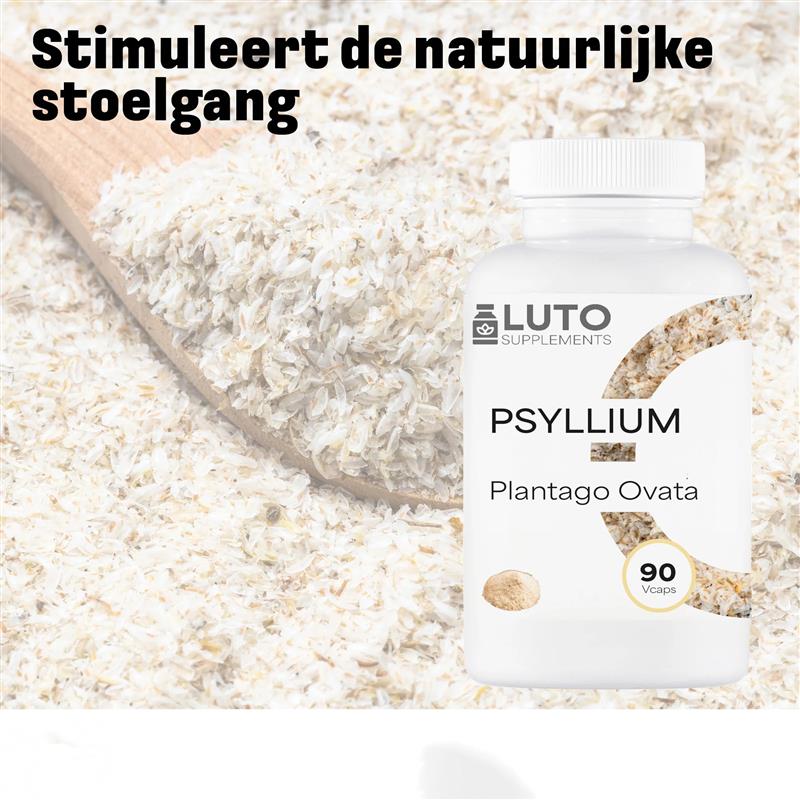
Luto Supplements Psyllium Plantago Ovata
psyllium husk in capsule vorm?
Psyllium (Plantago Ovata) LUTO Supplements – Produktverpackung Vorderseite
Psyllium (Plantago Ovata) LUTO Supplements – Verpackung mit Etikett und Produktinformationen
Psyllium (Plantago Ovata) LUTO Supplements – Nährwerte und Inhaltsstoffe auf der Verpackung

LUTO Supplements

Psyllium (Plantago Ovata) | 90 Capsules | LUTO Supplements

Actieprijs€15,90

In stock. Delivery within 2-3 business days.

Volume discount

Not valid with discount codes.

Specificaties

Categorie Herbs & Plants
Artikelcode luto-049
Barcode 8721055250456
Houdbaar tot Op aanvraag
Batchnummer Op aanvraag
Inhoud 90 capsules
Aantal doseringen 30

Psyllium Capsules with Fiber from Plantago Ovata

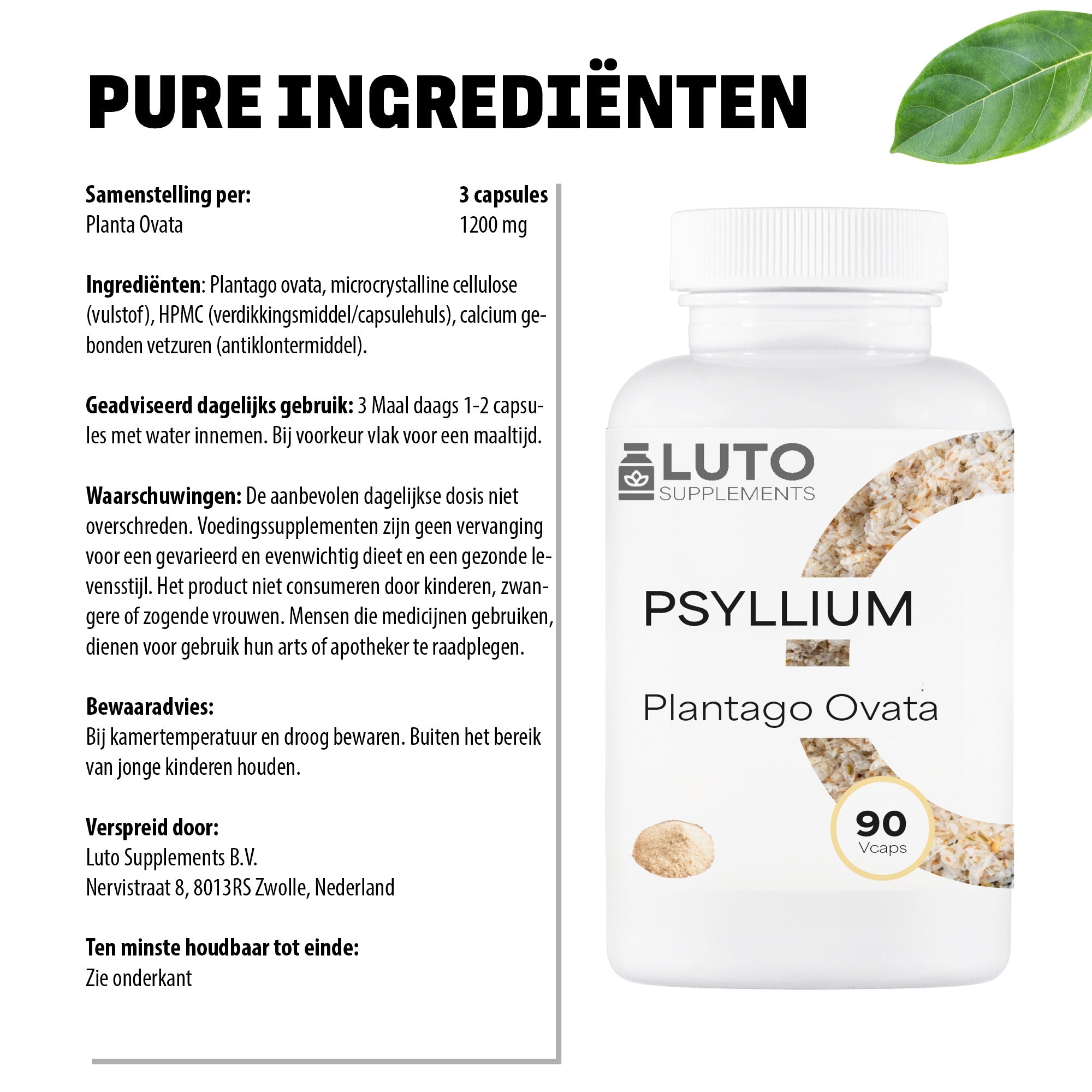
Struggling to get enough fiber through your daily diet? You're not alone. Plantago ovata (psyllium fiber) is one of the best-known natural sources of fiber in the world. LUTO Supplements provides this soluble fiber in plant-based capsules, so you don't have to mix any powder. Each container contains 90 capsules, providing 30 servings of 1200 mg of psyllium each.

How psyllium fiber works in your gut: Plantago ovata is the seed husk of the psyllium plant. This seed husk consists mainly of arabinoxylan, a mucilage that can bind a lot of water. As soon as the fiber comes into contact with moisture in the gut, it forms a soft gel. This gel increases the volume of your intestinal contents. In this way, psyllium fiber contributes to intestinal passage and bowel function.* This makes it a mild and natural way to increase your fiber intake. However, one requirement is important. Always drink plenty of water with the capsules. Without enough liquid, the fiber cannot do its job.

Capsules versus loose powder

Psyllium husk is traditionally sold as a loose powder. You then mix it into water or yogurt. This works perfectly, but not everyone finds the texture pleasant. Capsules are more convenient. No clumps, no taste, easy to take with you. But there is a downside. One capsule holds 400 mg of psyllium fiber. At the maximum dosage of 6 capsules per day, you get 2400 mg, or 2.4 grams. Scientific studies usually use dosages of 5 to 10 grams per day. LUTO's capsules are therefore primarily suitable as a supplement to your daily fiber intake, not as a replacement for all the fiber you need. Think of it as a practical base in addition to your vegetables, fruit, and whole grains.

What is and isn't in the psyllium capsules

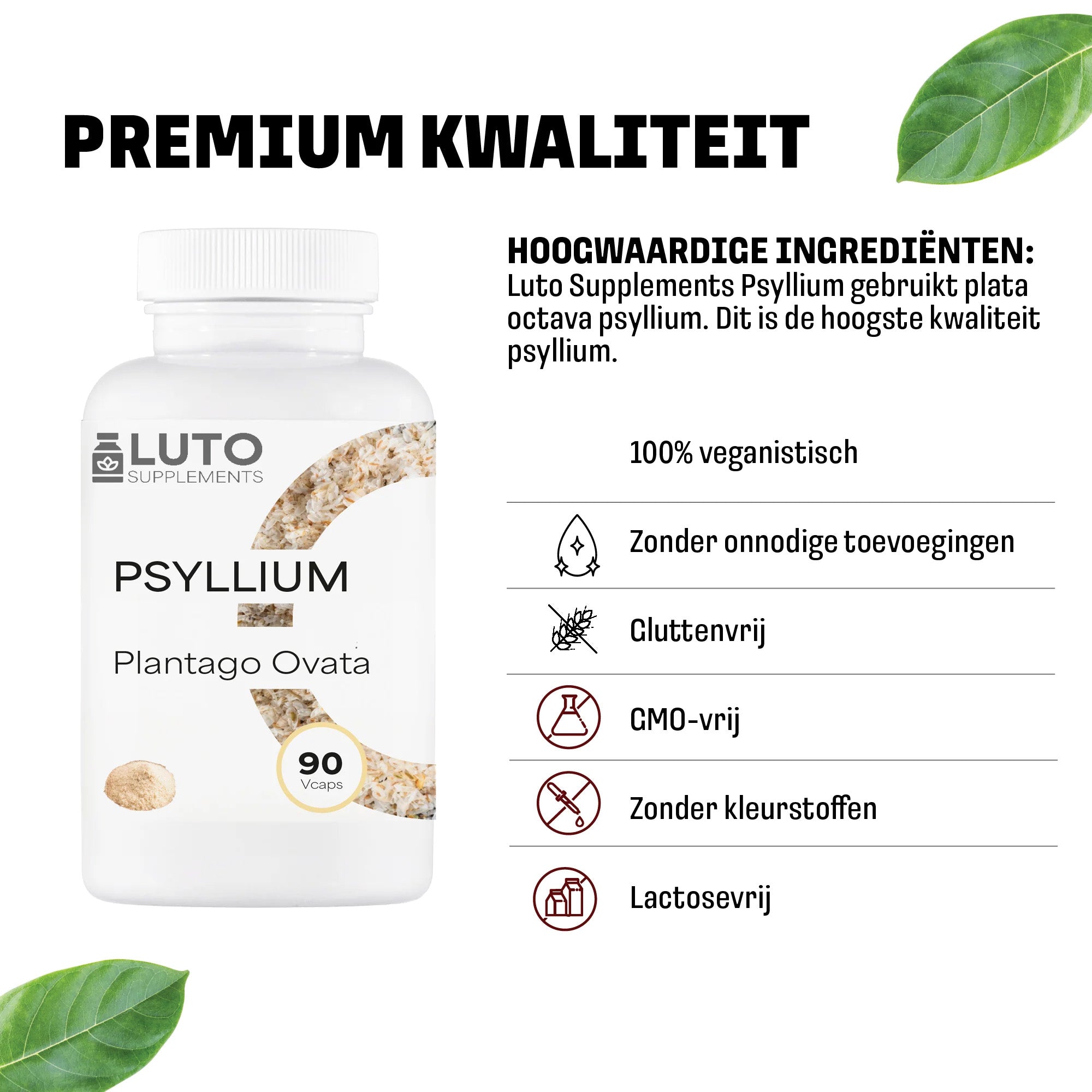
LUTO keeps the composition simple. The capsules contain Plantago ovata (psyllium fiber), microcrystalline cellulose as a filler, and a plant-based HPMC shell. No artificial colors, no preservatives. The product is vegan, gluten-free, lactose-free, and free from genetically modified organisms. By the way, the calcium salts of fatty acids listed on the label are a common anti-caking agent used in capsule production. Nothing special, but it explains why calcium appears on the ingredients list. It is a minimal amount that does not make a significant contribution to your daily calcium intake.

What to look out for with psyllium

Psyllium fibers are mild, but your body needs to get used to them. Start gently and increase slowly. Some people experience bloating or increased gas at first. This usually subsides after a few days. Important: Always take psyllium capsules with a large glass of water. Without enough liquid, the gel cannot form properly. And if you take medication, take the capsules at a different time. The gel-forming property of Plantago ovata can delay the absorption of certain medications. Think of thyroid medication or iron tablets. A one-hour gap is often enough.

In short: This psyllium fiber dietary supplement from LUTO offers an easy way to incorporate additional soluble fiber into your day. The capsule form is practical and clean, the composition pure. For anyone who wants to take their fiber intake a step further without the hassle of powder, this is a logical choice.

Why Psyllium (Plantago Ovata) from LUTO Supplements?

100% Plantago ovata seed husk as a source of fiber

The active ingredient in these capsules is the seed husk of the psyllium plant, also known as psyllium husk. This seed husk is rich in arabinoxylan, a mucilage that can bind a lot of water and forms a gel in your gut. No additional herbs or fiber blends have been added.

1200 mg psyllium fiber per daily dose

Each daily dose of 3 capsules provides 1200 mg of Plantago ovata. At the maximum dosage (6 capsules per day), you get 2400 mg. This makes the product suitable as a daily supplement to your dietary fiber intake.
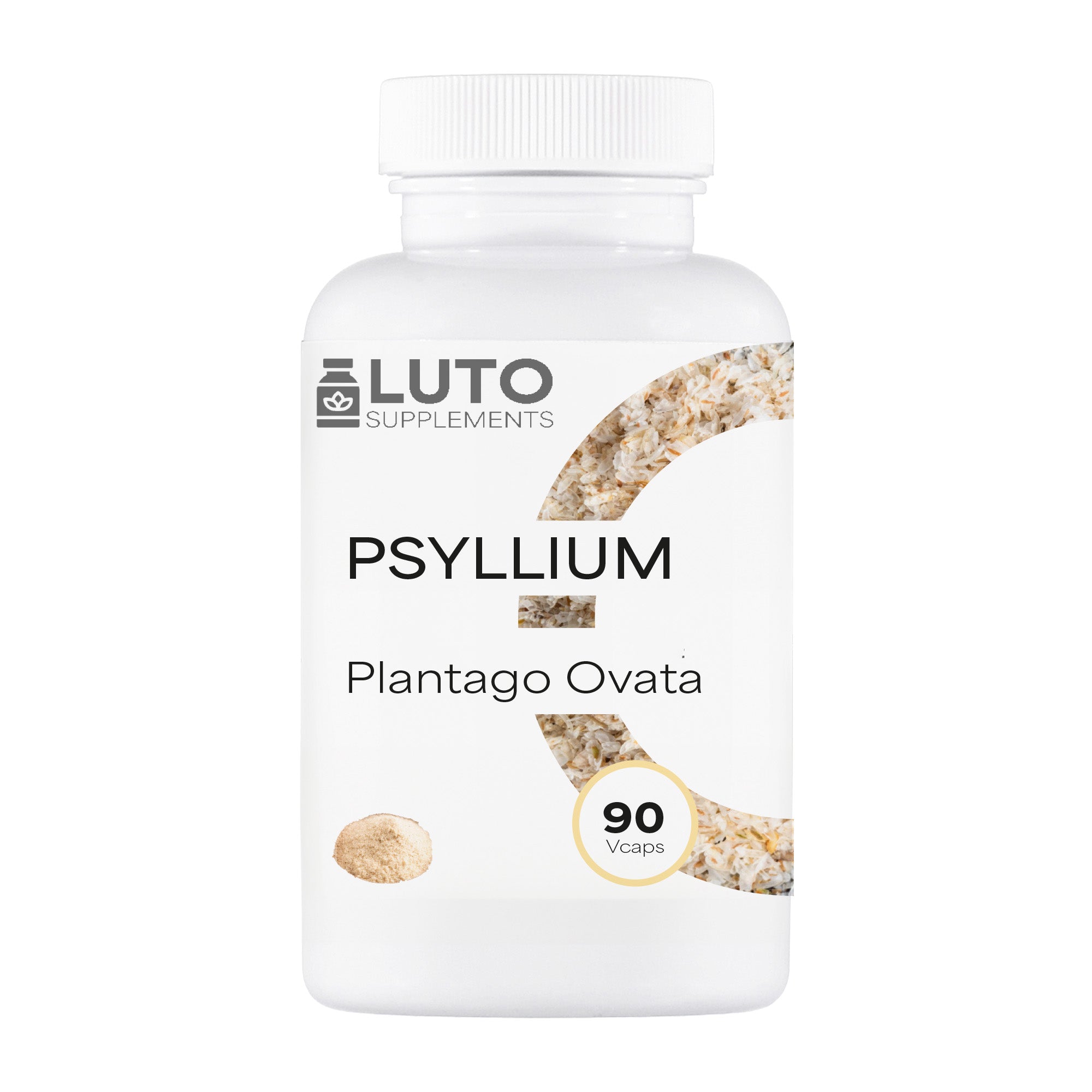
Capsules instead of powder or gel

Psyllium powder mixed with water creates a gel-like texture that not everyone finds pleasant. Simply swallow LUTO's plant-based capsules with water. No clumps, no taste, easy to take with you.
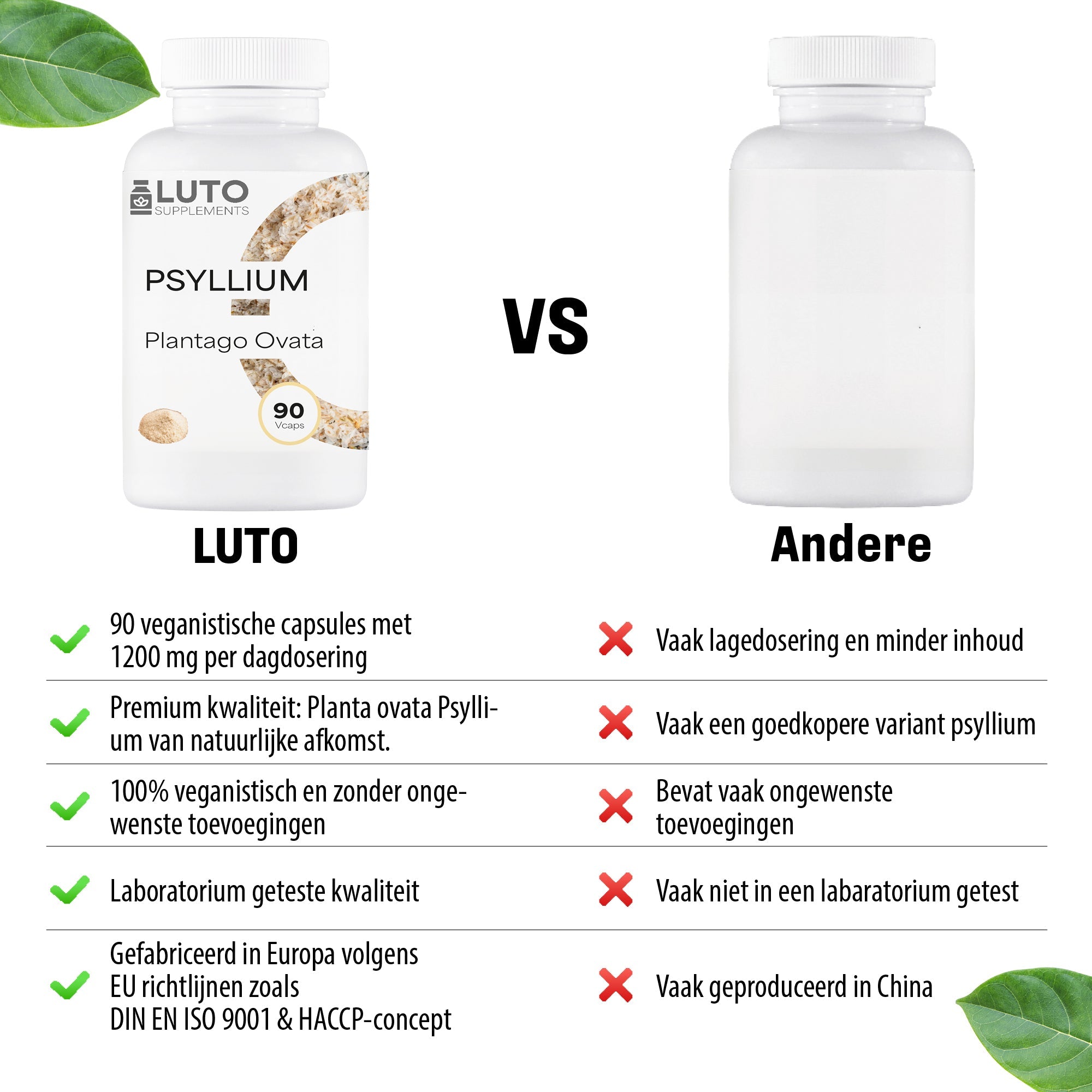
Vegan, gluten-free and free from artificial additives

The capsules contain no artificial colors or preservatives. The product is vegan, gluten-free, lactose-free and free from genetically modified organisms. The capsule shell is made of HPMC, a plant-based alternative to gelatin.

Frequently Asked Questions

What is the difference between psyllium capsules and psyllium powder?

The active ingredient is the same; the difference lies in the form of use. You mix the powder into water or yogurt, which not everyone likes because of its gel-like texture. You simply swallow capsules with water, without any taste or lumps. The disadvantage of capsules is that each one holds less psyllium. A capsule holds 400 mg, while it is easier to reach 5 to 10 grams per day with powder. Capsules are therefore mainly practical as a supplement to your fiber intake, not as a complete replacement for powder.

Why do you need to drink water with psyllium?

Psyllium fiber works by binding water and forming a soft gel in the bowel. Without enough liquid, this gel cannot form properly. What's more, not drinking enough water with psyllium can even lead to constipation. Therefore, always drink a large glass of water with each dose and make sure you drink enough throughout the rest of the day too.

Can you combine psyllium with medication?

This is possible, but not at the same time. The gel-forming property of psyllium can delay the absorption of certain medications. Think of thyroid medications, iron tablets, or lithium. Therefore, take psyllium at least one hour before or after your medication. Do you use prescription medication? Then speak to your doctor or pharmacist first.

Isn't the dosage of 1200 mg per day too low?

That depends on what you want to achieve with it. In scientific studies, dosages of 5 to 10 grams per day are used. With 3 capsules you get 1200 mg, with the maximum 6 capsules 2400 mg. This is indeed lower than the study dosages. This product is therefore intended as a supplement to your daily fiber intake from vegetables, fruit and whole grain products. Not as a replacement for it. For anyone who wants more psyllium, powder is usually more practical.

How exactly does psyllium fiber work in your gut?

The seed coat of Plantago ovata consists mostly of arabinoxylan, a mucilage that can hold a lot of water. As soon as the fiber absorbs moisture in the gut, it forms a soft, viscous gel. This gel increases the volume of your intestinal contents, thereby altering the passage through your gut. In the large intestine, part of the fiber is fermented by gut bacteria, which leads to the formation of short-chain fatty acids.

What is the difference between psyllium and other dietary fiber supplements?

The main difference lies in the type of fiber. Psyllium is a soluble fiber that forms a gel. Other dietary fiber supplements, such as wheat bran, contain mainly insoluble fiber, which acts more as a bulking agent. Soluble fibers like psyllium absorb water and soften the stool, while insoluble fibers mainly increase its volume. There are also synthetic fibers such as methylcellulose. Psyllium, on the other hand, is entirely plant-based and is one of the most extensively studied natural sources of fiber.