


What is vitamin B1 used for?
Thiamine contributes to normal energy metabolism, the normal function of the nervous system, normal psychological function, and normal heart function. It is a water-soluble vitamin that your body does not produce itself.
Bestsellers
View allBestsellers
View allCart
Your cart is empty

In stock. Delivery within 2-3 business days.
Not valid with discount codes.
Choose options
Not valid with discount codes.
Not valid with discount codes.
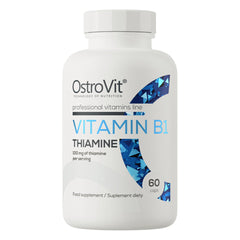
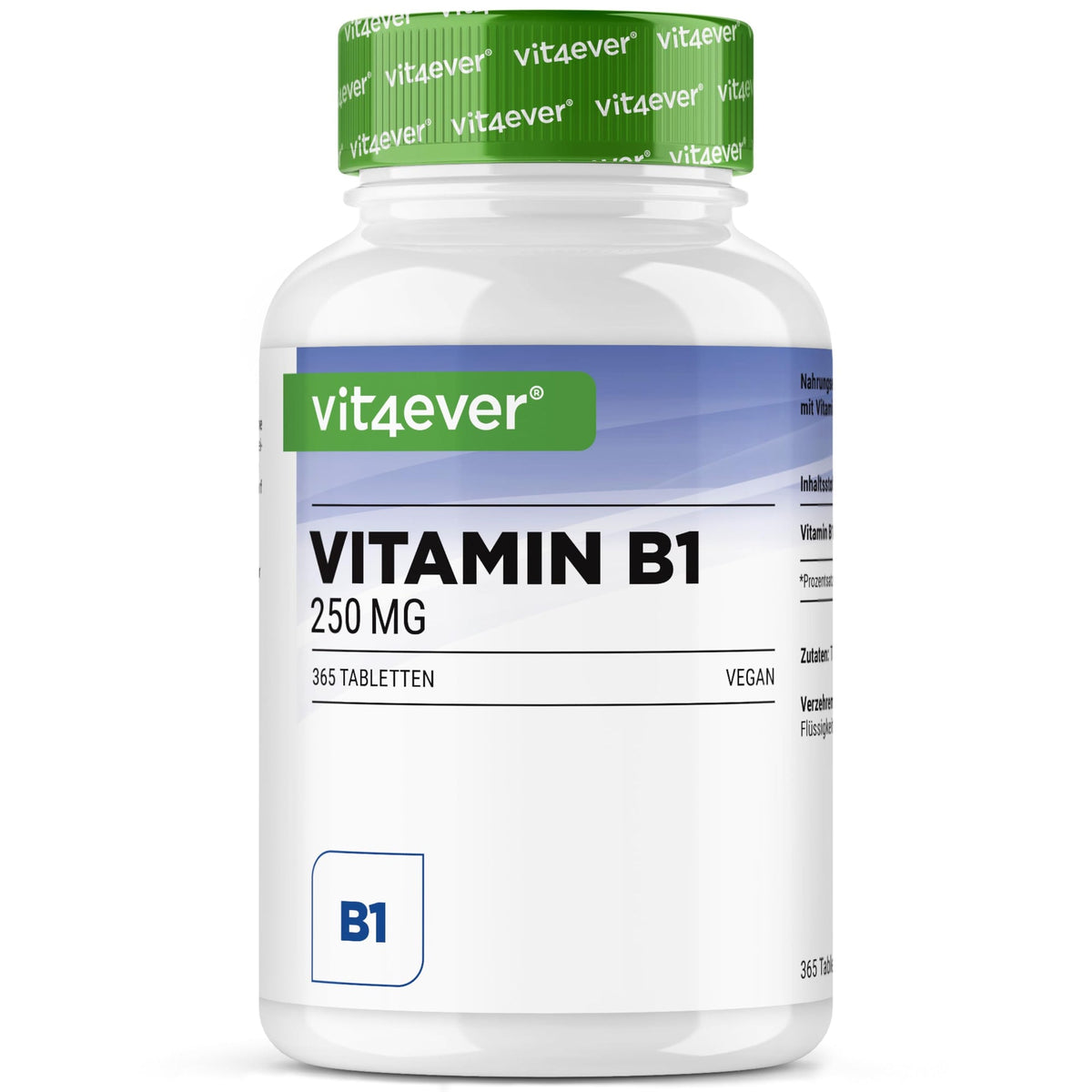
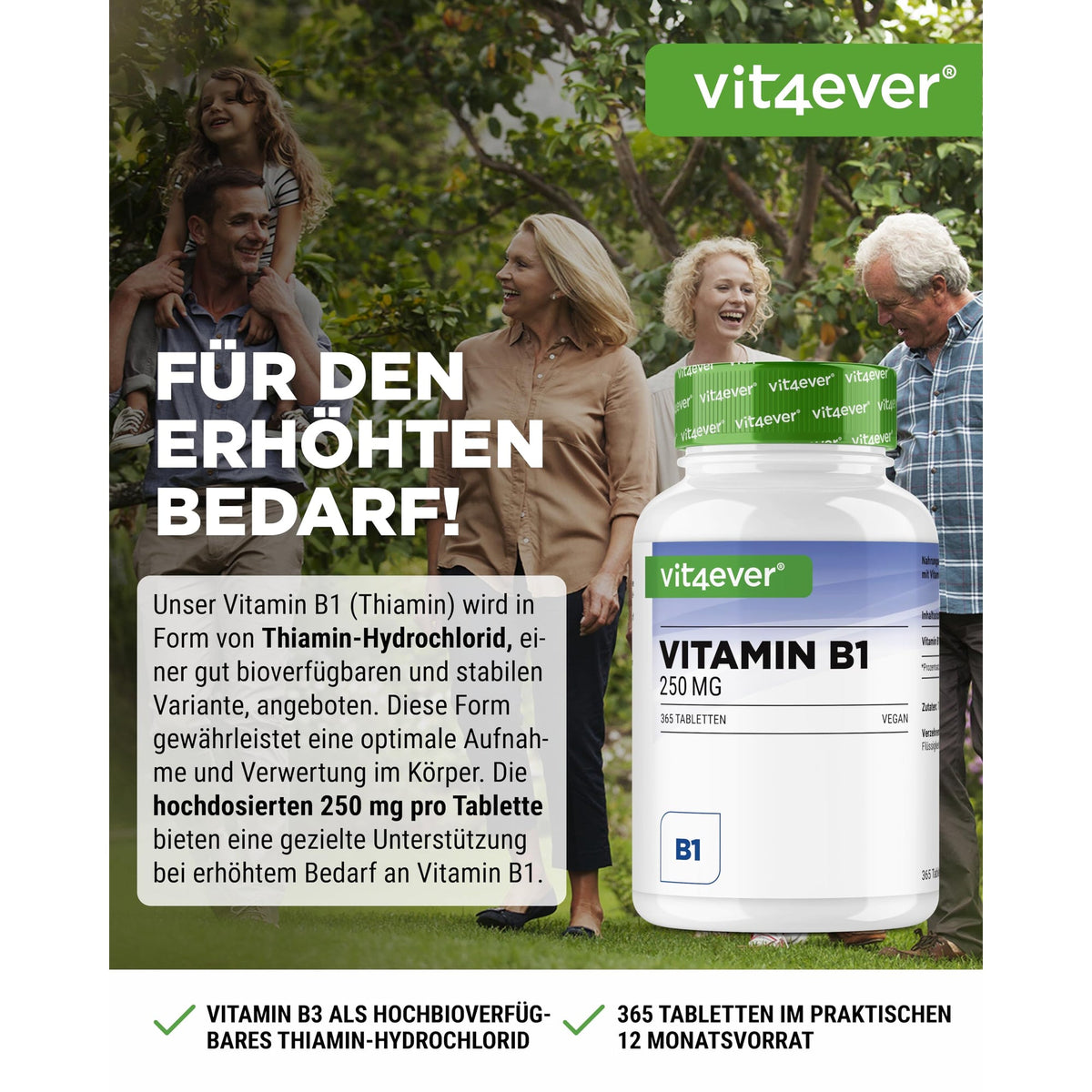
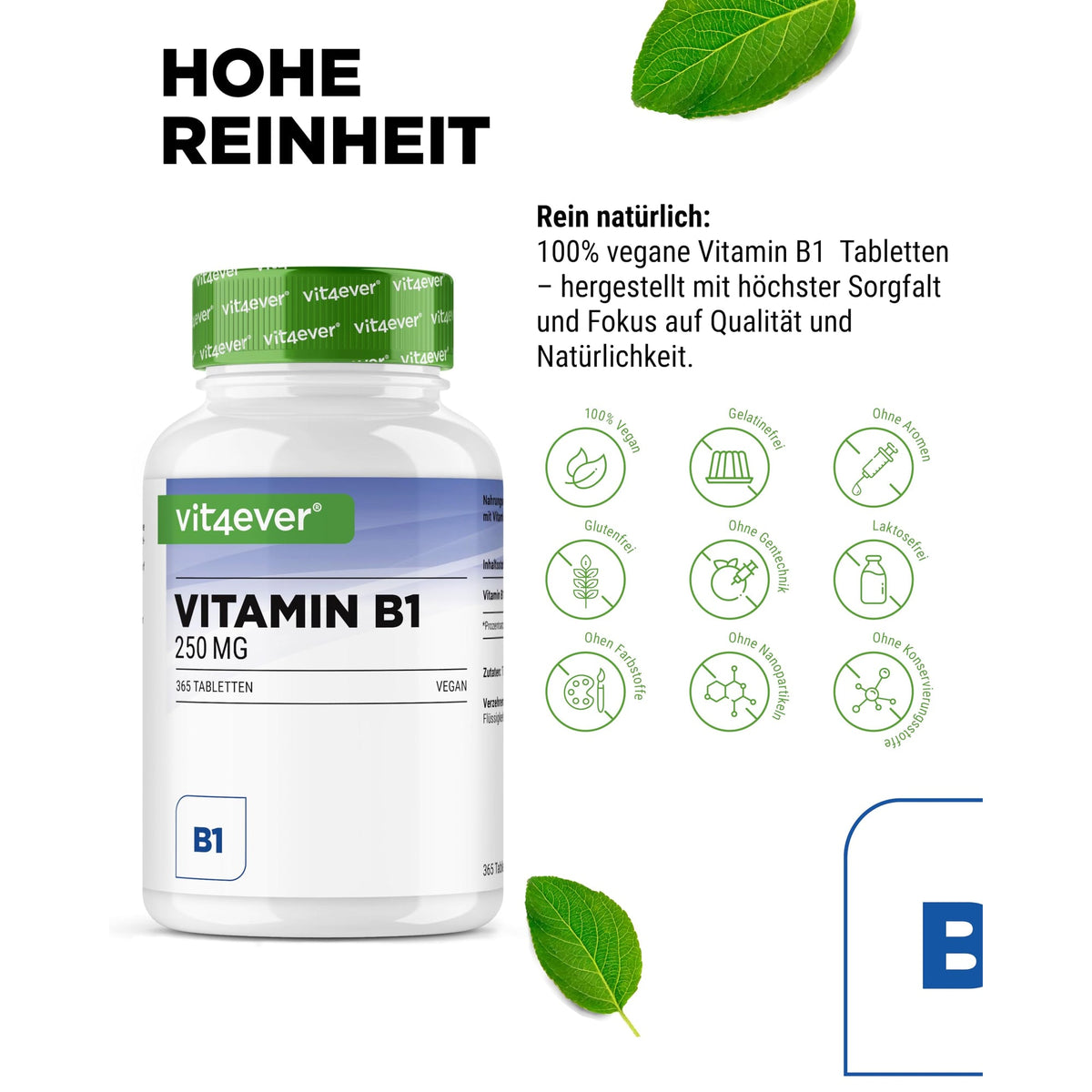
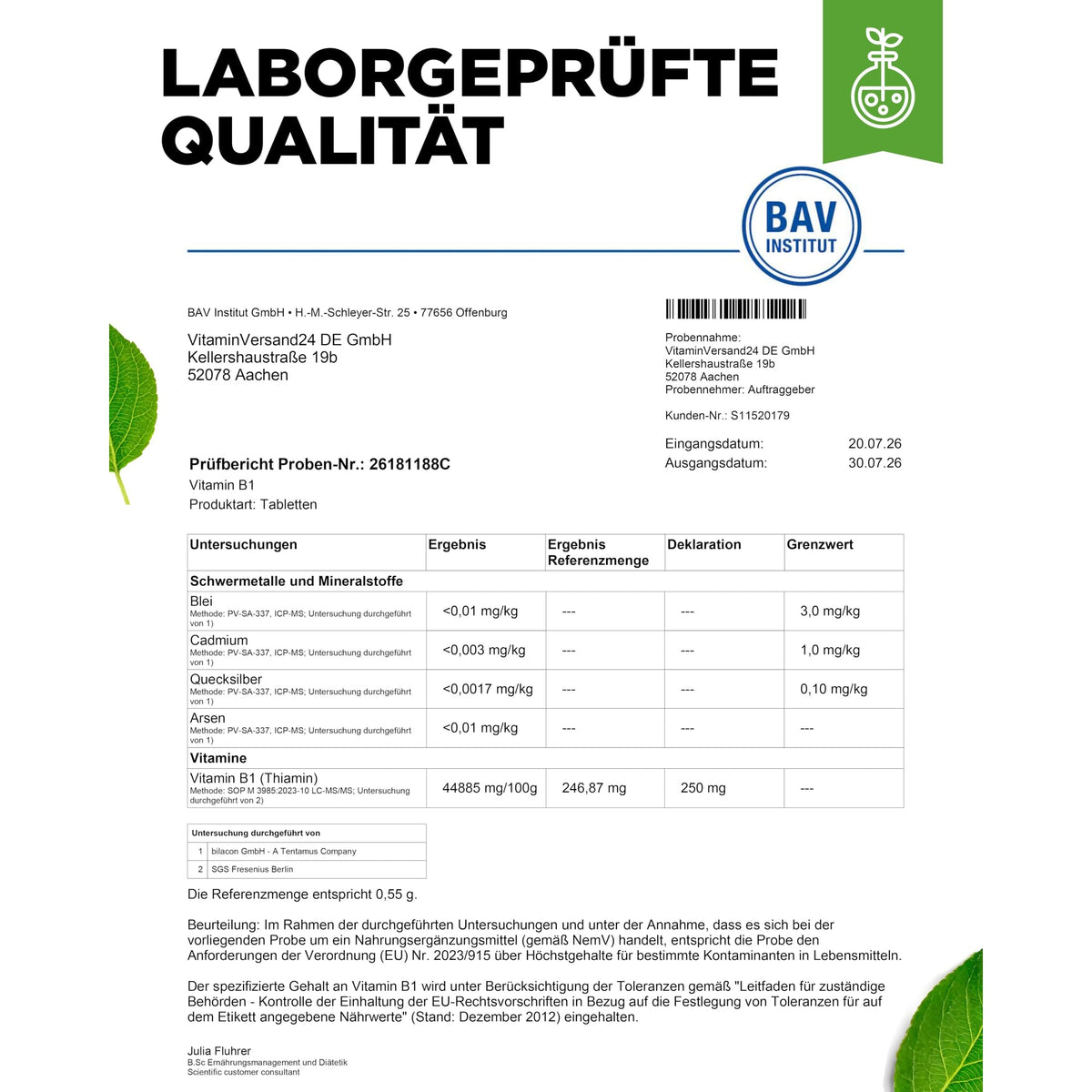
Each tablet of this dietary supplement contains 250 mg of vitamin B1, a dosage that goes far beyond a standard supplement. This raises a logical question: Isn't that too much for your body? The answer lies in how your body handles this vitamin. Thiamine is water-soluble, and what your body does not directly use is eliminated through the urine. This tablet by Vit4ever provides 250 mg per tablet, packaged in a container with 365 tablets, so one tablet every day for a year without running out.
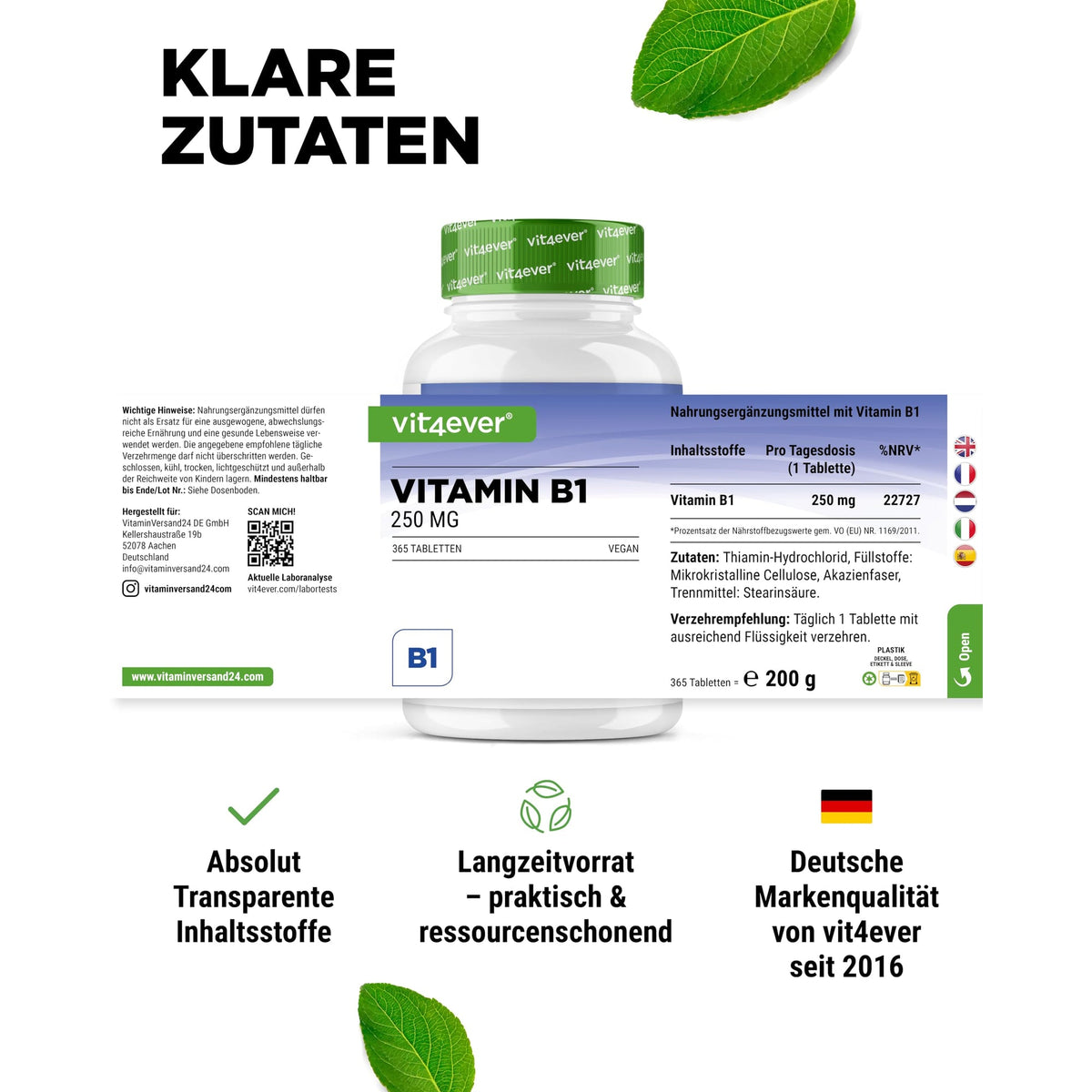
The recommended daily amount of vitamin B1 is usually around 1 to 1.5 mg. With 250 mg per tablet, you are therefore many times above this, calculated as 22,727 percent of the reference amount. That sounds extreme, but with a water-soluble vitamin, the calculation works differently than with fat-soluble variants such as A, D, E, and K. Your body absorbs what it needs for metabolism and the nervous system, and the rest is excreted again through the kidneys. Many people deliberately choose a higher dosage because they need to dose less frequently and are sure that enough is available, even on days when their diet is less varied. Thiamine contributes to normal energy metabolism and the normal function of the nervous system. Furthermore, vitamin B1 contributes to normal psychological function and normal heart function.
What many do not know: With water-soluble vitamins such as B1, there is hardly any risk of accumulation. The body regulates by itself how much it retains. Compare it to a bucket that is already full: Water that you pour in simply overflows. That is how it works with thiamine too. The excess leaves the body within a few hours through the urine, instead of accumulating in the fatty tissue or the liver. This is exactly the difference to, for example, vitamin A, where too high an intake can indeed pose a problem in the long term. With thiamine, this risk does not play out in the same way, precisely because the body repeatedly excretes excess amounts. Some people therefore notice that their urine temporarily turns a more intense yellow after taking a high dose of B1, a harmless and well-known effect of water-soluble vitamins.
Naturally, thiamine is found in, among other things, whole grains, legumes, and pork, but the amounts per serving are limited. To get to 250 mg through diet alone, you would have to eat unrealistic quantities. Vit4ever solves this with a tablet in which the thiamine is processed as thiamine hydrochloride, supplemented with microcrystalline cellulose as a filler. This filler ensures that the tablet retains its shape and is easy to swallow. It contains no artificial colors, gelatin, or preservatives, which makes the tablet also suitable for a vegan diet. The choice of tablet form instead of a capsule also means that no additional shell is necessary.
In practice, the role of thiamine in energy metabolism means that it helps convert carbohydrates into usable energy in your cells. At the same time, it plays a role in signal transmission in the nervous system, where nerve cells constantly pass on stimuli. Many wonder why a vitamin B1 preparation is offered specifically in tablet form and in this dosage. In short: A tablet is stable, easy to dose, and requires no refrigeration or special storage, unlike some liquid vitamin preparations. Athletes, people with a busy life, or anyone looking for a reliable supplement alongside their daily diet therefore choose a tablet with a clearly verifiable amount per piece. One tablet per day with a glass of water is enough. The tablet form makes precise dosing easy, without you having to measure out or weigh out, as would be the case with powder.
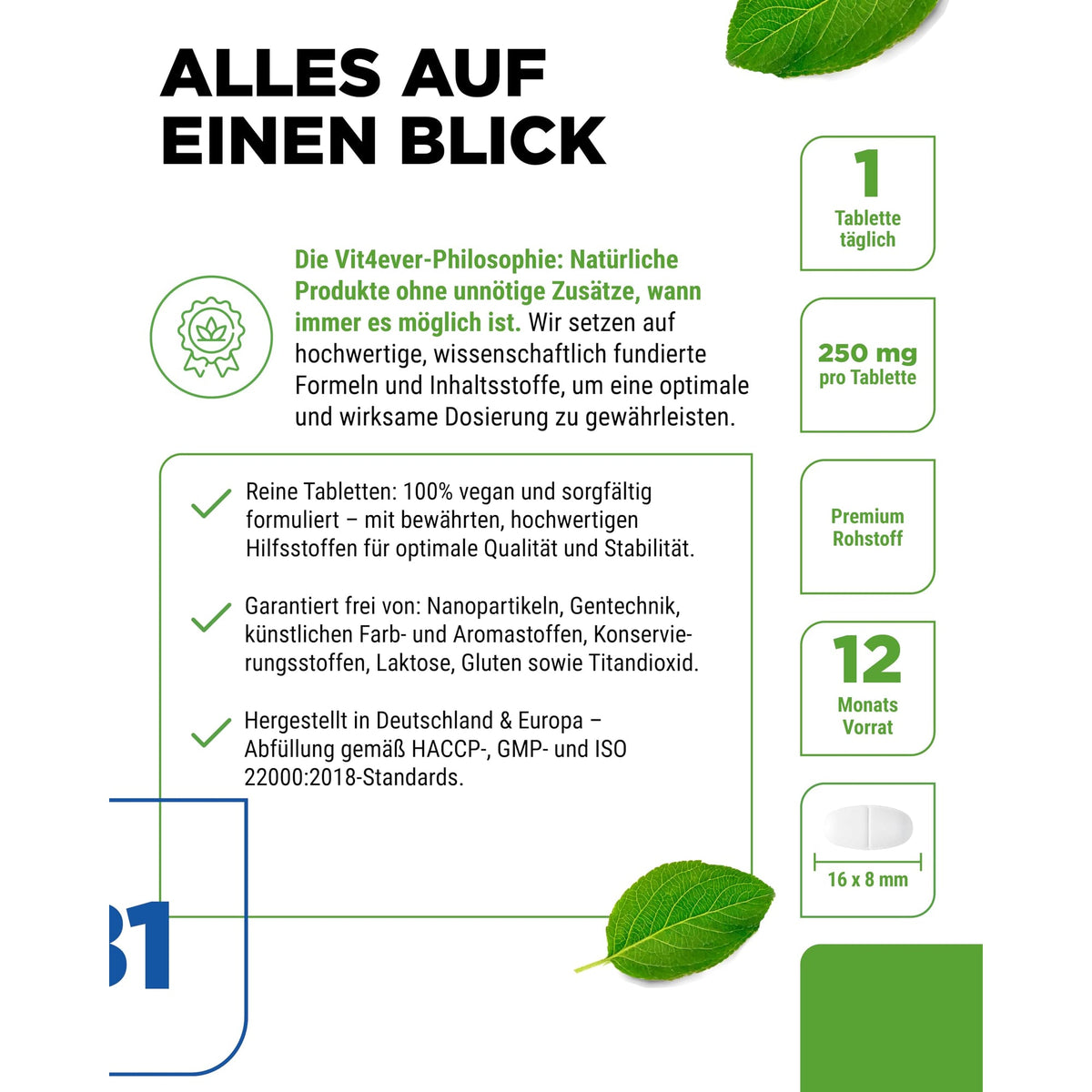
Taking the same amount of thiamine daily for a year without having to reorder in between: That is what this container with 365 tablets is designed for. Whether you have been using dietary supplements for a long time or are encountering vitamin B1 in this form for the first time, the combination of a high dosage and water solubility makes it a supplement without complicated build-up schedules or dosage adjustments.
A dosage of over 22,727% of the reference intake, higher than that of most standard B1 supplements.
If you consume too much thiamine, your body naturally excretes the excess through your urine instead of storing it.
At 1 tablet per day, you have exactly enough for a whole year, without having to reorder in between.
Free from gelatin, artificial colors, and preservatives, with microcrystalline cellulose as the only bulking agent.
Thiamine contributes to normal energy metabolism, the normal function of the nervous system, normal psychological function, and normal heart function. It is a water-soluble vitamin that your body does not produce itself.
No, thiamine is water-soluble, and your body naturally excretes any excess through your urine. There is no storage organ like there is for fat-soluble vitamins, so it does not build up with normal use.
The recommended dosage is 1 tablet per day, taken with sufficient water. Do not exceed this amount without consulting a doctor or a nutrition professional.
Thiamine is indeed found in grains, legumes, and meat, but in relatively small amounts per serving. With a 250 mg tablet, you take in a single dose that is difficult to achieve through diet alone without having to weigh out large quantities.
Thiamine is involved in the conversion of carbohydrates into usable energy in your cells and plays a role in signal transmission in the nervous system. It also contributes to normal heart function and normal psychological function.
A multivitamin usually contains only a fraction of the reference intake of thiamine, distributed among dozens of other substances. This product is a pure vitamin B1 preparation with 250 mg per tablet, for anyone specifically looking for a higher dose of thiamine.