Omega 3 Fish Oil in Triglyceride Form
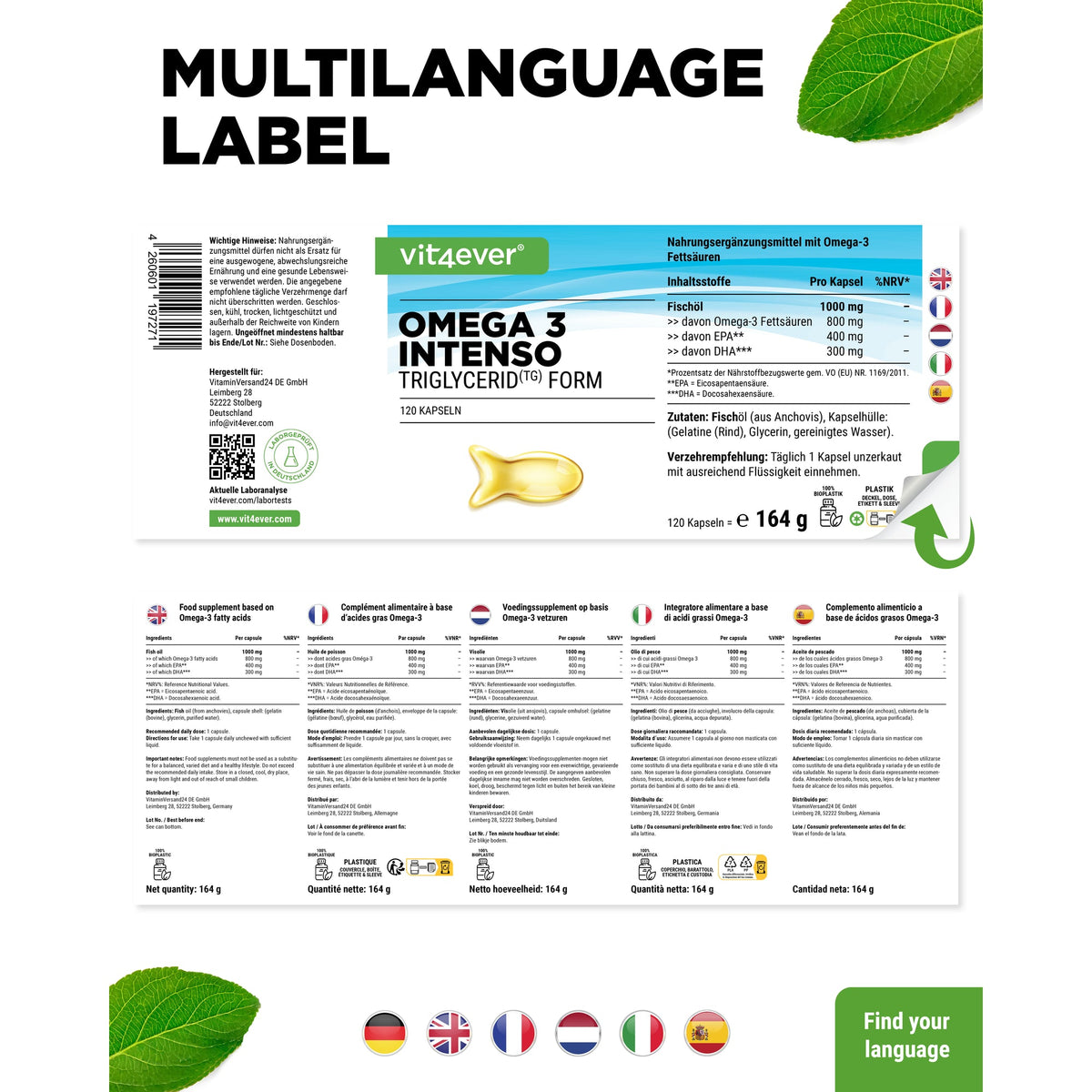
Omega 3 Fish Oil provides the fatty acids EPA and DHA, which your body cannot produce itself and therefore must obtain from food or a supplement. Vit4ever uses fish oil from sardines, caught off the coast of Peru, and processes it in the natural triglyceride form. Each softgel contains 1000 mg of fish oil with 800 mg of Omega 3, of which 400 mg is EPA and 300 mg is DHA. The product is available in 120 and 365 softgels, so you can choose between a smaller bottle or a year's supply. This way, you do not have to swallow several smaller capsules per day to reach your daily portion.
What Makes the Triglyceride Form Different
Fish oil comes in two main forms: triglyceride form (TG) and ethyl ester form (EE). The TG form is the form in which fatty acids naturally occur in fish before their molecular structure is altered. The EE form is created through an additional processing step in which the fatty acids are bonded to ethanol. Many manufacturers choose EE because it is cheaper to concentrate, but the TG form is known for better absorption in the intestine. Vit4ever deliberately chooses TG, even though this is a more expensive and complex production step. The production process of returning the oil to the TG form after concentration takes more time and money than simply leaving the oil in the EE form, which explains why TG fish oil is often slightly more expensive than EE variants.
400 mg EPA and 300 mg DHA per Softgel
One softgel already provides 700 mg of EPA and DHA combined, significantly more than the 250 mg required to state that EPA and DHA contribute to normal heart function. With 300 mg of DHA per softgel, you also exceed the threshold of 250 mg of DHA required for DHA claims: DHA contributes to the maintenance of normal brain function and normal vision. What many people do not know: EPA and DHA are both omega-3 fatty acids, but they perform slightly different tasks in the body. EPA has its own, different profile, while DHA is more of a structural building block of cell membranes in the brain and eyes. Therefore, most omega-3 products, including this one, always contain a combination of both. If you would prefer to avoid the taste of omega 3 fish oil entirely, it is best to take the softgel with a meal: This significantly reduces the likelihood of a slight fishy aftertaste.
Sardine Origin and Purity
The oil comes from sardines, a small fish that is low on the food chain. This is relevant because fish that are low on the chain generally had less time to accumulate heavy metals than large predatory fish such as tuna or swordfish. Nevertheless, each batch is additionally tested individually for purity and its Totox value, a measure that indicates how fresh or oxidized an oil is. A low Totox value means that the oil is less degraded, which benefits the smell and taste of the softgel. Are you unsure which variant is right for you? The 120 softgels are practical for trying out, while the 365 softgels last a full year when taking 1 softgel daily. Both options contain exactly the same composition per softgel; the only real difference lies in the total number of softgels in the bottle. Natural vitamin E, derived from soy, is added to the oil. Vitamin E helps protect cells from oxidative stress and also protects the oil itself in this product from going rancid, which can occur in unsaturated fatty acids as soon as they are exposed to air and light.
Attention: The softgel itself is made of beef gelatin, which means this product is not suitable for everyone who follows a vegan or vegetarian diet. Those who prefer a plant-based alternative will find an omega 3 from algae oil with comparable amounts of DHA and EPA at Vit4ever. For everyone who has no objections to animal gelatin, fish oil remains a direct and well-researched way to reach the recommended daily amount of EPA and DHA, packaged in a single softgel per day instead of several capsules. The packaging also plays a role: A well-sealed bottle in a dark place protects the oil better than a bottle that is often left open in a damp room.